


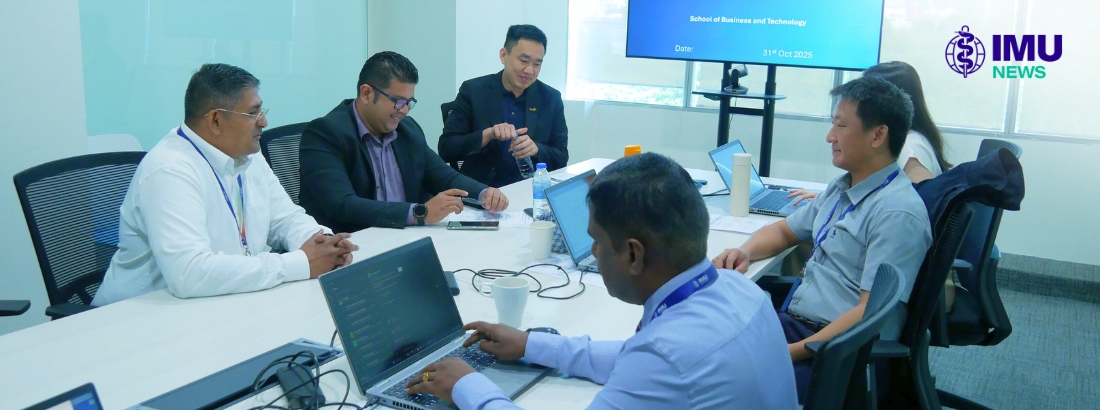
The 3rd Industry Advisory Board meeting for Digital Health & Health Informatics reaffirms IMU’s Bachelor in Digital Health and Master in Health Informatics and Analytics as programmes built for tomorrow’s healthcare ecosystem.
Key Facts
Event: 3rd Industry Advisory Board Meeting for Digital Health & Health Informatics
Institution: IMU University School of Business and Technology
Date: 31 October 2025
Programmes: Bachelor in Digital Health (BDH), Master in Health Informatics and Analytics (MHIA)
Kuala Lumpur, 31 March 2026
IMU University‘s School of Business and Technology (SOBT) convened its 3rd Industry Advisory Board (IAB) meeting for Digital Health & Health Informatics (DHHI) on 31 October 2025, bringing together some of Malaysia’s most influential voices in healthcare technology, innovation, and digital transformation.
The meeting signaled a powerful alignment between IMU’s academic vision and the urgent demands of a rapidly evolving healthcare industry — and confirmed the institution’s two programmes, the Bachelor in Digital Health (BDH) and the Master in Health Informatics and Analytics (MHIA), as programmes that are genuinely responsive to where the industry is heading.
Industry Heavyweights at the Table
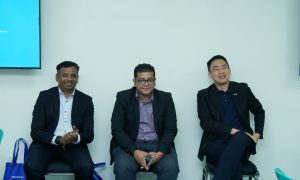
The IAB brings together senior industry figures who provide direct, unfiltered insight into what the healthcare sector needs from its next generation of digital talent. This year’s panel (in the photo below) included
- Dr Mohd Aizuddin, Head of Unit at the Digital Health Research & Innovation Unit (DHRi) of the Institute for Clinical Research;
- Ts Tan Aik Keong, CEO of Agmo Group; and
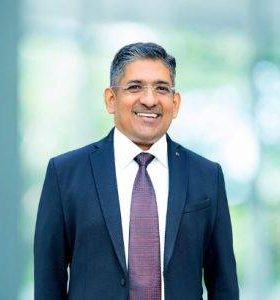
- Mr G Saravanan, Chief Information Officer of the National Cancer Society Malaysia.
The meeting was officiated by Prof Saravanan Muthaiyah, Dean of SOBT, and attended by the DHHI academic team.
Their collective expertise spans clinical research, enterprise technology, cancer care informatics, and digital health entrepreneurship — providing a uniquely grounded perspective on the skills and capabilities that graduates must demonstrate to thrive.
AI is a Co-Pilot, Not a Replacement
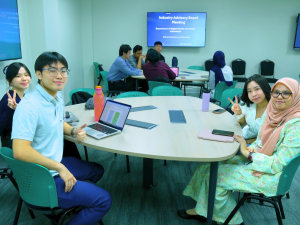
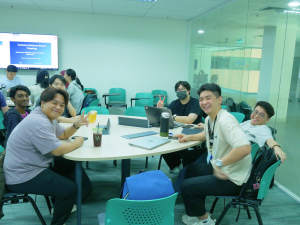
One of the most consistent messages from industry panellists — echoed at both the IAB session and a student dialogue attended by 37 BDH and MHIA students — was a clear-eyed view of Artificial Intelligence in healthcare.
“AI will not replace digital health workers,” the panel emphasised. “It will serve as a co-pilot, amplifying individual human capability.”
What stood out clearly was the lasting importance of people, especially when it comes to how doctors connect with patients on a personal level. Yet equally vital is who answers for decisions made – clinicians hold that duty by law and ethics alike.
Though machines assist, judgment stays firmly in human hands. Because of such realities, training at IMU shapes professionals who grasp these distinctions without oversimplifying them.
What Industry Actually Wants: A Skills Landscape in Sharp Focus
Industry leaders highlighted that basic IT skills are no longer sufficient. The industry is looking for graduates who possess advanced, demonstrable proficiency in AI — including Data AI, Generative AI, and Vision AI — paired with strong data analytics capabilities.
The panel identified several high-growth technical domains as essential for graduates entering the digital health space:
- Health interoperability standards: HL7 (Health Level Seven) and FHIR (Fast Healthcare Interoperability Resources)
- Electronic Medical Records (EMR) systems and emerging technologies such as blockchain
- Cybersecurity, particularly through the lens of the Open Web Security Project to safeguard sensitive patient data
- Regulatory literacy in telemedicine, AI applications, and data-sharing frameworks are increasingly essential for managing liability and compliance.
These competencies are becoming essential as healthcare systems increasingly rely on data integration, digital infrastructure, and AI-driven decision support.
Beyond Technical Skills: The Mindset That the Market Demands
Perhaps the clearest point raised by the Industry Advisory Board had nothing to do with tools or systems. it was about mindset.
Attendees were encouraged to move beyond working solely for others, instead adopting perspectives aligned with creating opportunities. In real terms, this looks like treating tasks as personal responsibilities, recognising how contributions affect business outcomes, while designing responses that lead to measurable financial results and broader influence across teams.
Despite common assumptions, success depends less on skill alone, more on attitude shaped by initiative and awareness of long-term goals.
Here, shifting focus from tools toward actual challenges became essential. What stood out was that strong digital health efforts come from people who start by observing patient and community struggles – rather than starting with software and searching for an issue to fit it.
To reach this understanding requires presence among medical staff, extended periods within active care settings, alongside sustained attention to how treatment works in practice.
From Students to Innovators: Entrepreneurship and Intellectual Property
A key aspiration reinforced by the IAB is for MHIA students to view their academic projects not merely as academic exercises but as potential commercial innovations. Rather than treating assignments only as coursework, learners might see them evolving into novel offerings. Shaping a mindset focused on generating Intellectual
Property and contributions were explored through sustained discussion, highlighting how systems that assign rights often reflect what participants bring to joint efforts.
Looking ahead, projects are better shaped when aligned with practical demands, and partnerships with companies tend to yield balanced results when arrangements match participation levels.
The discussion also emphasized the value of student access to external incubators, which helps develop enterprise skills and positions education as a practical launchpad for health-focused initiatives. While learning continues within institutions, real-world application emerges most effectively through structured collaborations beyond campus walls.
Real-World Exposure: The National Technology and Innovation Sandbox
The IAB highlighted the National Technology and Innovation Sandbox (NTIS) as a key platform for providing both BDH and MHIA students with hands-on, real-world exposure.
By engaging with NTIS and similar industry environments, students gain practical experience that bridges the gap between classroom learning and the complex, often messy realities of deploying digital health solutions at scale.
“This IAB engagement strengthens IMU’s position as a strategic hub for digital health education in Malaysia, where academia and industry converge to shape programmes that are responsive, future-focused, and aligned with the evolving needs of the healthcare sector. At IMU, we don’t just teach digital health but we build industry-ready leaders who can translate AI, data, and innovation into real impact for patients and healthcare systems.”
— Prof Saravanan Muthaiyah, Dean, School of Business and Technology, IMU University
About the Programmes
Bachelor in Digital Health (BDH):
A undergraduate programme that equips students with the technical, analytical, and clinical knowledge to design, implement, and manage digital health solutions. Graduates are prepared for roles spanning health technology, data analytics, digital systems integration, and health innovation.
Master in Health Informatics and Analytics (MHIA):
A postgraduate programme designed for working healthcare and technology professionals seeking to deepen their expertise in health data, informatics systems, analytics, and digital health leadership. The programme is structured to accommodate working adults and is grounded in real-world, industry-relevant challenges.
Article Summary
IMU University convened its 3rd Industry Advisory Board meeting for its the Bachelor in Digital Health (BDH) and the Master in Health Informatics and Analytics, bringing together industry leaders to shape the future of digital health education. The discussion reinforced the relevance of IMU’s Bachelor in Digital Health and Master in Health Informatics and Analytics programmes in preparing graduates for emerging healthcare technologies.
Thoughts Shared