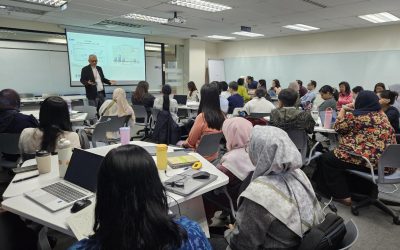
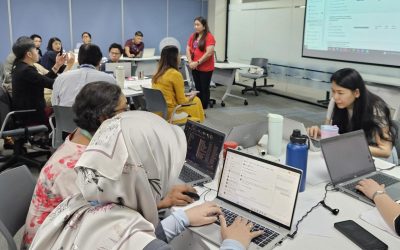
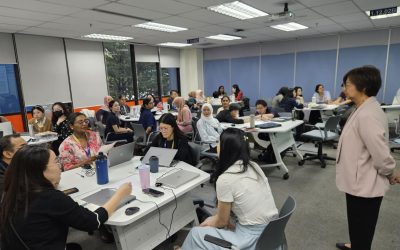
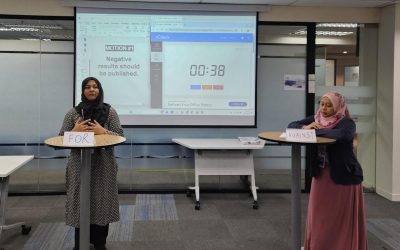
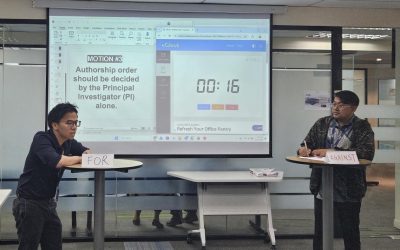
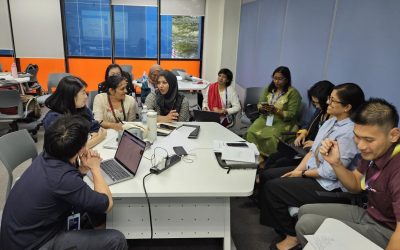
During the FoR programme, participants explored several key topics essential for conducting impactful research. These included comprehensive training in research planning, execution, management, and communication, ensuring that researchers are well-equipped to handle all stages of the research lifecycle. Emphasis was also placed on ethical and responsible research practices, highlighting the importance of integrity and accountability in research endeavours.
Furthermore, the programme covered literature review and critical analysis, enabling participants to effectively synthesise existing knowledge and identify gaps in the current literature. Participants also learned how to construct compelling research proposals and understand the processes involved in the commercialisation and impact of research, encouraging them to translate their findings into real-world applications.
Through the programme, participants gained valuable insights into differentiating between basic, applied, translational, and clinical research, allowing them to align their research interests with appropriate research types. They also developed skills in identifying research problems and gaps, enabling them to formulate focused research questions.
The programme highlighted the utilisation of IMU resources for literature review, providing participants with the tools to conduct systematic and targeted literature searches. Additionally, participants gained an understanding of intellectual property and commercialisation, empowering them to protect their research outputs and explore commercialisation pathways.
Finally, the programme emphasised the importance of engaging with communities in research, encouraging participants to involve stakeholders meaningfully in the research process. These insights collectively contribute to fostering a research culture that is not only rigorous but also relevant and impactful, driving innovation and making a tangible difference in society.
The programme featured a diverse group of 19 experts from public health, epidemiology, basic and fundamental research, applied research, clinical research, social science, community engagement research, and evidence synthesis, providing the participants a holistic approach in uplifting IMU research culture. Participants will undergo an assessment involving the submission and revision of a research manuscript or proposal. Upon successful completion, a Certificate of Completion will be issued.
%202024.png)