Search

Ten Years On: How an IMU–Strathclyde Psychology Education Shaped My Journey

They say, “it’s about the journey, not the destination”. But that is not always true. Having been born and raised in the traffic jams of KL, I would like to avoid the journey wherever possible. Not to mention, the destination is the one starting the journey and often is the most influential in deciding the path to take. When I decided to start at IMU, the credit transfer programme with the University of Strathclyde was what stood out to me the most, compared to its competitors at the Education Fair. If you asked me then, I would have probably said yes, send me there straight. But now?

I should begin with the destination. My name is Boon, I am currently a PhD candidate with the University of York studying selective attention and working memory, and as of writing this article, waiting to defend my thesis.

As a Psychologist, I mainly use experimental and behavioural methods to investigate cognition, with additional prior neuroimaging methods training from an MSc in Cognitive Neuroscience (also from University of York).

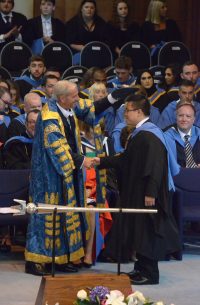
I started my undergraduate at IMU in 2014 in the batch PS2/14, and graduated in 2018 at the University of Strathclyde in the storybook-like Barony Hall.

I have also spent most of my career lecturing on the side, mostly with Year 1 undergraduates at CITY College, University of York Europe Campus. It is a niche destination that most graduates will not pursue, but one I am quite proud of in spite of the challenges that come with. Now that you know ‘who’ I am, perhaps you can decide ‘why’ you would want my opinion.

001_Toh

The destination is simple and to the point, the journey, less so. I started off at the nearby SMK government school and the nearby A-Levels college, both for free tuition and short travel distance from home. Took my excellent grades, decided to duck past medical school, locked-in to Psychology, and wound up at IMU.

In my two years at IMU, the topics covered were more than enough as an introduction to the degree. We had elements of Research Methods, Biological, Cognitive, Individual Differences, Social, Developmental, as well as coverage of historical components in Psychology. The bases sound arbitrary to the average person, but these are the key subjects to be covered in a British Psychological Society (BPS) Accredited undergraduate degree. In fact, the six capitalised topics mentioned are the six modules that make up Year 3 at Strathclyde. Having sufficient time with each of the areas across different modules built a strong foundation for me as a Psychology student, and made the transition between the universities more seamless as I was well-prepared to handle the progression into the next stage.

What also helped was the similarities in the types of expectations set in assessments and exams, going beyond just memorising textbooks. This in particular was important to me, as my experience (along with many others) in acing SPM and A-Levels at the top of my class was relying on regurgitation from my memory capacity. Without the feedback and support of the teaching staff at IMU to improve the depth of my work, the destinations would have been much further away.

I could wrap this part up by gushing over the connections I have made, and the beautiful moments cherished (which for what it is worth, would be true). Instead, I would like to take a quick step back and view this somewhat objectively. The two years at IMU was a great starting point into the degree at Strathclyde, with amazing staff members and a lively community. While my performance in the assessments was important in securing a credit transfer, none of it transferred over to the final degree classification. Notably, this pathway did make getting into a UK-degree programme more financially viable with the two-year local university fees. Upon leaving IMU, I thought good memories and good people was the only things I would gain. It was not.

Relevant Fundamentals I Learnt

Looking back at my time at IMU and the time spent completing my doctoral thesis, it really impressed on me how much of the fundamentals I learnt from my early undergraduate years are still relevant to me today.

Let me start unpacking this by using one of the key pillars in Psychology, Research Methods. One of the first modules we learn in Psychology was Statistics 1 (and later Statistics 2). While we also learn statistics in a module called ‘Research Methods’ in Year 3 at Strathclyde, the requirements, checks and steps for the analyses have remain consistent up to my undergraduate dissertation. Taking it further, this knowledge remained just as useful during the core statistics module of my Masters, and the deep understanding imparted to me was key in learning neuroimaging analyses as well as more advanced statistical methods such as quantitative meta-analyses and Bayesian statistics.

When it finally came to analysing data in my PhD, the behavioural data files looked like mountains, and so I started from the base taking one step at a time. In doing so, I fell back upon my training to consider which analyses could I start with, what my data needed to look like before running the analyses, the preparations needed to get the data ready, before actually running and interpreting my findings.

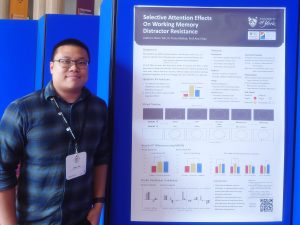
Analyses and reports that have been presented at well-regarded international conferences such as the 4th International Conference on Working Memory (ICWM 2024). Fundamentals taught to me over a decade ago since my time at IMU, that remain consistent now as well as in the foreseeable future as an early-career researcher.

Benefits Gained for My Career as a Lecturer

Even though the other subjects covered in the first two years of the Psychology programme have been less immediately impactful to my present-day research compared to the Statistics and Research Methods modules, it has directly benefitted me as a lecturer. Admittedly, I did not expect how, nor was I focused on these aspects while I was there in the classes. For context, an immediately stark difference between IMU and Strathclyde during lectures is the scale.

At IMU, I was in a batch of around 30 students (give or take), the largest batch thus far at the time. Going to Strathclyde, the week of orientation for Psychology Year 3 was an auditorium of around 100 students (give or take 30 more). Both sizes have their pros and cons, but to be mildly biased and get to the point quicker, the smaller batch at IMU allowed us to be more familiar with each other, and interact at a more personalised level with our lecturers. From a general graduate perspective, this could offer stronger network connections that can last longer. From my perspective, I can optimise my classes.

I began lecturing a final year elective module with a small enrolment before moving to teaching Year 1 undergraduates at a smaller university in Greece with class sizes of around 30. While building the weekly itinerary for lectures, I began reflecting on the informal group discussions and fun in-class activities we had in lectures/tutorials at IMU, and how this was simply a lot less viable when having larger classes. We also had more group presentations as assessments, from oral ones to poster presentations and even Psychology Day booths. I could not apply my prior experience in a 1-to-1 way, but the possibility and concept of it inspired my formulation of a more interactive experience during classes and more practical soft-skills related assessment options, with the hope that they too would be as engaged in Psychology as I was back then.

Additionally, I took after the staff members I remembered fondly from IMU, and engaged with my students before, after, and between classes. I recalled how the friendly and approachable demeanour of the IMU lecturers made me feel more comfortable asking for guidance and support, and also less nervous during assessments. I also took pointers from some brilliant Strathclyde lecturers, but the larger classes and campus had a different dynamic and form of familiarity, which also made it more difficult to emulate when put in the opposite position.

Putting it all together, my brief stint at IMU was a great starting stretch for the marathon I have currently decided to run. It prepared me with all I needed to go to the next pace along with other runners I still cooldown with side-by-side or see in passing. I still hear from the running coaches now and then, and it is always a pleasure. When I see other runners starting their race, I am a better teacher to those fresh legs because of them. I am doing as well as I am on the track that I am on today (a bumpy one called research) because I was taught well at the start. Psychology at IMU was never the destination. But what a journey it was, and I would do it again.

Written by Toh Boon Kheng