


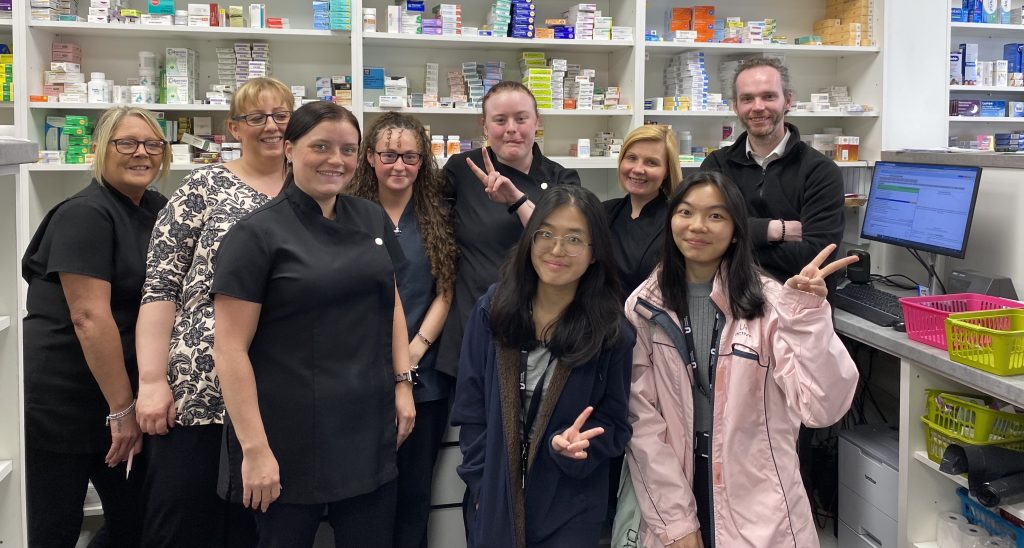
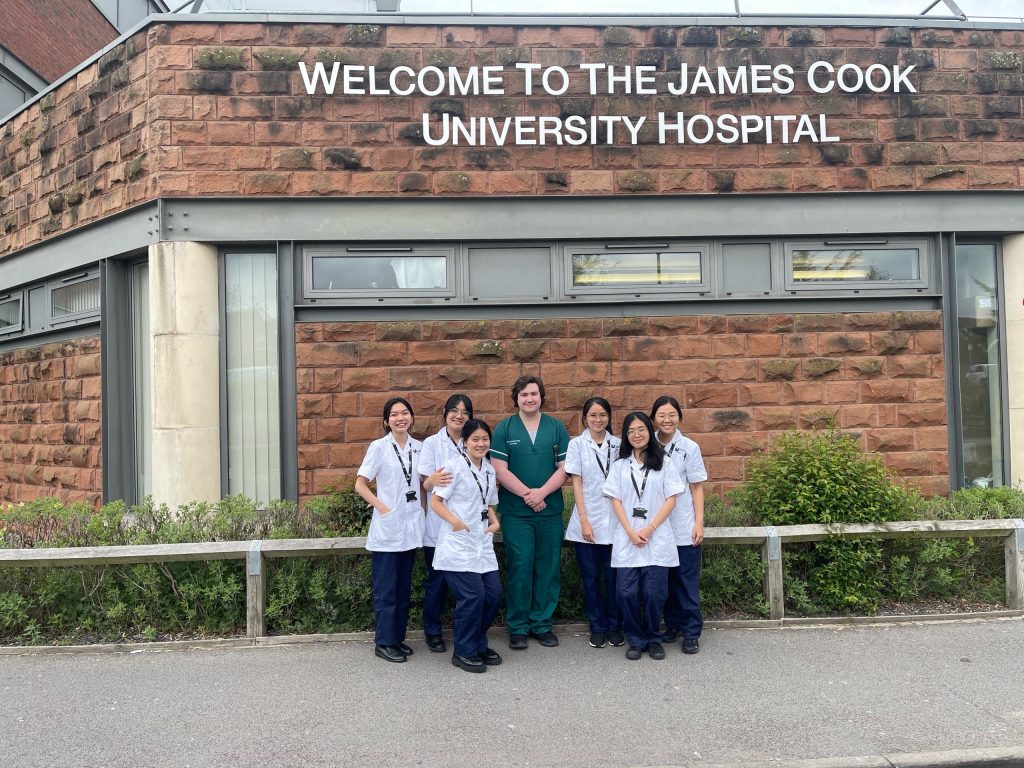
Six IMU Pharmacy students from cohort BP122 (Song Teck Yee, Yip Jin Hui, Chuah Yi Wen, Lau Qian Qian, Chong Yixine and Saw Jing Wen) had the exceptional opportunity to complete their elective programme at Teesside University, United Kingdom, from 7-26 April 2025. They experienced a 3-day community pharmacy placement at one of three branches of Pharmacy Express: Linthorpe, Hemlington and Ormesby, all located in Middlesbrough and a 2-week hospital attachment at The James Cook University Hospital (JCUH).
Placement at Pharmacy Express
Pharmacy Express is a retail pharmacy that offers NHS and private services to the local community, including prescription dispensing, medipack preparation, methadone dispensing, minor ailment management and vaccinations.
During their placement at Pharmacy Express, students gained valuable experience in a fast-paced pharmacy environment dedicated to serving clients with minor health ailments and social needs. Pharmacy Express focuses on delivering opioid substitution therapy and medication support for individuals often marginalised within the broader healthcare system.
Prescription dispensing is a fundamental component of pharmacy education, equipping students with the necessary skills to ensure the safe and effective delivery of medications. Engagement in dispensing activities profoundly fosters the development of students’ technical competencies, decision-making abilities and communication skills. Furthermore, this experience provides students with a valuable opportunity to deepen their understanding of the medications commonly prescribed and utilised within communities across the United Kingdom. It facilitates a comprehensive comparison with local pharmaceutical practices and medications, enhancing students’ understanding of international healthcare systems and medication management.
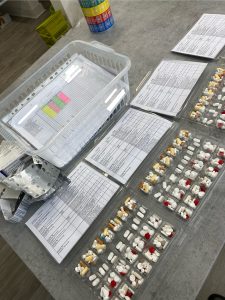
Additionally, students were given the opportunity to prepare MediPack, a multi-dose medication packaging system for patients with medication adherence issues, which offered them valuable hands-on experience in both medication management and patient care. By actively engaging with the MediPack system, pharmacy students develop technical skills, deepen their understanding of medication adherence, and foster empathy for patients managing complex medication regimens.
Apart from that, UK community pharmacists play a more clinical and patient-centered role. They provide a wide range of clinical services, such as minor ailment consultations, vaccination services, smoking cessation programmes, and medication reviews.
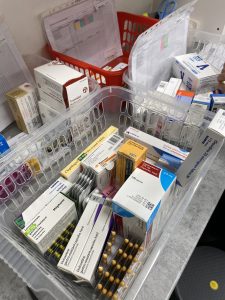
While observing a community pharmacy in the UK, Qian Qian and Yi Wen witnessed a case that reflected the pharmacist’s professionalism.
An elderly woman entered with a cotton bud in her ear, complaining of pain worsened by wind exposure. The pharmacist invited her into the consultation room and carefully assessed her symptoms—no discharge, pain, and sensitivity to touch. Thinking it might be an ear infection like otitis media or external, he advised the woman to stop doing that and suggested seeing a doctor for a proper check-up. He also recommended something for the pain and offered to help book a GP appointment.
The pharmacist’s response reflected sound clinical judgement, clear and compassionate communication, and a strong sense of professionalism. He stayed within his scope of practice while ensuring the patient received the appropriate care, demonstrating the important role pharmacists play in frontline healthcare. It reminded students that staying within the scope of practice while prioritizing patient wellbeing is essential for effective and ethical healthcare delivery.
Hospital Attachment at The James Cook University Hospital
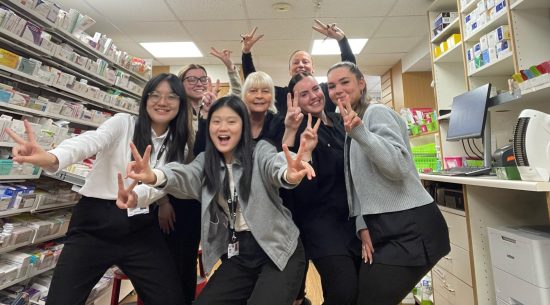
In addition to community placement, the students undertook a 2-week hospital attachment at The James Cook University Hospital (JCUH), a regional major trauma centre and tertiary hospital. They were exposed to a wide range of clinical departments, including Cardiology, General Medicine, Aseptic Services, Oncology, the Intensive Therapy Unit (ITU), and Trauma & Orthopaedics – allowing them to hone their clinical skills across various specialties and gain a deeper understanding of the pharmacists’ role in disease management and medication optimisation.
Prior to the actual placement, the students participated in a consultation skills session with three trainee pharmacists.
The trainee pharmacists guided them and shared practical communication tips such as how to ask open-ended questions and prompt patients for key information.
This preparation not only improved the students’ ability to gather accurate medication histories but also emphasised the pharmacist’s role in patient education and safety.
At the wards, students shadowed the pre-registered and specialist pharmacists in taking medication and medical history, conducting medication reconciliations through patient interviews, and navigating through the hospital’s electronic patient records.
By informing patients of any potential side effects of medications and answering patients’ queries, they build a rapport with the patients.
In the surgery department, the students acquired knowledge about examples of critical medications including insulin, parkinson medications, epilepsy medications, blood thinners, and cancer drugs. Besides, they learned to conduct medication reviews using the MIYA flow system and WebICE to evaluate patients’ medication records and lab results.
In the cardiology department, they learned about the UK guidelines regarding prophylactic and therapeutic dosing of tinzaparin, a low-molecular-weight heparin commonly used to prevent thromboembolism.
Teck Yee and Jin Hui also visited Redcar Primary Care Hospital’s cardiac rehabilitation centre, where they attended a presentation by a cardiology specialist pharmacist, Mr. James and observed exercise sessions for patients recovering from cardiovascular events, heart surgery, or heart failure.
In the ITU, students studied patient assessment using the FAST-HUG BID mnemonic and participated in medication reconciliation with an ICU patient under pharmacist supervision. During their oncology rotation, guided by a pharmacist and pharmacy technician, they learned about managing chemotherapy side effects with medications such as pain relievers, anti-nausea drugs, corticosteroids, erythropoietin, G-CSF, and antidiarrheals.
Additionally, in the aseptic unit, students also learned about the preparation of total parenteral nutrition and cancer treatments, including dose calculations based on body surface area.
One of the most valuable experiences during the hospital placement was when Teck Yee and Jin Hui interviewed patients about their medication history and subsequently engaged in a clinical discussion with a healthcare practitioner regarding potential drug modifications. This hands-on experience underscored the critical role of effective communication – not only between healthcare professionals and patients but also within the multidisciplinary team – in achieving optimal patient care.
During the discussion, they were exposed to the rationale behind modifying a patient’s pharmacotherapy, considering various factors. This interaction not only strengthened their clinical reasoning skills but also highlighted the collaborative nature in healthcare settings, where input from different professionals contributes to more effective and safe treatment outcomes.
A Lasting Impact
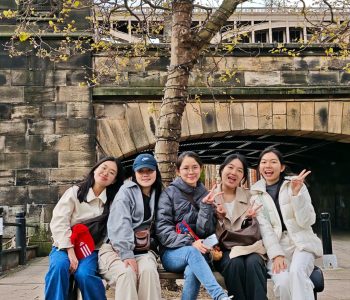
Although short in duration, this placement left a lasting impact.
The knowledge, skills, and memories gained have strengthened their commitment to the pharmacy profession and motivated them to continue striving towards becoming competent pharmacists.
They are deeply grateful for the guidance and support provided by the pharmacists, whose contributions made this experience truly meaningful.
Finally, they sincerely appreciate the efforts and financial support of the School of Pharmacy in making this placement possible.
Hi I’m interested
How much is the schedule fee per year?
Our team will reply on your enquiry soon