


Eating healthy is not just about what you eat but also how much. That is where the concept of “one serving” becomes especially useful. By understanding what a serving looks like, you can make smarter choices, avoid overeating, and build meals that support energy, concentration and long-term wellbeing.
A serving size refers to a set, standard amount of food such as a cup or a slice that is used as a reference to guide how much to eat from food within a food group. It acts as a practical guide for everyday eating, helping you create balanced meals with the right mix of nutrients. Whether you are dining at home or on campus, knowing what one serving looks like turns the Malaysian Healthy Plate (Suku suku Separuh) into a habit you can confidently follow every day.
How Many Servings Do You Need in A Day?
To plan your meals more easily, refer to the recommended number of servings from each food group based on your daily energy needs. The Malaysian Dietary Guidelines 2020 provide guidance for 1500, 1800, and 2000 kcal. For most students with moderate activity levels, the 1800 kcal per day range is a helpful starting point.
Recommended Daily Servings (1800 kcal)
🥦 Vegetables: ≥ 3 servings
🍎 Fruits: 2 servings
🍚 Rice, cereals, whole grains and tubers: 4 servings
🍗 Poultry, meat, egg: 1 serving
🐟 Fish: 1 serving
🥜 Legumes: 1 serving
🥛 Milk and dairy products: 2 servings
🧈 Fats and oils (including nuts and seeds): 6 servings
🍬 Sugar (free sugar): 1 serving
What Does One Serving Look Like?
🥦 Vegetables
- ½ cup cooked vegetables such as sawi, spinach, kangkung
- 1 cup raw leafy vegetables such as lettuce or ulam
- ½ cup mixed cooked vegetables (e.g. cabbage plus carrot plus corn)
Tip: Add vegetables to noodles, fried rice, or sandwiches to increase intake
🍎 Fruits
- 1 pisang berangan or 1 medium apple
- 1 slice papaya or watermelon
- ½ cup cut fruit salad or fresh cut fruit
Tip: Snack on fresh fruits between meals or include them in breakfast or dessert
🍚 Rice, cereals, whole grains and tubers
- 2 scoops cooked white rice (per serving equals 1 scoop)
- 2 slices wholemeal bread
- 1½ cups cooked mee hoon or oats
- 1 small capati (20 cm) or 1 piece roti canai
- 1 medium sweet potato or 4 pieces cream crackers
Tip: Mix brown rice with white rice or try whole grain mee goreng
🍗 Poultry, meat, egg
- 1 matchbox sized piece of chicken or beef (100g)
- 2 hen eggs
🐟 Fish
- 1 medium Indian mackerel (ikan kembung) or 2 sardines
- 1 cup cooked prawn or 12 medium prawns
🥜 Legumes (Plant Protein)
- 1 square tofu
- 2 slides tempeh
- ½ cup dhal or chickpeas
Tip: Combine animal and plant proteins in meals for variety and nutrition
🥛 Milk and dairy products
- 1 glass low fat milk (250 ml)
- 1 small cup yogurt (150 g)
- 2 slices cheese
Tip: Choose plain or low-sugar dairy to reduce added sugar intake
🧂 Fats and Oils
- 1 teaspoon cooking oil
- 1 tablespoon coconut milk used in cooking
- 2 dessert spoons nuts or seeds (e.g. almonds, sunflower seeds)
Tip: Use healthier oils such as olive oil for dressing and reduce deep-fried foods
🍬 Sugar
- 1 teaspoon sugar equals 1 serving (limit to 3 teaspoons max per day)
Putting It into Practice: Learning from a Sample Day
Use the Table below to see how one day of meals meet the recommended servings. It’s simple, affordable and based on foods students enjoy.
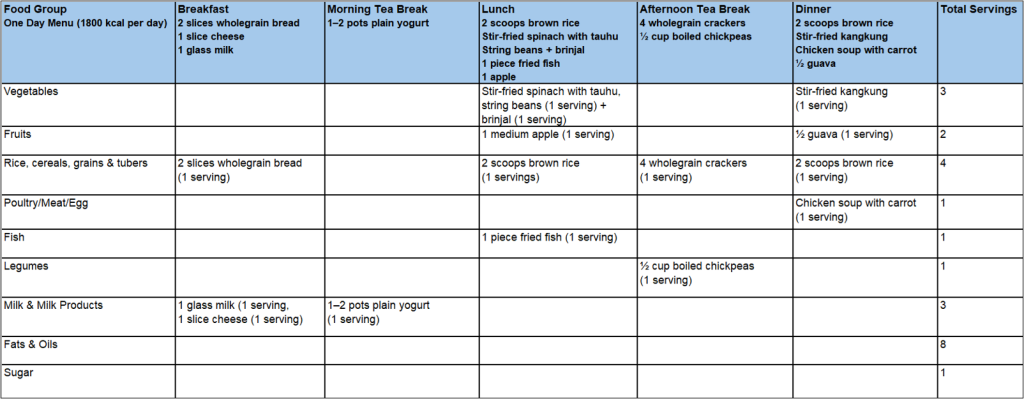
Try It Yourself: “Track and Match” Activity
- Take photos or write down everything you eat in one day.
- Use the table above to match foods to their food group and serving size.
- Reflect—what are you missing? What are you getting too much of?
Final Tips for Students
- Keep fruit in your bag for a fast, healthy snack
- Add vegetables to noodles or rice dishes
- Use cups and spoons to gauge portions
- Build every meal using the quarter-quarter half principle
Making Serving Sizes Work for You
Understanding what one serving looks like takes the guesswork out of healthy eating. It is not about being perfect but about staying consistent. Serving sizes help you plan meals that are satisfying, nutritious and practical for everyday student life. When you know how much to eat, the Malaysian Healthy Plate becomes more than just a visual guide. It becomes a habit that supports your focus, energy and long-term health.
Written by Dr Yong Heng Yaw, School of Health Sciences, IMU University
Reference: National Coordinating Committee on Food and Nutrition. (2021). Malaysian Dietary Guidelines 2020. Ministry of Health Malaysia.
Thoughts Shared