


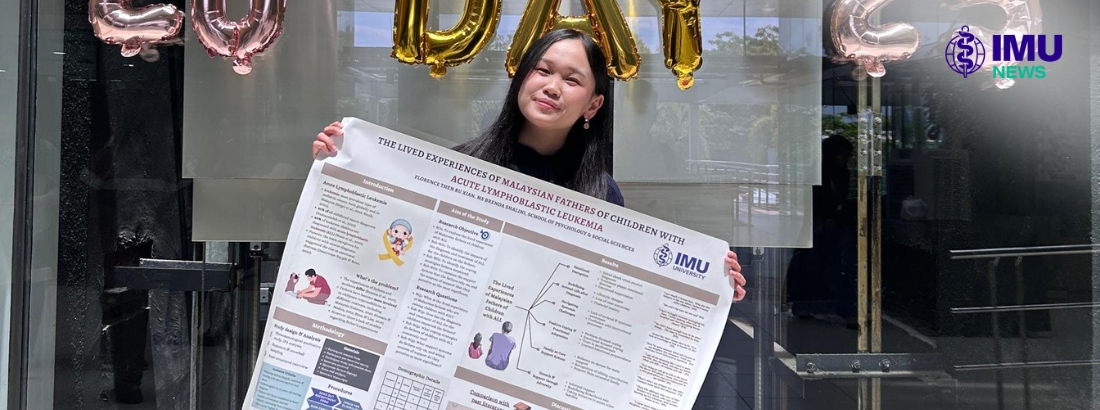
As psychology undergraduates, we were systematically trained to conduct high-quality research. Now, three years into the journey, we are still fine-tuning our research skills and deepening our knowledge, with the hope of contributing meaningful insights to the field of psychology.
In September last year (2024), our cohort began drafting our final year research project. Unlike previous group assignments, this project had to be completed individually, driven by our own passion and skill. I’m truly grateful that we were given the freedom to choose our own research topics, as it allowed me to pursue an area I’ve always been passionate about: health psychology.
Early in the process, I came across a research gap that deeply moved me: fathers of children diagnosed with leukaemia. I imagined how traumatic it must be for parents to receive such a diagnosis and to witness their child undergoing painful treatments. Yet, I noticed that most existing research focused on mothers’ experiences, with the common assumption that they are the primary caregivers. While this is understandable given traditional gender roles, we are increasingly seeing fathers taking on more active roles in childcare. This observation inspired me to explore how fathers experience and cope with this immense challenge. That led to the development of my research titled “The Lived Experiences of Malaysian Fathers of Children with Acute Lymphoblastic Leukaemia (ALL).”
We went through our proposal defense presentation with two lecturers serving as assessors. Unfortunately, I did not achieve a strong grade at that time, but I received valuable and constructive feedback from them. They pointed out that I needed to adopt a more research-oriented approach in my presentation, rather than a casual one. This made me realise that I had been too emotionally driven in my delivery and not sufficiently research-focused when responding to their questions.
Their feedback stayed with me and continued to guide me throughout the subsequent stages of my research process.
Recruiting participants was not easy. Fathers, understandably busy juggling work and family, may have found it inconvenient to spare an hour for an interview. I am incredibly thankful to those who agreed to share their experiences. Their insights were rich and moving, allowing me to analyse how they navigated their journeys and what kinds of support they felt were lacking. From these conversations, I was able to distil comprehensive themes that I hoped would help the audience better understand how fathers are affected, how they cope, and how we, as a community, can better support them.
Winning the Best Presenter Prize
Then came the research symposium day, a platform for each of us to present and share our findings with others. We were told that three students would be awarded the Best Presenter Prize, which served as a motivation to refine our presentation skills. But more than the prize, what truly drove me was the responsibility to deliver the fathers’ stories clearly and meaningfully. I rehearsed my presentation countless times at home, ensuring it was easy to follow, addressed any possible gaps in the study, and most importantly, gave justice to the voices of the fathers I interviewed. I am humbled and grateful to have been awarded one of the Best Presenter Prizes. It felt like a meaningful validation of both my research and my communication efforts, even though I know there’s still a long way to go before I produce a publication-worthy paper.
Reflecting on these past few months: from proposing my research idea, defending it, collecting data, and finally presenting the findings, it has been an incredibly enriching and memorable journey. I would also like to take this opportunity to thank my supervisor, Ms Brenda, for her unwavering trust and support. Her guidance definitely helped me achieve this important milestone in my academic journey.
Written by Florence Then Ru Xian, IMU Psychology student
Thoughts Shared