


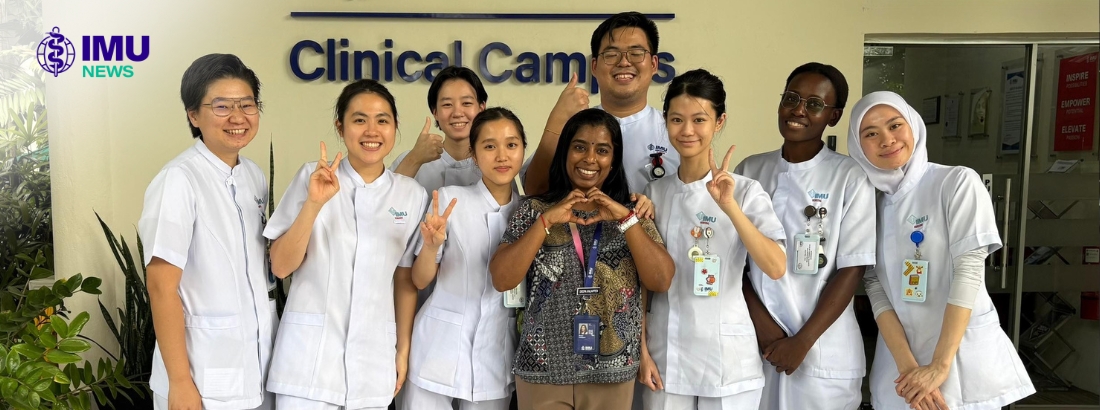
In paediatric nursing, precision is not simply a skill; it is a lifeline. For children, where even a single millilitre can mean the difference between recovery and risk, the responsibility that comes with intravenous (IV) therapy is immense. I came up with this workshop entitled “Little Patients, Big Responsibility: IV Pump Excellence in Paediatrics.”
The workshop, designed primarily for IMU Nursing students from cohort NU122, offered much more than a classroom lesson. It opened the door to the delicate art of paediatric IV therapy, blending theory with immersive practice to ensure that future nurses are not only knowledgeable, but also confident, precise, and compassionate in one of the most critical aspects of childcare.
The journey began at the IMU Seremban Clinical Campus, where three skill sessions were held on 23 June, 7 July, and 25 July 2025.
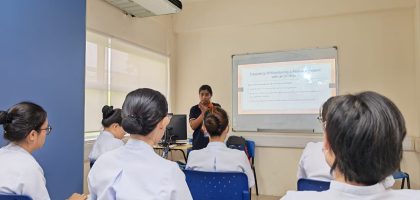
The first session carried an added spark of excitement as it welcomed not only the NU122 nursing students but also faculty, creating a vibrant atmosphere of collaboration and shared learning. Each session was carefully structured to guide students from theory into practice.
The mornings began with a pretest followed by an interactive lecture that set the foundation for understanding paediatric IV therapy. Students explored the science behind infusion pumps, the reasoning that guided decisions about fluids and flow rates, and the risks that make paediatric patients uniquely vulnerable.
The classroom then gave way to the clinical lab, where facilitators, led by me and supported by Ms Lee Mei Ying, brought the theory to life. Through live demonstrations, they showcased safe pump setup, programming, and troubleshooting using advanced simulation tools that mimicked real hospital wards. The students watched closely, then rolled up their sleeves and stepped into the role themselves.
In hands-on practice sessions, guided by the Direct Observation of Procedural Skills (DOPS) framework, students rotated through stations where they could handle pumps independently. Mistakes were not punished but treated as opportunities for learning. In this safe environment, every student found the confidence to take control of the equipment, sharpen their critical thinking, and practise with the reassurance of experienced facilitators by their side. Each session closed with reflection, post-tests, and open discussions, ensuring that knowledge was not only gained but deeply reinforced.
This was not merely a teaching exercise—it was a carefully designed, evidence-based approach, informed by global best practices in nursing education. Research has long confirmed the value of simulation in nursing: Li et al. (2021) and Nakamura et al. (2023) demonstrated that simulation training enhances both clinical precision and decision-making, while Gomes and Tan (2020) highlighted that real-time feedback during infusion pump training reduces anxiety among novice nurses.
By aligning with such findings, as well as with the Malaysian Nursing Board’s competency standards, which require nursing graduates to demonstrate identified competencies and meet registration criteria (Ministry of Health Malaysia, 2013), and the WHO’s Medication Without Harm global patient safety framework, which aims to reduce avoidable medication-related harm through strategies targeting high-risk situations, polypharmacy, and transitions of care (World Health Organization, 2017), the IMU workshop ensured that students were trained to meet both local and international standards of safety.
Students' Feedback
The impact was clear in the students’ feedback. An impressive 95% reported that their confidence in operating IV pumps had grown significantly, while 93% felt the training directly enhanced their readiness for clinical practice. Their reflections were heartfelt. “I loved how we weren’t just watching; we were doing. That made all the difference,” said one. Another admitted, “The practice sessions helped me overcome my fear of handling pumps. Now I feel much more prepared for the ward.” The approachable facilitators and the supportive environment transformed what many had initially feared into an empowering and even enjoyable experience.
Ultimately, this workshop mattered because paediatric patients are not simply smaller versions of adults. Their care demands heightened precision, closer monitoring, and stronger safeguards. Even the smallest error in IV therapy can carry devastating consequences. By equipping students with both technical skills and a deep sense of responsibility, the workshop bridged the gap between textbook learning and bedside care, preparing future nurses to meet the challenges of paediatrics with skill and compassion.
“Little Patients, Big Responsibility Workshop” was far more than a workshop; it was a transformative journey. For NU122 students, it shaped them into safer and more competent practitioners and as for the Faculty of Nursing, it marked another milestone in shaping graduates who enter the healthcare system not only with knowledge, but with the precision, purpose, and professionalism that the future of healthcare demands. Because in paediatrics, every drop truly counts.
“Every Drop Counts, Every Child Matters.”
Written by: Deepa Kaliappen, Faculty of Nursing
Reviewed by: Dr Lim Swee Geok, Head of Nursing Division
Thoughts Shared