


25 – 26 November 2025 | IMU University
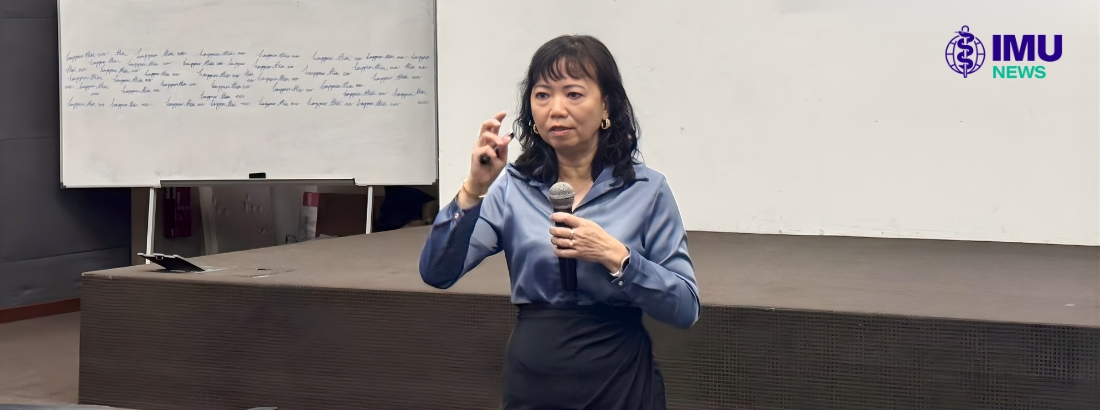
The Institute for Research, Development and Innovation (IRDI) recently organised a Workshop on Clinical Epidemiology: Research, Interpretation and Application (CERIA) on 25 – 26 November 2025 at IMU Bukit Jalil. The session was led by Prof Dr Moy Foong Ming, a distinguished epidemiologist from the University of Malaya and a certified Cochrane trainer, whose expertise in Clinical Epidemiology, Research Methodology and Evidence-Based Medicine, has shaped Malaysia’s public health research landscape.
Prof Moy, a Professor of Epidemiology and Public Health, at the University of Malaya, is renowned for her research in non-communicable disease (NCD) prevention, lifestyle determinants of health, and workplace wellness. She leads the large-scale study of Clustering of Lifestyle Risk Factors and Understanding its Association with Stress on Health and Wellbeing among School Teachers in Malaysia (CLUSTer) – involving nearly 15,000 teachers across Peninsular Malaysia, producing impactful longitudinal evidence on lifestyle, stress and cardiovascular risks. Her extensive experience in guiding doctoral and public health trainees enriched the learning environment for IMU academic staff, clinicians, and postgraduate students.
The CERIA Workshop provided participants with a structured, practice-oriented introduction to clinical epidemiology. Over two days, Prof Moy introduced participants to the four pillars of clinical epidemiology including diagnostic, prognostic, aetiologic and therapeutic research using practical examples and clear methodological guidance, while strengthening their skills to critically appraise scientific papers. The session also emphasised translating epidemiological findings into meaningful insights, enabling IMU Staff and postgraduate students to enhance the rigour, clarity and practice relevance of their own research work.
Prof Moy emphasised how choosing the right study design shapes research quality. Participants explored key diagnostic concepts such as PICO, avoiding spectrum bias, interpreting sensitivity, specificity, predictive values, and understanding ROC curves. In prognostic and aetiologic research, attendees learned how cohort and case-control designs help identify risk factors and predict outcomes, while addressing common sources of bias and confounding. The session also covered the fundamentals of randomised controlled trials (RCTs), including randomisation methods, allocation concealment, blinding, and evaluating treatment effects using established appraisal tools like CASP, GRADE and the Cochrane Risk of Bias framework.
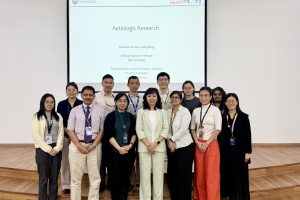
Interactive discussions encouraged clinicians and academic staff to examine real-world evidence, critique methodological quality and interpret data with greater analytical precision. Many attendees reflected that this engaging workshop has revealed the practical aspects of research planning among various study designs and has inspired them to design and conduct epidemiological studies with confidence – from formulating a question, choosing an appropriate study design, to analysing effect sizes and interpreting confidence intervals.
Overall, attendees gained theoretical and hands-on experience in interpreting scientific findings, assessing strengths and limitations of research articles, and understanding how to apply evidence responsibly in clinical or population settings.
Postgraduate students also gained insight into experiencing how clinical questions are translated into study designs and how results inform patient care. Students developed a clearer appreciation of how the competencies gained in their degree programmes directly contribute to improving health outcomes.
Through initiatives like CERIA, IMU continues to strengthen its commitment to producing graduates who are equipped not only to understand scientific evidence, but to apply it responsibly, critically and effectively in their future practice and research. The workshop further highlights IMU’s emphasis to strengthening methodological rigour in research, fostering interdisciplinary learning and nurturing research-literate healthcare professionals who can contribute meaningfully to evidence-based healthcare and wider scientific community.
Submitted by Ngai Zi Ni & Wong Kai Xuan
Thoughts Shared