


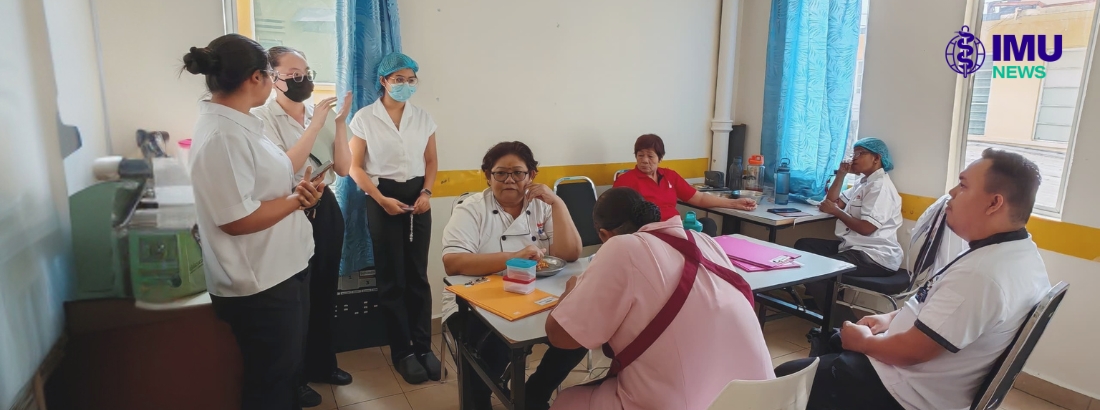
As part of Semester 6 of the Bachelor of Science (Hons) in Dietetics with Nutrition programme at IMU University, I commenced my Food Service Placement at Assunta Hospital. This hospital was my first-choice placement site as it is the closest to my home, allowing me to balance commuting demands while remaining fully engaged in the learning experience. Beginning the semester alongside three classmates in a welcoming and supportive environment set a positive tone for our professional journey from the very first day.
The placement provided us with valuable exposure to the operational workflow of a hospital kitchen, reinforcing concepts previously learnt during the Semester 4 Food Service Management module. Under the supervision of our appointed Local Preceptor, Mr Chong Koy Seong, an IMU alumnus, we were guided through various aspects of hospital food service management. His mentorship allowed us to observe how theoretical knowledge is translated into practice within a real healthcare setting, bridging the gap between classroom learning and professional application.
Throughout the two months placement, we worked closely with dietitians, food service managers, and kitchen staff, gaining a comprehensive understanding of hospital food service operations. Learning directly from kitchen staff offered us practical insights into the challenges faced during daily operations, while also allowing us to appreciate their dedication and teamwork. These experiences helped us make more realistic and informed decisions for our menu planning and quality improvement assignments.
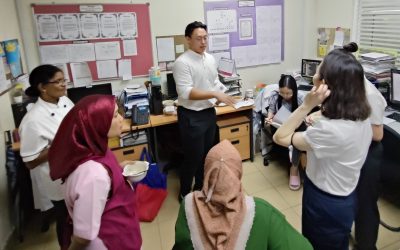
Menu planning assignments enabled us to understand the critical role dietitians play in ensuring meals are nutritionally adequate, cost-effective, culturally appropriate, and aligned with therapeutic requirements. By working within real hospital constraints such as budget limitations, ingredient availability, and patient needs, we developed a deeper appreciation of how dietitians contribute to patient recovery and satisfaction beyond clinical consultations.
Similarly, the quality improvement assignment strengthened our understanding of continuous improvement in food service systems.
It highlighted the dietitian’s role in identifying operational gaps, enhancing food safety practices, improving service efficiency, and ensuring compliance with healthcare standards. These assignments reinforced the importance of dietitians as key contributors to patient safety, service quality, and interdisciplinary collaboration within hospital food service settings.
We were actively involved in assisting chefs with the preparation of hospital meals for patients as well as banquet meals for departmental meetings. In addition, we accompanied pantry aides during patient meal ordering and meal service, ensuring compliance with food safety standards that we had learnt in class. We were also introduced to stock management and procurement processes in the office, including ordering supplies under the guidance of food service management and administrative staff.
Effective communication was emphasised throughout the placement as an essential professional competency for dietitians. We learnt the importance of adapting our communication styles when working with individuals from diverse backgrounds and roles within the kitchen team. Understanding staff personalities and workplace dynamics was key to fostering collaboration and ensuring efficient daily operations, further highlighting the human aspect of food service management.
A unique aspect of our placement was the weekly meetings involving myself, my three classmates, Mr Chong, and our University Supervisor, Ms Hana. These meetings provided a structured platform to update the university on our latest learning experiences, newly assigned tasks, upcoming scheduled activities, and assignment progress. The sessions also allowed us to receive timely feedback from both academic and industry perspectives, helping us reflect on our progress and plan our next learning steps at Assunta Hospital more effectively.
The placement also allowed us to participate in multiple food safety inspections of food outlets within the hospital. Notably, we were given the opportunity to lead the final food safety inspection, which enabled us to apply our knowledge in a hands-on manner. To ensure that learning outcomes were met, we were regularly assessed through quizzes conducted by Mr Chong, aligned with the programme’s learning outcomes.
While the placement was a valuable learning experience, it was not without its challenges. We learnt to practise patience and to resolve team-related issues professionally, which helped to build our character and resilience prior to entering our clinical placements. Through hands-on experience, the theoretical knowledge we had gained became more meaningful and easier to apply in real-life situations.
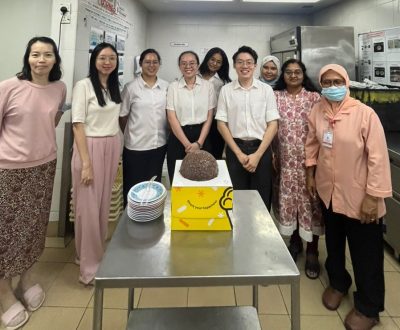
Monthly professionalism evaluations conducted by the Local Preceptor helped us identify our strengths and areas for improvement. One-to-one discussions provided a safe and supportive platform for us to address challenges and receive constructive feedback. The kindness and patience shown by the hospital staff contributed greatly to our learning experience, enabling us to grow both professionally and personally.
Although food service experiences may vary between hospitals, this placement gave us greater confidence and clarity about what to expect in the food service industry. Overall, the experience has better prepared us to become competent and adaptable dietitians, equipped with essential skills for future professional practice, while providing us with a meaningful and supportive start to our professional journey.
Written by Tharine Jyo Liyn
Thoughts Shared