


At a Glance
Event:
Clinical Epidemiology in Practice (CEiP) Workshop
Organiser:
IMU Institute for Research, Development and Innovation (IRDI)
Date:
6 April 2026
Venue:
IMU Clinical Campus
Speaker:
Prof Dr Moy Foong Ming, University of Malaya
Participants:
Clinicians and healthcare professionals from multiple specialties
IMU CEiP Workshop Strengthens Clinicians’ Skills in Clinical Epidemiology, Biostatistics, and Research Design
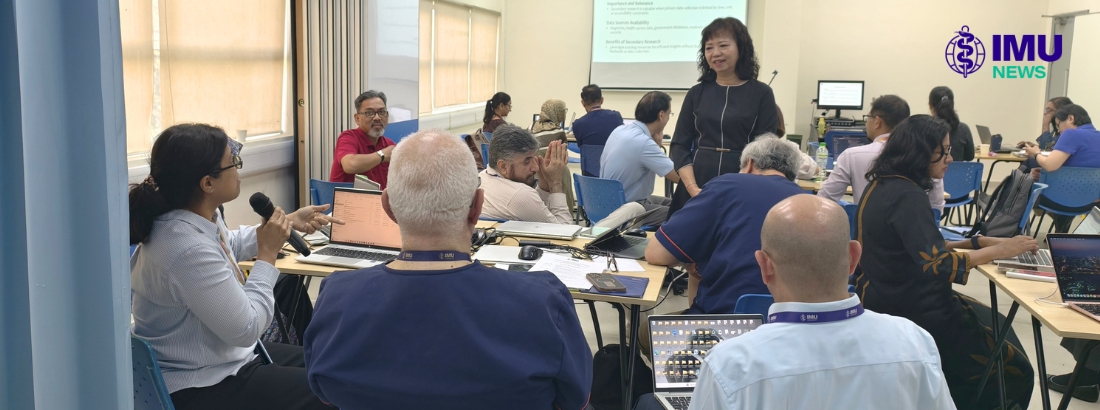
On 6 April, 2026, the IMU Clinical Campus became a hub of intellectual synergy as the Institute for Research, Development and Innovation (IRDI) again for second time, hosted Clinical Epidemiology in Practice (CEiP) workshop, led by the world-renowned Prof Dr Moy Foong Ming —a University of Malaya professor ranked among the top 2% of global scientists. The session was designed to demystify the complexities of clinical research.
Prof Moy, a certified Cochrane trainer with a legacy of over 150 peer-reviewed papers, shared her extensive expertise in translational research and non-communicable disease (NCD) prevention, setting a high-caliber tone for an event aimed at bridging the gap between textbook theory and bedside application.
Strengthening Clinical Research Skills Through Practical Epidemiology Training
The workshop floor was alive with interdisciplinary collaboration, bringing together clinical staff from different specialties in a shared mission.
The workshop focused on established research frameworks, specifically teaching participants how to select the most appropriate observational designs:
- Cohort,
- Case-control, and
- Cross-sectional studies.
Key technical training included in the workshop are strategies to
- Identify and mitigate bias and confounding
- Statistical Interpretation
As the day progressed, the atmosphere shifted from formal instruction to a vibrant, hands-on exchange of ideas. Attendees moved through structured modules that mirrored the actual workflow of a researcher—from the initial spark of a research question to the final interpretation of data.
This collaborative environment allowed participants to test their analytical precision against real-world evidence, fostering a sense of community that is often missing in the siloed world of specialised medical practice.
However, the session also shed light on the systemic “bottlenecks” that stifle clinical output.
Participants highlighted a significant lack of biostatistics support, noting that the gap in statistical knowledge often halts a project before it reaches the analysis phase.
Addressing the Real Challenges Clinicians Face in Research
Beyond technical skills, the most glaring issue raised was time. Between heavy clinical loads and supervising students whose academic semesters are often too short for robust data collection, research is frequently pushed to the periphery.
Furthermore, the Ethics Committee approval process and proposal defenses were described as daunting hurdles; many clinicians voiced a need for the provision of more guidance along the pathways to allow for agile, practical research without the crushing weight of bureaucratic complexity.
Building Research Confidence
The CEiP seminar proved to be an invaluable roadmap for navigating these very obstacles. By providing practical strategies for constructing robust protocols and streamlining the research process, the workshop gave participants the confidence to tackle high-level projects despite their heavy clinical loads.
The insights gained here are not just academic—they are the tools needed to translate evidence into better patient care.
Given the immense value of this guidance, there is a clear appetite for this seminar to become a regular fixture in the IMU calendar, ensuring that the next generation of healthcare leaders can contribute meaningfully to the global scientific community.
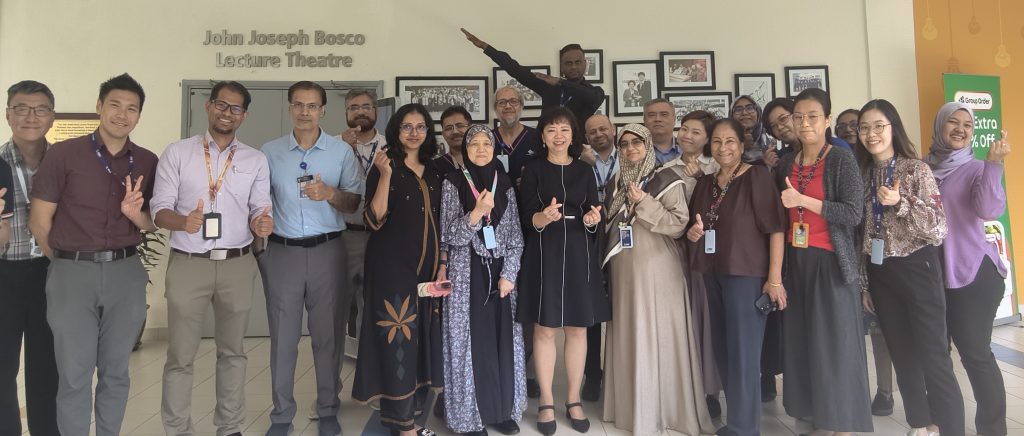
Written by Dr Looi Chin King and Dr Henry Chang Chung Yuan
Thoughts Shared