


Article Summary
Asha Dees, a graduate from Dartmouth College, completed a 9-month research internship at IMU University under the Institute for Research, Development and Innovation (IRDI). Supported by the Dickey Center for International Understanding and the Lombard Fellowship, her work focused on digital health innovation and chronic disease management in Malaysia, particularly Type 2 Diabetes care.
At a Glance
Intern:
Asha Dees (Dartmouth College, USA)
Programme:
9-month Research Internship
Host Institution:
IMU Institute for Research, Development and Innovation
Research Centre:
Centre for Transformative Nutrition and Health
Field Focus:
Digital health
Chronic disease management
Supervisors:
Prof Winnie Chee
Dr Lee Ching Li
9-month Research Internship
Asha Dees recently completed a 9-month research internship under the Centre for Transformative Nutrition and Health at the Institute for Research, Development and Innovation (IRDI) at IMU University.
Supported by the Dickey Center for International Understanding and Dartmouth’s Center for Social Impact’s Lombard Fellowship, Asha’s research focused on digital health and chronic disease management in Malaysia.
Graduating in 2025 from Dartmouth College with a bachelor’s degree in Biological Sciences and a minor in International Studies, Asha was drawn to IMU because of its
- Strong reputation in culturally adapted public health research
- Multidisciplinary approach to healthcare innovation.
Her internship brought together public health, digital innovation, and chronic disease research within the Malaysian healthcare context.
Driven by her passion for global public health and chronic disease epidemiology, Asha’s goal in Malaysia was to explore how digital technologies can improve healthcare accessibility and diabetes self-management. Her interest was driven by the increasing prevalence of non-communicable diseases worldwide, which affects millions of individuals globally.
“In the United States, 1 million new people are diagnosed with diabetes each year,” she shared.
“I was interested in learning what we can learn from Malaysia’s approach to mobile health technology since diabetes has also become an important national priority here.”
Research Focus: Digital Health and Diabetes Care
Throughout her internship, Asha worked under the supervision of Prof Winnie Chee and Dr Lee Ching Li on a qualitative research project conducted in collaboration with Alpro Pharmacy. The study focused on understanding the adoption of a digital care platform among individuals living with Type 2 Diabetes in Malaysia.
As part of the project, Asha secured ethics approval and designed a mixed-methods study involving healthcare providers and people living with diabetes. Her main responsibilities included
- Developing recruitment materials
- Preparing semi-structured interview guides
- Conducting interviews and usability testing
- Performing data analyses using tools like the Dedoose software
Over the nine-month period, she conducted 16 qualitative interviews involving healthcare providers such as dietitians and nutritionists, as well as individuals with lived experiences of diabetes. She also facilitated a focus group discussion to co-design a clinical trial protocol in collaboration with people with lived experience with diabetes.
“Our research explored how people were introduced to mobile health applications, how these tools affected their health communication, and what factors make digital health solutions impactful,” Asha explained.
Beyond technical research skills, Asha noted that the internship gave her valuable insight into the operational side of scientific research, including participant recruitment.
“One of the biggest lessons I learned was what makes collaborative research successful,” she said. “When working alongside dietitians, healthcare providers, community partners, and people with lived experiences with chronic diseases, as a researcher you need to make sure that your collaborators feel comfortable asking questions and giving feedback”
She also reflected on the importance of communicating research in ways that are understandable and approachable to the public.
“We realised during recruitment that scientific language can sometimes feel intimidating. Adjusting how we communicate using visuals, FAQ sheets, and infographics shared over WhatsApp became an important part of the research process,” she added.
Community-Engaged Research Experience
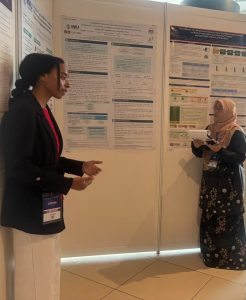
In addition to her primary research project, Asha also contributed to a user-experience study involving continuous glucose monitoring (CGM) systems distributed during IMU’s World Diabetes Day event.
The study explored user feedback regarding the usability and perceived impact of CGM technology for health promotion.
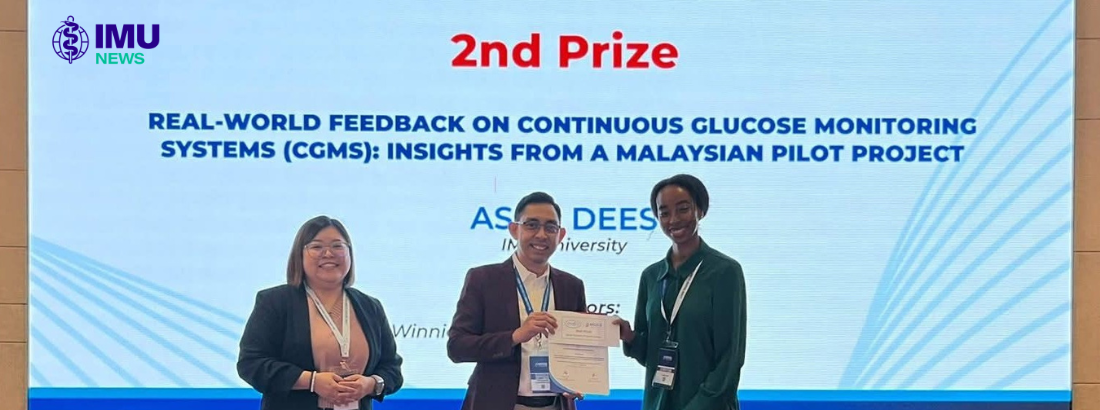
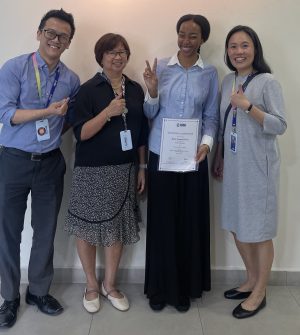
Her efforts and contributions were recently recognised at the Malaysian Diabetes Educators Society (MDES) Conference 2026, where this project was awarded second prize in a poster competition.
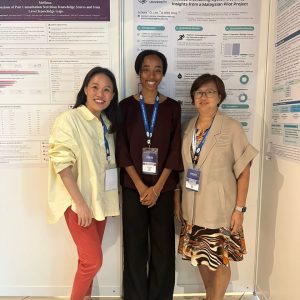
Reflecting on the experience, Asha shared that one of the most valuable lessons she learned was how key community-engaged research is for scaling new healthcare strategies.
“Research exists to help people and by working in partnership with people working and receiving care in community pharmacies I got to see firsthand how designing care models for long-term engagement can really make a difference”
Beyond Research: Community Engagement
Beyond research activities, Asha immersed herself deeply in the IMU and Malaysian community. She actively participated in IMU Cares initiatives, including diabetes education programmes and community outreach activities such as the Wangsa Community Health Event, where she assisted in diabetes screening and health education activities.
She was also a communications volunteer with Action4Diabetes, a non-governmental organisation supporting children and young adults living with Type 1 diabetes in South-East Asia. As part of her volunteer work, she helped organise the organisation’s first Peer to Peer Engagement in Malaysia.
Asha also loved exploring Penang, Melaka, Ipoh, Putrajaya, Langkawi, Shah Alam, Puchong, and Alor Setar during her time in Malaysia.
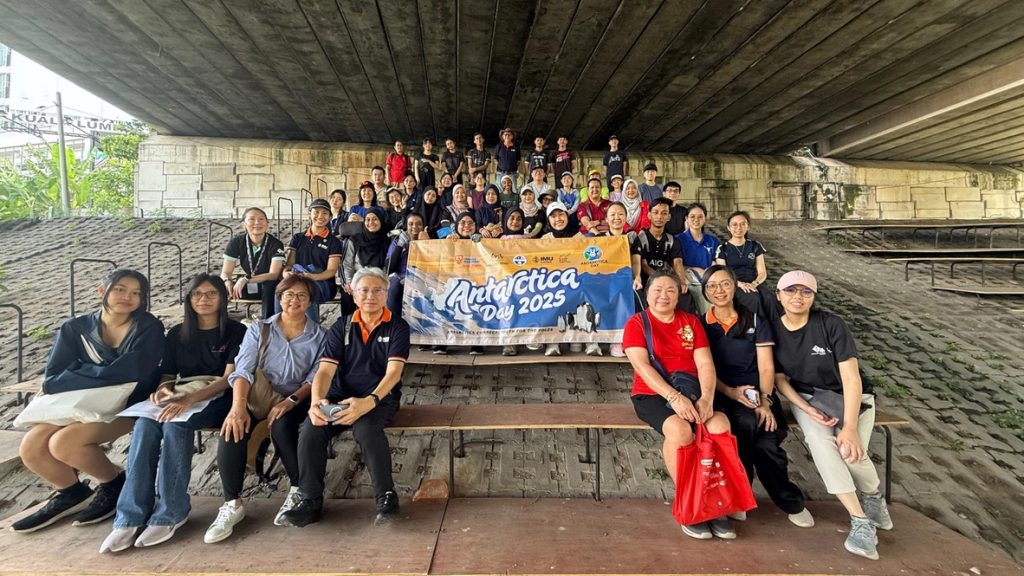
“The people I was lucky enough to meet here in Malaysia made me feel like home,” she shared. “Everyone was so kind and loved sharing their favourite foods and recommendations about places to check out.”
Research Culture at IMU
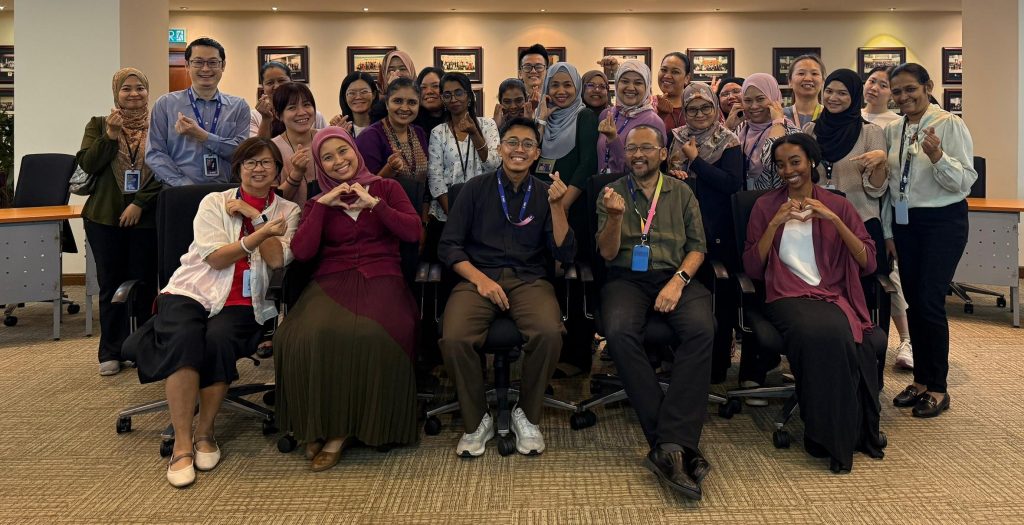
Within IRDI, Asha described the working environment as welcoming and supportive. She fondly recalled participating in potluck gatherings, festive celebrations, seminars, and “Mind Sessions” where researchers and guest speakers exchanged ideas on what’s next for global health.
Among her fondest memories were the festive lunches at IRDI, where staff and students shared cultural traditions and food during Deepavali, Chinese New Year, and Ramadan.
“I expected strong clinical research at IMU, but I also got to learn more about all the interesting food science, psychosocial, and biomaterial research projects the university is leading”
Impact and Future Direction
At IMU, Asha sharpened her qualitative research, statistical analysis, and cross-cultural communication skills while gaining deeper insight into the operational aspects of scientific research. The internship also strengthened her long-term academic and professional aspirations. Inspired by her experience in Malaysia, Asha will be pursuing postgraduate studies in epidemiology with a focus on community-engaged research methods.
“I want to continue exploring how digital health interventions can be culturally relevant, accessible, and adaptable for different populations,” she said. “This experience reaffirmed my interest in patient-centred public health research and showed me how important collaboration is in creating meaningful healthcare solutions.”
Closing Note
IMU congratulates Asha on her achievements and contributions during her time at IRDI. Her journey reflects IMU’s continued commitment to fostering global collaborations, interdisciplinary research, and meaningful community engagement in advancing healthcare innovation.
Thoughts Shared