


Article Summary
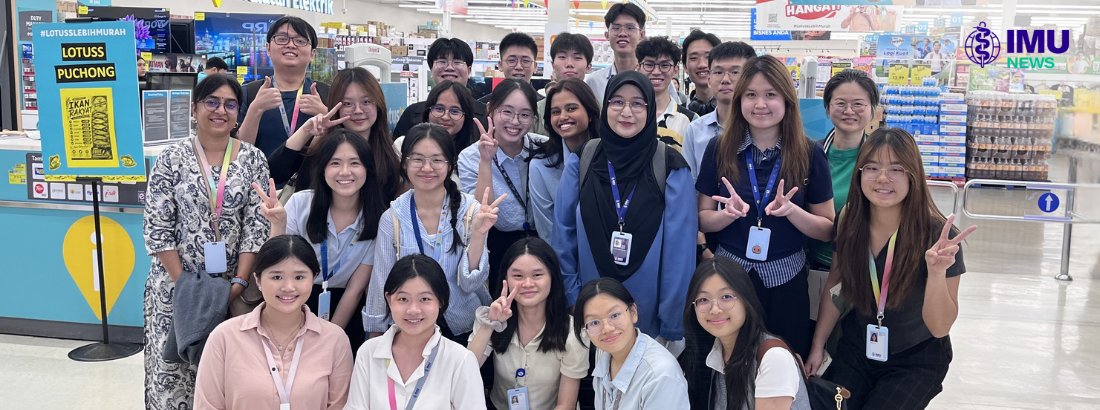
Students from the Bachelor of Science (Hons) in Dietetics with Nutrition programme at IMU University participated in a supermarket tour at Lotus’s Puchong as part of their Principles of Food Preparation module. The experiential learning activity provided practical exposure to food labelling, nutrition claims, food safety, consumer behaviour, and healthy food choices, helping students connect classroom knowledge with real-world nutrition practice.
Key Facts
Activity:
Supermarket Tour
Module:
Principles of Food Preparation
Date:
10 June 2026
Location:
Lotus’s Puchong
Participants:
DN1/25 Dietetics with Nutrition students
Supermarket Tour: A Learning Activity to Apply Knowledge and Theories to a Practical Setting
Applying classroom knowledge to real-world situations makes learning more meaningful. As part of the Semester 2 Principles of Food Preparation module in the Bachelor of Science (Hons) in Dietetics with Nutrition programme at IMU University, my classmates and I had the opportunity to join the supermarket tour.
This learning activity allows us to apply the knowledge and theories learned in lectures to a practical setting while gaining a deeper understanding of the factors that influence consumer’s food choices.
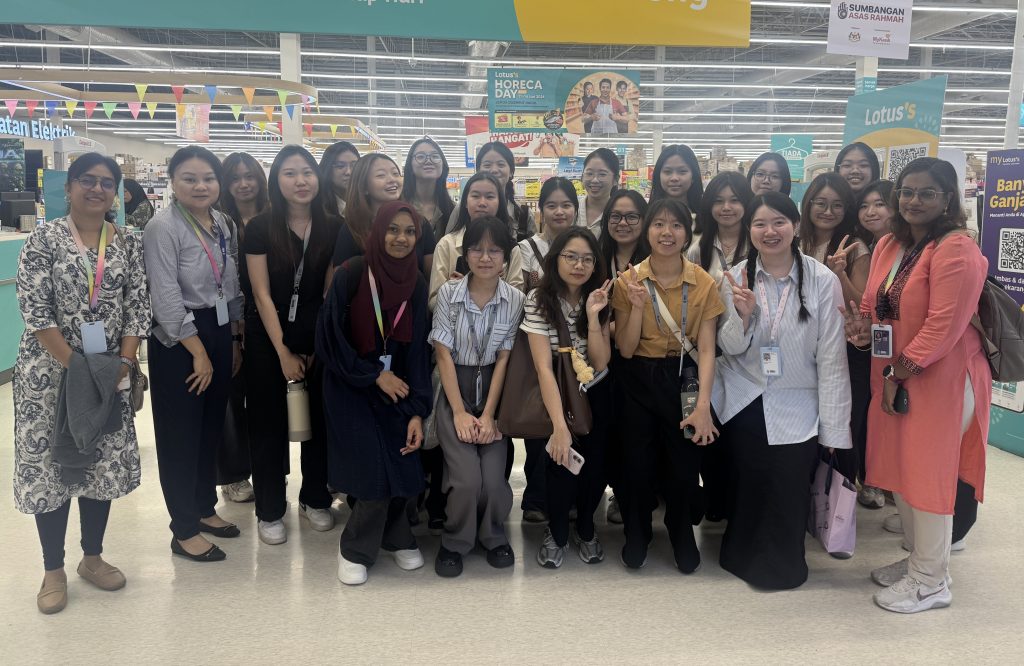
On 10 June 2026, students from the DN1/25 cohort participated in a supermarket tour at Lotus’s Puchong under the guidance of:
- Dr Kanimolli Arasu,
- Dr Sharmela Sahathevan,
- Dr Yong Heng Yaw,
- Dr Farah Yasmin Hasbullah and
- Dr Tan Siew Tin.
Throughout the tour, we learned how to evaluate and interpret
- Nutrition information panels,
- Ingredient lists,
- Nutrition claims, and
- Food marketing strategies that may influence consumers’ purchasing.
Importance of Guiding Future Patients and Clients in Food Products Selection
One of the most valuable lessons I gained was the importance of guiding future patients and clients in selecting food products that best suit their nutritional needs.
Marketing Claims
During the tour, we examined numerous products displaying claims such as “cholesterol-free,” “trans-fat free” and “reduced sugar.” Our lecturers explained that many consumers are attracted to these claims without fully understanding their nutritional significance.
For example, vegetable oils are naturally cholesterol-free because cholesterol is only found in animal products. Similarly, some products highlight that they are free from trans fat even though trans fat would not normally be expected in the product. These examples demonstrated how marketing claims can influence consumer perceptions and purchasing behaviour when nutrition knowledge is limited. This highlighted the importance of evaluating the complete nutrition information panel rather than relying solely on front-of-pack claims.
Sodium Content
During our visit to the canned food section, we discussed the sodium content commonly found in canned products and pickled foods. We also learned the importance of checking food packaging carefully, as dented, or damaged cans may compromise food safety. In addition, we explored canned fruits packed in syrup and discussed the practical dietary strategies for individuals with diabetes such as draining or rinsing the syrup before consumption to reduce the sugar intake. Where possible, fresh fruits may be a preferable alternative. This discussion reinforced the importance of considering both nutritional value and food safety when making food choices.
Nutritional Characteristics
The cooking oil section provided another interesting learning experience. We were introduced to several types of cooking oil and their nutritional characteristics. I was particularly interested in learning about red palm oil, which obtains its distinctive reddish colour from carotenoids and vitamin A. This highlighted how food processing and fortification can influence the nutritional value of food products.
Affordability
Beyond nutritional content, our lecturers highlighted the significance of considering affordability when providing dietary recommendations. As future dietitians, it is important for us to recognise that family budget and financial constraints often affect food decisions. Therefore, nutrition advice should not only be evidence-based but also realistic and tailored to an individual’s socioeconomic circumstances, especially when some healthier oil options may be more expensive than others.
Healthier Choice Logo
The Healthier Choice Logo (HCL) was another topic discussed during the tour. While the logo can help consumers identify healthier options within a food category, it does not specify which nutrient has been improved. Therefore, dietitians play an important role in helping consumers understand food labels and make informed decisions based on their individual health needs.
A Valuable Experience
Overall, the supermarket tour was a valuable experience that broadened our understanding of the local food environment and allowed us to apply classroom knowledge in a real-world context.
One of the key strengths of this activity was its ability to connect theoretical learning with real-world application.
As a future dietitian, this experience strengthened my ability to assess food products critically and increased my awareness of the important role dietitians play in educating consumers to make healthier and more informed food choices.
What Other Students Say About This Learning Activity
“As a dietetics student, this experience has strengthened my ability to compare products and evaluate their nutritional value based on individual needs. In the future, I will apply these observations when providing nutrition counselling and education by helping clients interpret food labels and choose suitable alternatives based on their health conditions, preferences, and budgets. The supermarket tour also increased my awareness of how food marketing and health claims influence consumer decisions, reinforcing the importance of providing evidence-based and practical dietary recommendations that support sustainable healthy eating,”
Tessriin Chesrin Chow, DN1/25 Dietetics with Nutrition student.
One of the key observations I made was the importance of food labelling. By examining nutrition information panels and ingredients lists, I was able to compare products and identify differences in nutrient content, ingredients, and food additives. This helps me understand how consumers can make informed food choices based on their nutritional needs and preferences. I noticed the large variety of convenient foods available and reflected on how modern lifestyles influence food purchasing decisions. While these products offer convenience, it is important to evaluate their nutritional value and ingredient composition. Overall, the supermarket tour allowed me to connect the concepts learned in class with practical observations in a real supermarket environment making the learning experience more meaningful and relevant.”
Chan Ke Yi, another DN1/25 Dietetics with Nutrition student.
Written by Tan Ling Yu (DN 1/25 cohort) and Farah Yasmin Hasbullah
Thoughts Shared