


Article Summary
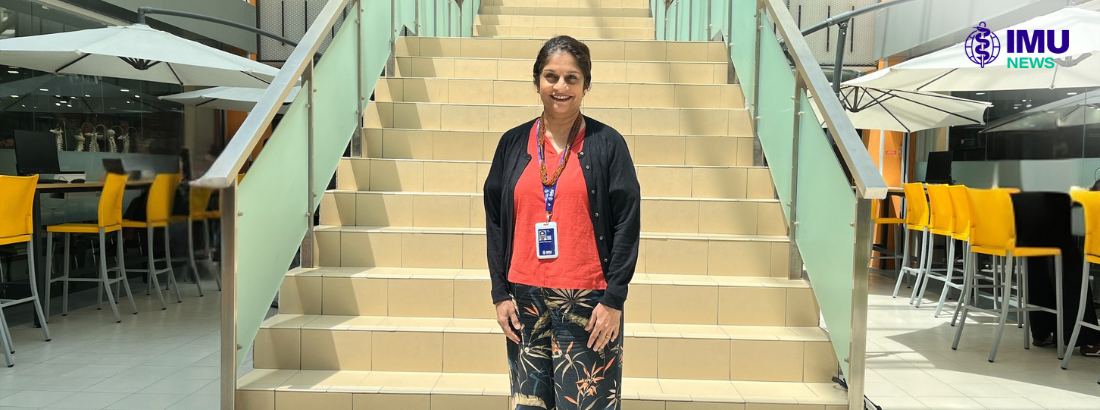
Prof Lakshmi Selvaratnam, recently appointed Professor of Anatomy at IMU University, brings over three decades of experience spanning dental surgery, regenerative medicine, tissue engineering and medical education innovation.
A Career Spanning Dentistry, Regenerative Medicine and Education Innovation
While many clinical paths are linear, Prof Lakshmi’s career has been defined by pivoting from hospital dentistry to the cutting edge of lab-based regenerative research, and then to technology-supported anatomy education.
From initiating tissue engineering research to transforming anatomy education through innovative technologies, Prof Lakshmi Selvaratnam has built a remarkable academic career spanning more than three decades across the United Kingdom and Malaysia.
She has recently joined IMU University as a Professor (in Anatomy) under the Department of Human Biology, School of Medicine.
From Oral Biology to Tissue Engineering Research
Trained originally as a hospital-based dental surgeon from the National University of Singapore (NUS), Prof Lakshmi later pursued a PhD at the London Hospital Medical College, Queen Mary University of London, where her research focused on studying epithelial-mesenchymal mechanisms driving differentiation of oral mucosa and skin. What began as a clinical interest in skin/oral wound healing and maxillofacial fractures in her patients, gradually evolved into a lifelong passion for regenerative medicine, tissue engineering and medical education research.
“My interest has always been in understanding how cells and tissues grow, heal and regenerate,” she shared during a recent interview. “What fascinated me was the possibility that research could eventually help restore function and improve healing in patients.”
Her early research involved developing in vitro tissue culture models to explore how skin and oral tissues regenerate. Working with keratinocytes and connective tissue scaffolds, her work contributed to the broader field of regenerative medicine, where scientists aim to grow tissues in the laboratory for potential clinical applications particularly in patients with burns, ulcers or tissue loss following cancer surgery.
After returning to Malaysia, Prof Lakshmi joined the Department of Anatomy at the Faculty of Medicine, University of Malaya, where she became part of the pioneering multidisciplinary Tissue Engineering Group [later incorporated into the National Orthopaedic Centre of Excellence for Research and Learning (NOCERAL)] involving orthopaedic surgeons, general surgeons, biochemists and anatomists. The team investigated musculoskeletal tissue regeneration, including cartilage and tendon repair using autologous and mesenchymal stem cells.
Among the Group’s notable achievements was the development of a scaffold derived from chitosan obtained from shellfish, which later led to a patent. The research also received innovation recognition through ITEX awards, while two of her postgraduate students went on to receive the prestigious L’Oréal-UNESCO For Women in Science award.
Advancing Stem Cell and Biomaterials Research in Malaysia
Prof Lakshmi also contributed to national guidelines on stem cell research and therapy with Malaysia’s Ministry of Health, helping strengthen ethical and scientific standards in this rapidly expanding field.
Her expertise in regenerative medicine, biomaterials, and tissue engineering aligns with current research priorities at IMU University. Her experience in interdisciplinary research can help support potential opportunities for IMU collaboration with healthcare/ biotechnology partners or to strengthen industry-linked research initiatives.
Areas such as stem cell research, scaffold development, biomimetic materials and regenerative therapies are increasingly attracting both academic and industrial interest globally. Her experience working alongside clinicians, scientists, government agencies and industry partners positions her well to contribute towards innovation-driven projects within IMU.
She highlighted the importance of creating multidisciplinary research ecosystems that integrate different stakeholders to accelerate innovation and real-world application.
“In tissue engineering and regenerative medicine, teamwork is essential. You need clinicians, scientists, academicians and industry partners working together because each brings diverse expertise and perspectives to the table,” she explained.
Her previous experience engaging with industry partners such as Unilever during her doctoral training and later with Intel, as well as collaborations involving biomaterial development and education technologies, further reflects her understanding of how academia-industry partnerships can drive innovation. She believes these collaborations are crucial, not only for research funding and commercialisation, but also for translating discoveries into practical healthcare solutions.
Transforming Medical Education Through MAPEL and Digital Learning
Beyond laboratory research, Prof Lakshmi made significant contributions to medical education innovation during her tenure at Monash University Malaysia. There, she helped develop for its new Medical School a non-dissection, clinically focused anatomy curriculum supported by collaborative and technology-enhanced learning.
One of the team’s major innovations was the creation of the Medical Anatomy and Pathology e-Learning (MAPEL) Lab, featuring interconnected smart tables and collaborative digital learning systems designed to promote active and team-based learning among healthcare students.
“We wanted students to become active learners and engage with the learning resources and their peers,” she explained. “Technology should support teaching and learning, especially in helping students develop practical and collaborative skills as demanded in today’s healthcare professions.”
This innovative networked ecosystem and its pedagogical framework later received the IMU-RHIME Award (twice), the Australian Award for University Teaching (AAUT), an ITEX award as well as Utility Innovation (UI) intellectual property recognition.
Moreover, Prof Lakshmi’s background in educational technology could support IMU’s ongoing developments in digital and simulation-based healthcare education, including potential partnerships involving healthcare training and learning technologies.
Reflecting on her own journey, she stressed that impactful innovation depends on game-changing ideas, institutional support, collective networks and sustained research culture.
Contributing to Research at IMU
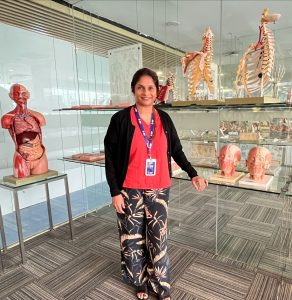
After visiting IMU’s research and laboratory facilities, Prof Lakshmi expressed optimism about future collaborations within the university. “I’m very impressed with the ongoing work and facilities at IMU,” she said. “I hope that with my experience in tissue engineering and regenerative medicine, I can contribute in some way to the exciting research taking place here.”
Her journey stands as a testament to how curiosity, collaboration and innovation can bridge the worlds of science, healthcare and education — ultimately with the aim of advancing patient care, medical training and industry-linked research development at IMU.
Thoughts Shared