


Article Summary
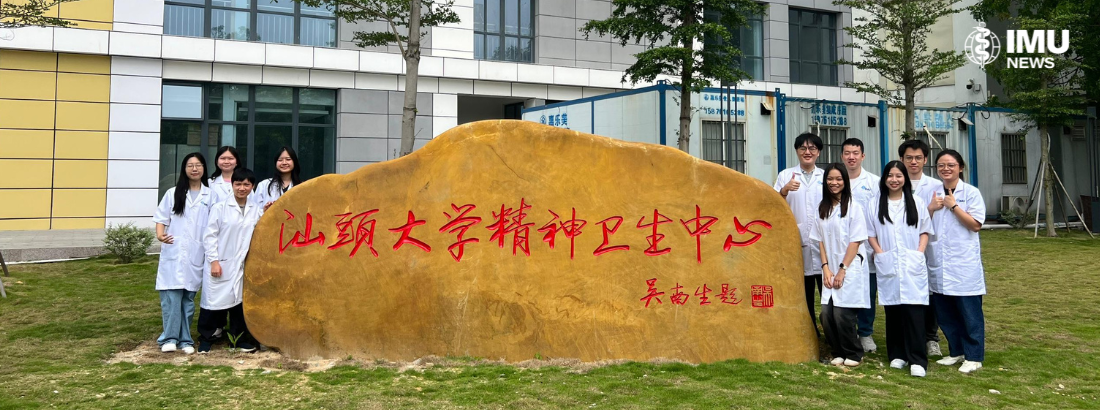
Twenty IMU University Pharmacy students participated in a two-week international elective placement in China through the Global Mobility Programme. Conducted in two batches between April and May 2026, the programme provided hands-on exposure to China’s healthcare system through placements at four Shantou University Medical College affiliated hospitals and a pharmaceutical manufacturing facility, enhancing students’ understanding of modern pharmacy practice, healthcare innovation, and interdisciplinary patient care.
Programme Overview
Activity:
Global Mobility Programme Elective Placement
Venue:
Shantou University Medical Centre
Four Affiliated Hospitals
Sirio Pharmaceutical Company
Participants:
20 IMU Pharmacy students from the BP1/23 cohort
Date:
First Batch: 13 – 26 April 2026
Second Batch: 4 – 17 May 2026
Pharmacy Students in this Elective Placement
Batch 1
Batch 2
Lee Vei Hoong
Gan Wei Xuan
Lee Sze Hui
Wong Yung Hang
Fong Zi Jing
Qi Qi Chong Xiao Qi
Koh Hui Shin
Goh Shyan Nee
Khor Yi Cheng
Goh Kirsten
Tham Jiesheng
Cheong Kah Jer
Lee Pin Jing
Tang Kien Nin
Kow Hong Kiat
Tong Yee Xuan
Tan Kaiyi
Lee Jin Wen
Chloe Oi Yu En
Lai Xuan Tong
International Elective Placement under the Global Mobility Programme
20 pharmacy students from IMU University, Malaysia, participated in an international elective placement organised through the collaborative initiative between Shantou University Medical College (SUMC) and IMU University under the Global Mobility Programme.
Conducted in two batches of ten students each, from 13–26 April 2026 and 4–17 May 2026, the elective programme immersed students in China’s healthcare system through placements at four SUMC-affiliated hospitals and one pharmaceutical manufacturing facility, offering valuable insights into:
- Modern pharmacy practice
- Healthcare innovation
- Interdisciplinary patient care
Experiencing real hospital placements for the first time, the students entered this fast-paced, highly automated environment with butterflies in their stomachs. What awaited the delegation was an eye-opening journey that seamlessly bridged heavy classroom theory with:
- Advanced clinical strategies
- Specialised legal safeguards
- Massive industrial automation
Shantou University (STU) Campus Experience: Academic and Creative Exploration
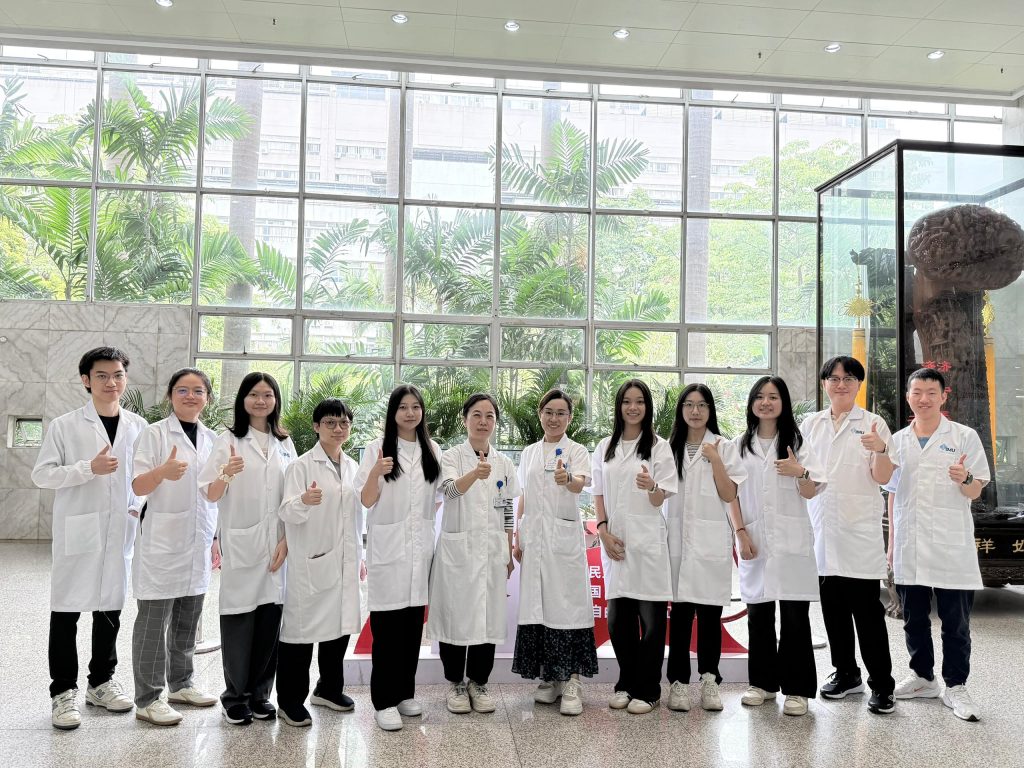
Beyond clinical placements, the cohort had the privilege of touring the main campus of Shantou University, gaining first-hand exposure to its academic and research environment.
The students visited the renowned STU Library, celebrated as one of the most stunning, modern, and aesthetically peaceful university libraries in Asia, providing an inspiring, silent environment where hundreds of students gather daily.
The students also stood in awe before the university’s iconic brainstem-design landmark building, a brilliant structural testament to medical science. Their guided educational tour extended into the human life science museum as well as the clinical and pharmacy skills simulation centre, showcasing advanced, patient-centric teaching tools that elevate academic training to a global tier.
First Affiliated Hospital (FAH): Automation and Precision Medicine
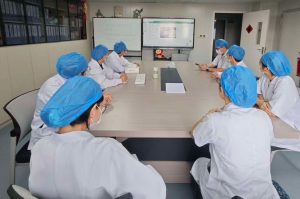
At the First Affiliated Hospital of SUMC (FAH), the students explored a highly integrated digital healthcare ecosystem powered by specialised platforms, such as:
- Inpatient and Outpatient Pharmacy Automation Systems (IPAS/OPAS),
- Pre-prescription screening tools, and
- National pharmacovigilance networks.
Sterile Logistics and ICU Stewardship
At the Pharmacy Intravenous Admixture Services (PIVAS) centre, supporting 29 departments and 1,200 beds, the students observed technicians executing batch compounding (按药配) for critical therapies. The students learnt how pharmacists prevent chemical precipitation via a shared-solvent check (同个融媒) to block incompatible intravenous combinations. While the outpatient department utilises a high-capacity CONSIS OPAS machine, the inpatient IPAS focuses on rapid, automated unit-dose packaging.
Joining morning ward rounds across specialised ICU and endocrinology units, the students witnessed critical cases. This rotation introduced them to China’s rigid national Antibiotics Tiered Management system, which classifies anti-infectives into:
- Unrestricted,
- Restricted (requiring specialist endorsement), and
- Special-use tiers reserved strictly for multi-drug-resistant strains.
High-Throughput Precision Therapeutic Drug Monitoring (TDM)
In the TDM laboratory, the students watched pharmacists utilise Ultra-Performance Liquid Chromatography-Tandem Mass Spectrometry (UPLC-MS/MS), reducing sample turnaround times from 25 minutes to just 3 to 5 minutes. Pharmacists also perform individual precision dosing for narrow-index drugs.
The students reviewed automated software interventions for critical care scenarios, including cases of augmented renal clearance, vancomycin toxicities, and linezolid-induced myelosuppression.
Second Affiliated Hospital (SAH): Multi-Disciplinary Care and Regulation
The Second Affiliated Hospital (SAH) highlighted the critical role of pharmacists in:
- Medication safety
- Adverse drug reaction (ADR) monitoring
- Multidisciplinary patient care
Ward checks led by clinical pharmacists in various departments, including ICU, PICU, Endocrinology, Respiratory Medicine and General Medicine, allowed the students to observe real-life scenarios in the ward, including ADR incidents dealt with by pharmacists, providing valuable insights to China’s ADR reporting framework.
Further case study sessions involving prescription screening allowed the students to:
- Address common prescribing errors,
- Correct prevalent clinical misconceptions regarding viral upper respiratory infections and antibiotic misuse
- Learn more about China’s antibiotic stewardship principles.
The students also reviewed complex multidisciplinary cases managed by the Clinical Pharmacy Unit, including an infective endocarditis case and an ICU psittacosis case.
Students were also introduced to SAH’s front-end prescription screening system (前置审方), which uses colour-coded alerts (Blue, Yellow, Red, Black) to identify potential medication issues before dispensing.
In addition, they explored China’s highly regulated narcotics management system, including biometrically secured Automated Dispensing Cabinets (ADCs), specialised prescription requirements and strict disposal procedures.
Traditional Chinese Medicine (TCM) Pharmacy & Warehouse Logistics
A profound highlight was stepping into the TCM Pharmacy, a department entirely absent from Malaysian clinical hospital structures. The students observed the careful screening of an outpatient prescription for urticaria (瘾疹).
They learned that a valid TCM prescription is strictly split into three anatomical zones:
- Qiánjì (前记 – Preface): Demographics and clinical diagnosis.
- Zhèngwén (正文 – Body): Raw herbs and exact weights, adjusting for age.
- Hòujì (后记 – Postscript): Billing, signatures, and strict compounding checks.
Students learned the structure of TCM prescriptions, discussed toxicological considerations and observed dispensing processes for outpatient care.
They concluded by touring the Central Drug Warehouse, auditing cold chain vaults (+2°C to +8°C) and inventory management systems. The students gained insights into China’s innovative “Dual-Channel” Medicine Strategy (双通道药品) that allows patients to obtain specialised, high-cost medication from accredited street pharmacies at identical reimbursement rates.
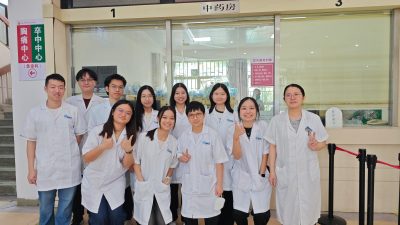
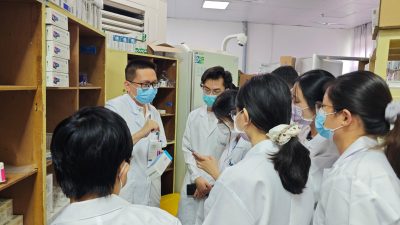
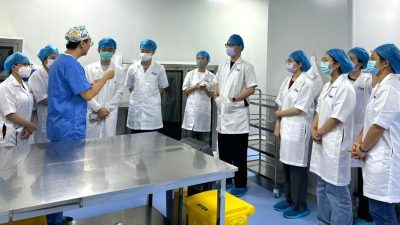
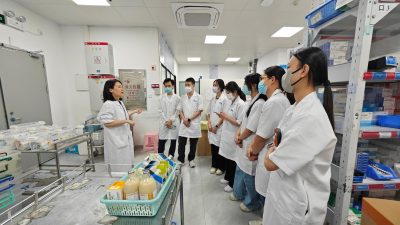
SUMC Cancer Hospital (Oncology): Sterile Logistics and Advanced Oncology
At the SUMC Cancer Hospital, the students navigated strict contamination zones, a 7-step handwashing protocol, and secondary product cross-checking within a specialised oncology cleanroom environment.
The students studied chemotherapy prescription screening, where the general rule is that non-cell-cycle-specific cytotoxic drugs will normally be administered before cell-cycle-specific agents to optimise therapeutic response, although not all. Oncology pharmacists possess the full authority to reject medical orders containing incompatible combinations or dosage errors.
The students explored specialised pharmaceutical care strategies within the oncology and intensive care units, focusing heavily on matching patient-specific parameters with optimal drug outcomes. They analysed how severe physiological stress can completely alter standard pharmacokinetics, examining the mechanics of drug-induced toxicities and the complications of long-term central venous catheters.
The clinical sharing also emphasised the critical intersection of critical care and anti-infective management. The students examined How extreme pathophysiological shifts in critically ill patients, such as Augmented Renal Clearance (ARC) and major changes in the volume of distribution (Vd) due to aggressive fluid resuscitation, impacting hydrophilic drug elimination. This underscored the absolute necessity of shifting away from static pre-dose concentrations towards advanced dynamic tracking models to ensure optimal bactericidal exposure while proactively protecting renal function.
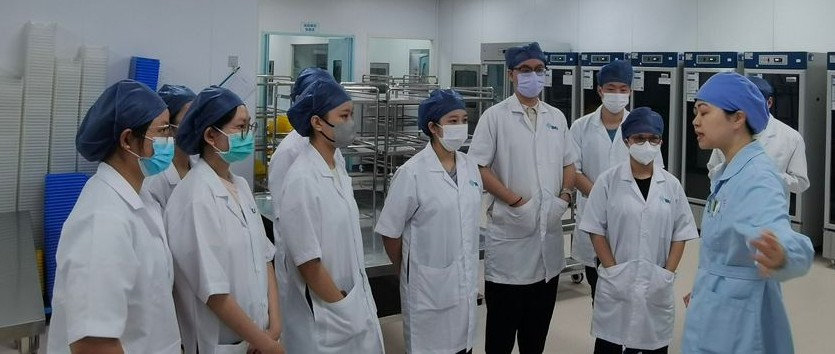
SUMC Mental Health Centre (MHC): Psychiatric Care and Legal Safeguards
The rotation at the Mental Health Centre (MHC) provided a rare and profound look into high-security psychiatric pharmaceutical care. In this highly regulated setting, Class-2 psychotropics are dispensed in unique 30-day supplies using specialised red prescriptions and paediatric green forms.
The definitive highlight was participating in clinical ward rounds inside the highly guarded, double-security psychiatric ward. Tagging along with the medical team, the students saw complex psychiatric disorders like Paranoid Schizophrenia and Erotomania, and learnt about Modified Electroconvulsive Therapy (mECT).
On the wards, the students learnt that the nurses and clinical pharmacists execute highly structured oral medication runs. Staff conduct meticulous mouth checks to confirm ingestion, eliminating the risk of drug hoarding or non-adherence.
Sirio Pharma (Sirio): Industrial Scale Automation
Transitioning from clinical settings to industrial manufacturing, the cohorts visited Sirio Pharma (仙乐健康), an automation powerhouse producing over 9.1 billion softgels annually.
Operating under a strict “one mixer, one product, one room” cross-contamination protocol, the facility showcases automated gel-melting suites pumping out 90,000 capsules per hour, automated tumble dryers, and high-speed optical inspection systems screening 120,000 capsules per hour with 360∘ imaging for structural defects. Unmanned drying areas utilise Automated Guided Vehicles (AGVs) navigating via QR-code floor grids to transport bulk stocks seamlessly, highlighting the immense technological scope open to modern pharmacists.
Medical Outreach at NanXi Village: Healthcare Beyond Hospital Walls
Batch 1 students also took part in a community medical outreach programme at NanXi Village, working alongside physicians and pharmacists to deliver free healthcare services to local residents.
The outreach offered valuable insights into rural healthcare delivery, including
- Patient consultations
- Medication counselling
- Lifestyle education
- Home visits for patients unable to travel
Through real-life case discussions and practical demonstrations, students observed how healthcare professionals assess, diagnose and manage patients in community settings. Free medications were distributed to eligible villagers, and participants later visited the Red Culture Education Hall to learn about the village’s history and heritage.
Cultural Immersion and Global Learning
The elective programme also provided an enriching cultural experience. Students explored Shantou, a city renowned for its rich food culture and often described as a “foodie heaven”. Recommendations from locals introduced us to iconic Chaoshan dishes such as fried beef kway teow, handmade meatballs, oyster omelette, hotpot and steamed rice noodle rolls.
The region’s celebrated Kung Fu Tea culture, featuring traditional tea preparation and their distinctive local LongJing tea, further reflected the warmth and hospitality of the local community.
Besides that, students gained a deeper appreciation of Chaoshan culture through experiences such as Yingge Dance (英歌舞), a vibrant traditional group performance commonly seen during festivals and celebrations. Visits to NanAo Island (南澳岛), MaYu Island (妈屿岛) and Queshi Scenic Area (礐石风景名胜区), together with daily interactions with local residents, offered meaningful opportunities for cultural exchange and broadened students’ global perspectives.
Reflection and Future Horizons
This intensive international elective has completely redefined the students’ perception of pharmacy, healthcare delivery and global collaboration. Overcoming a steep language barrier where clinical charts, presentations, and drug packages were written entirely in Chinese characters forced the cohort to adapt rapidly, directly translating every medication name into English in real time to match it with the ongoing clinical cases.
The experience broke down the barrier between heavy classroom theory and real-world clinical application while fostering cultural understanding, professional adaptability and global awareness. The experiences gained through clinical placements, community outreach and cultural immersion will continue to shape participants as they return to Malaysia more mature, adaptable, and globally minded, perfectly prepared for their upcoming Semester 8 government hospital rotations.
Written by Kow Hong Kiat and Khor Yi Cheng (BP123)
Thoughts Shared