


Article Summary
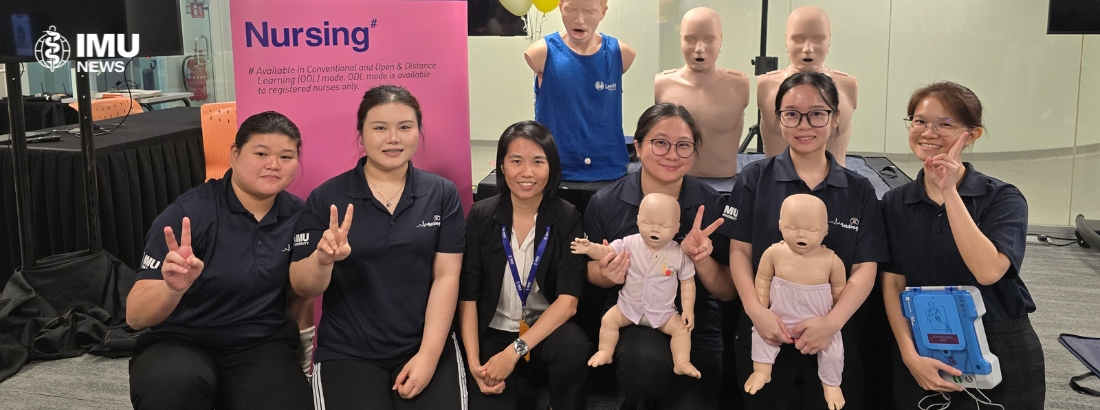
Visitors to the IMU University Nursing Open Day experienced the vital role nurses play in emergency and trauma care through the interactive “First Line Heroes: Nurses in Action” exhibition. Led by nursing students and faculty, the hands-on demonstrations covered CPR, AED use, choking management, infant emergency care, and trauma stabilisation, helping participants gain practical lifesaving knowledge.
Bringing Emergency Nursing to Life
Healthcare emergencies can occur at any moment, without warning. In these critical moments, nurses are among the first healthcare professionals to assess the situation, provide immediate care, and help save lives. To showcase the vital role nurses play in emergency and trauma care, the IMU University Nursing Open Day activity featured an interactive nurses pop-up titled “First Line Heroes: Nurses in Action.” Through a series of hands-on demonstrations, visitors were introduced to essential lifesaving skills commonly performed by nurses in both hospital and community settings.
The exhibition aimed not only to educate the public about emergency response techniques but also to provide a deeper understanding of the knowledge, competence, and confidence required in the nursing profession. Visitors of all ages had the opportunity to observe demonstrations, ask questions, and participate in return demonstrations under the guidance of nursing students from BNU123 & BNU124, alongside clinical instructor Ms Lee Mei Ying.
Learning Adult CPR and AED Skills
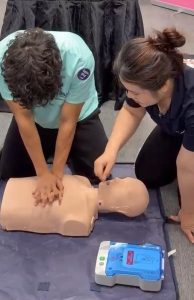
One of the key attractions was the Adult Cardiopulmonary Resuscitation (CPR) and Automated External Defibrillator (AED) demonstration. Cardiac arrest remains one of the leading causes of sudden death worldwide, and immediate intervention can greatly improve survival outcomes.
During the session, visitors learned how to recognize the signs of cardiac arrest, activate emergency medical services, perform effective chest compressions, and operate an AED. Participants were able to practice CPR techniques on simulation mannequins, gaining valuable insight into the importance of early intervention and high-quality resuscitation efforts.
Responding to Choking Emergencies
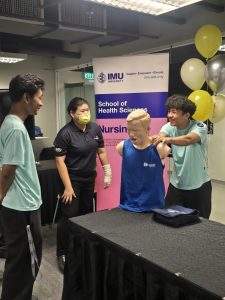
Another engaging station focused on Adult Choking Management. Choking can rapidly become a life-threatening emergency if not addressed promptly, as an inability to breathe can cause many consequences later.
Through realistic demonstrations, visitors learned how to identify the signs of airway obstruction and perform appropriate interventions such as back blow such as back blows, abdominal thrusts and chest thrusts. The session emphasized the importance of remaining calm, acting quickly, and seeking emergency care. Many participants expressed surprise at how a simple, yet effective technique could potentially save a person’s life.
Caring for Infants During Emergencies
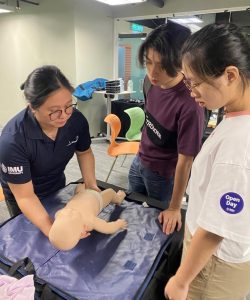
Special attention was also involved in caring for infants through demonstrations on Baby CPR and Baby Choking Management. Since infants have smaller and more delicate airways, emergency procedures differ significantly from those used for adults.
Nursing students demonstrated the correct techniques for delivering chest compressions and rescue breaths on infant manikins, while explaining the rationale behind each step.
Visitors were particularly interested in learning how to respond to choking incidents in babies, a common concern among parents and caregivers. These demonstrations reinforced the importance of age-appropriate emergency care and showcased the specialised knowledge nurses must possess when caring for pediatric patients.
Understanding Basic Trauma Management
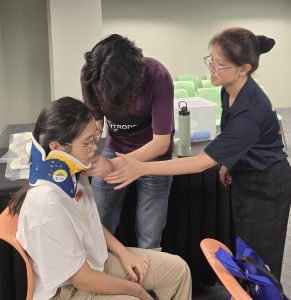
In addition to emergency response skills, visitors were introduced to basic trauma management through demonstrations on the application of Cervical Collars and Arm Slings.
These skills are frequently used in situations involving falls, road traffic accidents, sports injuries, and other forms of trauma.
Participants learned how cervical collars help stabilise the neck and protect the spinal cord in suspected cervical spine injuries, while arm slings provide support and immobilisation for upper limb injuries.
The demonstrations highlighted the importance of proper assessment and stabilisation techniques in preventing further injury before definitive medical treatment is available.
What made the exhibition particularly meaningful was its interactive nature. Rather than simply observing from a distance, visitors were encouraged to step forward and try the procedures themselves. Nursing students guided participants through each skill, providing constructive feedback and answering questions about emergency care. This hands-on approach not only increased public awareness but also empowered visitors with practical knowledge that could be applied in real-life situations.
Beyond demonstrating technical skills, the event also showcased the broader role of nurses as
- Educators,
- Advocates,
- Leaders in healthcare.
Nursing extends far beyond bedside care; it involves critical thinking, rapid decision-making, effective communication, and the ability to remain composed during emergencies. Through each demonstration, visitors witnessed how nurses combine scientific knowledge with compassionate care to achieve the best possible outcomes for patients.
Inspiring the Next Generation of Healthcare Heroes
The “First Line Heroes: Nurses in Action” exhibition successfully highlighted the impact nurses have on individual lives and communities. By sharing essential lifesaving skills with the public, the event promoted health awareness, encouraged community preparedness, and inspired greater appreciation for the nursing profession. For many visitors, it was an eye-opening experience that revealed the crucial role nurses play in responding to emergencies and safeguarding patient wellbeing.
As the Open Day ended, one message remained clear: nurses are often the first to assess, respond, and provide care when emergencies arise. Whether performing CPR, managing a choking victim, caring for an infant in distress, or stabilising an injury, nurses stand ready to make a difference when every second matters. Through their dedication, expertise, and commitment to service, they truly embody the spirit of being the first line heroes in action.
Prepared by:
- Annita Lim Quan Mei (BNU123)
- Chong Kai Cheng (BNU123)
- Denise Quek Le Yun (BNU123)
- Pung Hui Jing (BNU124)
Reviewed by:
- A/Prof Dr Lim Swee Geok
- Lee Mei Ying
Thoughts Shared