


At a Glance
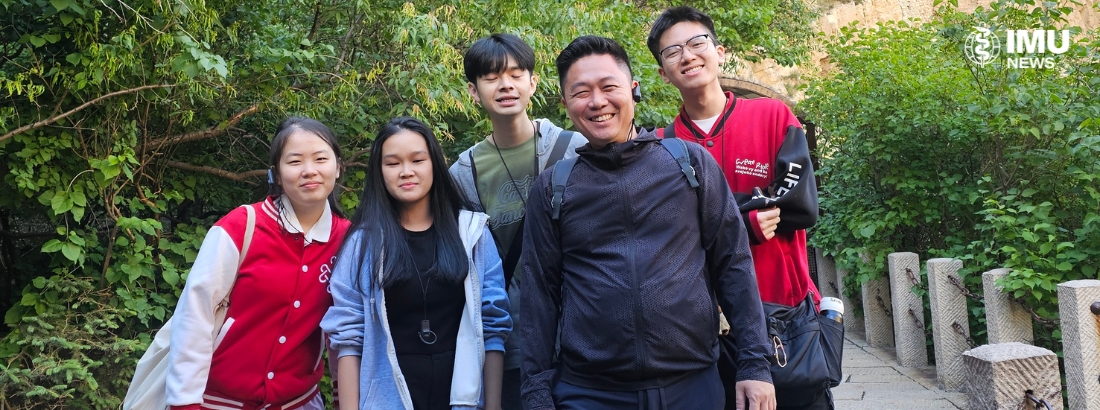
- IMU University Chinese Medicine students participated in a seven-day international study tour at Shanxi University of Traditional Chinese Medicine (SXUTCM) from 4 to 10 June 2026.
- The programme focused on acupuncture, moxibustion, tuina, herbal medicine cultivation and the cultural heritage of Traditional Chinese Medicine (TCM).
- The study tour strengthened international collaboration and deepened students’ understanding of TCM theory, practice and cultural roots.
Study Tour in Shanxi, China
From 4 to 10 June 2026, a lecturer and four Chinese Medicine students from the IMU University, together with other participants from Malaysia and Thailand, embarked on a seven-day international study tour themed “Master Acupuncture & Moxibustion, Explore TCM Culture in Shanxi” at Shanxi University of Traditional Chinese Medicine (SXUTCM).
Rooted in the vision of deepening Belt and Road Traditional Chinese Medicine (TCM) exchanges, this immersive journey spanned across Taiyuan and Datong. We delved into time-honored:
- Traditional Chinese Medicine (TCM) techniques
- Authentic herbal planting
- Profound traditional culture
- Classic historical relics
Every day was filled with discovery, practice and sincere friendship, leaving us with precious memories and substantial academic gains.
Day 1: Beginning a Traditional Chinese Medicine Learning Journey in Shanxi
Our study tour officially kicked off on 4 June 2026.
After arriving in Taiyuan, the ancient capital of Shanxi Province, we were warmly welcomed by the faculty from SXUTCM.
In the evening, we departed from the Taiyuan’s WuShu airport to the accommodation, located close to the SXUTCM campus.
Day 2 - Grand Opening Ceremony, Campus Orientation and Hands-On Experience
June 5 was a remarkable day marked by the official opening ceremony of the international study camp, held at the University’s Student Activity Centre. The event was attended by leaders of SXUTCM, as well as lecturers and students from Mainland China, Malaysia’s IMU University and Universiti Tunku Abdul Rahman (UTAR), and Thailand’s Rangsit University.
During the ceremony, the university leaders extended a warm welcome to all overseas participants. They highlighted Shanxi’s strengths as a major producer of authentic Chinese herbal medicines and shared the university’s achievements in Traditional Chinese Medicine (TCM) education and international collaboration. Representatives from the participating universities also delivered speeches, expressing their enthusiasm for learning, cultural exchange, and academic engagement.
The opening ceremony, both solemn and welcoming, brought together participants from different countries in a shared pursuit of deeper understanding and appreciation of TCM culture.
In the afternoon, we joined hands-on TCM craft workshops in the National Medical Hall 国医堂, which became one of the most interesting sessions throughout the whole tour.
Under the guidance of experienced TCM teachers, we learned to make traditional hawthorn pills 古法⼭楂丸 and fragrant herbal sachets ⾹囊制作. We learned the principles of herbal compatibility and the efficacy of hawthorn for aiding digestion. When making herbal sachets, we selected aromatic herbs like wormwood, chrysanthemum and mugwort. Each sachet was filled with carefully curated combination of herbs traditionally used for refreshing the mind and repelling mosquitoes.
Through manual practice, we not only mastered two classic TCM traditional skills but also truly appreciated the wisdom of ancient Chinese physicians, who integrated medicine into daily life.
We then visited the SXUTCM Museum of Traditional Chinese Medicine. The exhibits included:
- Ancient medical texts
- Classic acupuncture and moxibustion instruments
- Preserved herbal specimens
- Historical relics that recorded the development of TCM in Shanxi
Professional interpreters elaborated on the origin of local TCM schools and the inheritance of characteristic therapies. As overseas students majoring in TCM, we were deeply impressed by the long history and rich heritage of Chinese medicine.
Later, we toured the university’s TCM Experimental Center. The well-equipped laboratories showcased modern research methods for herbal medicine identification and pharmaceutical research.
On this day of the study tour, we bridged the gap between textbook knowledge and real-world TCM practice, laying a solid foundation for the subsequent activities.
Day 3 - Shanxi Provincial Museum and the Beauty of YanMenGuan
During our study tour in Shanxi, we paid a visit to Shanxi Provincial Museum. Our professional guide gave us a commentary centered on the theme — gathering fine cultural relics and witnessing that “we can see 5,000 years of Chinese history in Shanxi”. It was a rich and eye-opening museum visit for all of us.
The museum is grand and quiet, storing the most precious cultural essences of Shanxi Province. As we stepped into the exhibition halls, we wandered along different historical galleries and traveled through thousands of years of Chinese civilisation. We admired elegant bronze vessels from ancient dynasties, delicate painted pottery, ancient jade crafts and classic calligraphy relics. Every cultural relic is well-preserved, with fine carving and unique design.
These treasured artifacts record:
- The rise and fall of ancient dynasties,
- Local folk customs and
- Ordinary people’s daily life in different
They are silent witnesses of long history. Just as the theme says, Shanxi keeps complete historical relics across thousands of years, showing the long and splendid Chinese civilisation vividly.
Before this trip, we only memorised historical knowledge from cold textbooks. However, seeing these real cultural treasures in person made history lively and touching. We were shocked by the amazing creativity and wisdom of ancient Chinese craftsmen.
This meaningful visit taught me a lot. I truly understand why Shanxi is praised as the treasure house of Chinese history. I build a deeper love for traditional Chinese culture and feel proud of our 5,000-year-long civilisation. It is an unforgettable lesson outside the classroom.
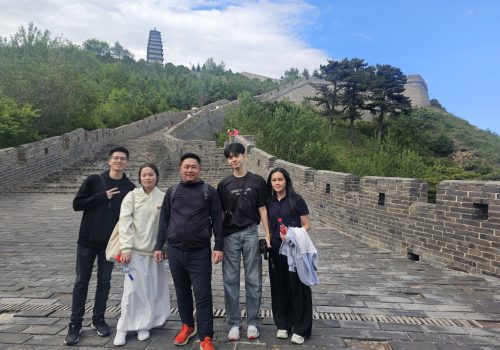
During our study tour in Shanxi, we also visited Yanmenguan Pass, known as the “No.1 Pass in China.” As soon as we arrived, a strong mountain wind greeted us. Standing on the ancient city wall, I looked out at the endless mountains stretching into the distance. The grey stone walls wound along the hills like a giant dragon, creating a breathtaking view. The vast landscape and the cool mountain air made me feel both excited and peaceful.
As we walked along the bluestone paths with our classmates, we noticed the old bricks and weathered walls that had stood for hundreds of years. Our tour guide introduced the history of Yanmenguan Pass and explained that it had been an important military stronghold for over 2,000 years. Listening to the stories while standing in such a historic place made me feel as if I had stepped back in time.
What impressed me most was the scenery. Climbing the stone steps to the city wall was not easy, but when I finally reached the top, the view was definitely worth it. The mountains surrounded the pass from all directions, and the view from the city wall was spectacular. Looking at the rolling hills under the blue sky, I felt very small standing in such a vast landscape. The beauty of nature and the traces of history blended together perfectly.
We enjoyed exploring the pass. We took photos together. The most unforgettable moment was standing on the ancient wall and feeling the strong wind blowing across the mountains. For a moment, I imagined what life might have been like for the soldiers who once guarded this place. Although hundreds of years have passed, the history of Yanmenguan Pass still feels alive today.
Besides learning about history, we also had the chance to try Shanxi’s famous vinegar cola. At first, many of us thought the combination sounded strange and were curious about its taste. However, after taking a sip, we were surprised that it tasted much better than expected. It had the sweetness of cola with a slight sour flavor from the vinegar. We laughed and shared our opinions with one another, making it a fun and memorable experience. It also gave us a chance to learn more about Shanxi’s local culture.
This visit taught me much more than what I could learn from textbooks. Seeing the ancient fortress with my own eyes made history feel real, while the beautiful scenery helped me appreciate the charm of Shanxi.
I was amazed by how nature and history came together in one place. I also realised how precious our peaceful life is today and learned to appreciate the efforts of those who came before us.
In conclusion, Yanmenguan Pass is not only a historic site but also a beautiful place filled with culture and natural beauty. From the magnificent mountain views and the stories shared by our tour guide to the unique taste of Shanxi vinegar cola, every part of this study tour left a deep impression on me. It was truly an unforgettable experience, and it helped me gain a deeper understanding of both Chinese history and the beauty of Shanxi.
Day 4 - Tour of Huang Qi Agricultural Base, Xuan Kong temple and Daylily Cultural Museum
At the Huang Qi Agricultural Base, located far from the urban area, we gained valuable insight into the cultivation, processing, and medicinal applications of Huang Qi (Astragalus), one of the most important herbs in Traditional Chinese Medicine (TCM). The visit allowed us to appreciate not only its therapeutic value but also the dedication and effort required to preserve and promote traditional herbal culture.
In addition, we visited the Hunyuan Huang Qi Cultural Park, which showcases various species of Huang Qi, including the renowned “King of Huang Qi,” a plant that has been growing for more than 120 years. The cultural park provided us with a deeper understanding of the different processing methods of Huang Qi and highlighted its historical and cultural significance. Overall, the experience enriched our knowledge of this valuable medicinal herb and its important role in Chinese medicine.
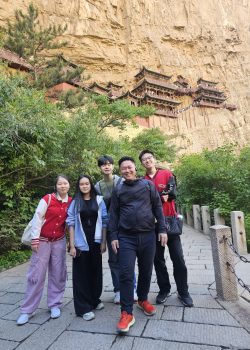
The visit to Xuan Kong temple showed us the wisdom, craftsmanship and religious harmony of ancient Chinese architecture. Observing this remarkable structure helped us to better understand China’s rich historical heritage and the ingenuity of its ancestors.
We have learned the cultural significance, cultivation methods and economic value of daylilies at the Daylily Cultural Museum. The exhibits highlighted how local communities have integrated daily application of daylilies with cultural development, which created a unique regional identity.
Day 5 - Visit to Yun Gang Grottoes and Fu Shan Garden
On June 8, we departed to the Yun Gang Grottoes, a UNESCO World Heritage Site, which is one of Three Great Ancient Grottoes, carved into the southern slope of Wuzhou Mountain during the Northern Wei Dynasty.
Stretching nearly one kilometer, the grotto complex holds 252 caves and around 51,000 to 59,000 meticulously sculpted Buddhist statues, blending Central Asian, northern nomadic and inland Han artistic aesthetics, embodying the grand integration of ancient Chinese civilisations. Guided by professional interpreters, we admired the monumental Tan Yao Five Caves and lifelike flying apsaras carvings. Beyond artistic appreciation, we discussed the close ties between ancient Buddhist health-preserving philosophies and TCM mind-body harmony theories prevailing in the Northern Wei era. The grottoes reflected how spiritual wellness concepts intersected with traditional medical practice in ancient northern China, deepening our understanding of TCM’s cultural and historical roots.
We also visited Chinese Fu Shan Garden in Taiyuan, a scenic spot built in memory of Fu Shan, a great thinker, artist and distinguished TCM physician of the late Ming and early Qing dynasties. As a master proficient in literature, art and medicine, Fu Shan left precious spiritual and medical wealth to later generations.
Led by docents, we wandered through archways, memorial halls and classical courtyards in the garden. We viewed calligraphy, paintings and medical works by Fu Shan and learned about his life stories, academic thoughts and medical achievements. We were particularly inspired by his medical philosophy of “harmony of body and mind, integration of food and medicine”. The garden also displays the inheritance of Fu’s traditional medicinal meals, including the national intangible cultural heritage “Eight-Treasure Purée (Tounao 头脑)” made with astragalus and other herbs.
This tour was not only a journey of TCM culture but also a spiritual baptism. We felt the bearing and perseverance of ancient Chinese scholars and physicians, and gained a more comprehensive insight into the connotation of TCM health preservation.
Day 6 - SXUTCM Affiliated Hospital, Shanxi Provincial Acupuncture Hospital and Closing
June 9 was the most fulfilling day in terms of learning TCM acupuncture and tuina. We visited the Shanxi Provincial Acupuncture Hospital and the Affiliated Hospital of Shanxi University of Traditional Chinese Medicine, where we had the opportunity to closely observe the practical application of:
- Acupuncture,
- Soft Tissue Manipulation,
- Moxa Cupping Therapy,
- Warm Needle Moxibustion, as well as
- Several advanced technology-assisted moxibustion
This greatly broadened our horizons and deepened our understanding of the integration of traditional Chinese medicine with modern technology in clinical practice.
We gathered around the treatment area and observed attentively. Using real patient cases as examples, the TCM physicians explained the process of syndrome differentiation and acupoint selection. They also demonstrated tuina techniques, showing how muscle stiffness can be relieved.
The hospital further arranged live demonstration sessions, where teachers and students experiencing physical discomfort volunteered as demonstration subjects. The TCM physicians performed complete treatment procedures on-site while providing detailed explanations throughout the process.
We then held a closing exchange forum back at the Shanxi Provincial Acupuncture Hospital. All teachers and student representatives took the floor one after another to share gains, feelings and insights from the seven-day study tour.
Reflecting on an International TCM Learning Experience
Many students said that this tour broke the limitations of classroom learning. Hands-on experience, clinical observation, herb base visits and cultural tours allowed us to understand TCM in an all-round way from theory, practice, raw materials to cultural inheritance. We have not only improved our professional abilities but also made friends with TCM lovers from different countries.
The seven-day study tour came to an end, yet the journey of inheriting and spreading TCM culture continues. This activity has built a solid bridge for TCM exchanges between our two universities.
We sincerely look forward to more in-depth academic exchanges, joint research and student interaction in the future. We will carry forward what we have learned in Shanxi, spread the profound TCM culture, learn from each other and make progress together on the path of inheriting and innovating traditional Chinese medicine.
Written by CM125 Students:
- Chin Zhi Xian
- Ong Aik Teng
- Ng Shu Zhen
- Tee Zi Yun
Thoughts Shared