


At A Glance
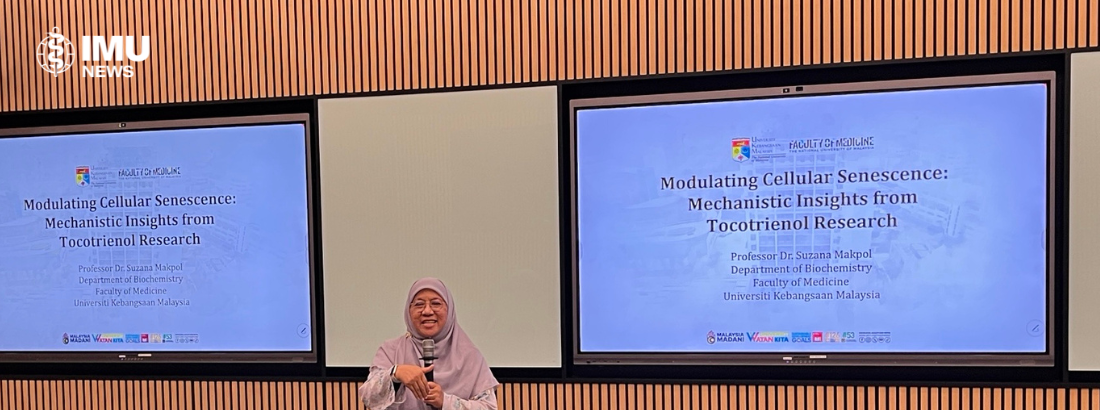
- IMU University’s IRDI MIND Programme welcomed Prof Dr Suzana Makpol from Universiti Kebangsaan Malaysia (UKM) as speaker for a lecture entitled Modulating Cellular Senescence: Mechanistic Insights from Tocotrienol Research
- The lecture explored the biology of cellular senescence and its role in healthy ageing and age-related diseases.
- Participants learned how tocotrienols, a form of vitamin E, may help protect cells, preserve telomeres and support healthy ageing.
- The programme encouraged collaboration between academia and industry to address challenges associated with an ageing population.
Exploring the Science Behind Healthy Ageing
Can healthy ageing be influenced at the cellular level? This thought-provoking question took centre stage at the latest Institute for Research, Development and Innovation (IRDI)’s Meet, Inspire, Networking and Discuss (MIND) Programme, jointly organised with the IMU School of Pharmacy, where IMU University welcomed Prof Dr Suzana Makpol, Professor of Medical Biochemistry and Head of the Department of Biochemistry, Faculty of Medicine, Universiti Kebangsaan Malaysia (UKM), to share the latest advances in ageing research.
Held on 1 July 2026 at IMU University‘s Bukit Jalil campus and supported by the Malaysian Oil Scientists’ and Technologists’ Association (MOSTA), the lecture entitled Modulating Cellular Senescence: Mechanistic Insights from Tocotrienol Research attracted academics, researchers, postgraduate students, and industry partners interested in understanding the science behind healthy ageing and disease prevention.
Prof Suzana is internationally recognised for her pioneering work in cellular ageing and the therapeutic potential of natural bioactive compounds. Leading the Ageing and Degenerative Diseases Research Group at UKM, her research combines molecular biology, genomics, proteomics and epigenetics to uncover how ageing occurs at the cellular level and how naturally occurring compounds may help delay age-related degeneration.
Understanding Cellular Senescence and Age-Related Diseases
During the lecture, she introduced participants to the biology of cellular senescence, a process in which cells permanently stop dividing and gradually lose their normal function. While senescence serves as a natural protective mechanism against damaged cells, its accumulation over time contributes to tissue ageing and increases the risk of chronic diseases.
Telomeres and Health
One of the key topics of the lecture was telomeres, the protective “caps” at the ends of our chromosomes that naturally become shorter as our cells divide and age. Prof Suzana explained that shorter telomeres are linked to the ageing process and age-related diseases.
How Tocotrienols May Support Healthy Ageing
She shared findings from her research showing that tocotrienols, a form of vitamin E found in palm oil, may help protect these telomeres, allowing cells to stay healthier for longer.
Prof Suzana also explained that tocotrienols are different from the more commonly known form of tocopherol because of their unique chemical structure. This allows them to work efficiently as antioxidants. Her research over the past two decades has shown that tocotrienols help protect cells from damage caused by harmful molecules known as free radicals, which build up naturally as we age.
In addition, her studies suggest that tocotrienols may influence how certain genes are switched on and off. By regulating these genes, tocotrienols may help:
- Slow down the ageing process,
- Keep cells functioning normally for longer, and
- Reduce the risk of age-related diseases.
These findings provide valuable insights into how healthy ageing could be supported at the cellular level.
From Discoveries to Translational Relevance
The lecture also showcased the translational relevance of this work. Prof Suzana presented evidence indicating that tocotrienols support collagen synthesis while reducing collagen breakdown, helping maintain skin integrity and firmness.
Other studies from her research group have demonstrated potential benefits in improving muscle cell function, reducing age-related muscle loss (sarcopenia), and preserving cognitive function in experimental models of Alzheimer’s disease. Collectively, these findings reinforce the growing potentials of tocotrienols as candidates for promoting healthy ageing and preventing degenerative diseases.
Building Research Collaboration for Healthy Ageing
The lecture concluded with an engaging discussion on the:
- Future of ageing research,
- Challenges of translating preclinical discoveries into clinical applications, and
- Opportunities for collaboration between universities and industry.
Participants actively exchanged ideas on the potential role of natural bioactive compounds in addressing the health challenges posed by an ageing population.
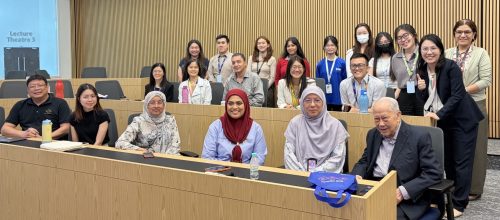
The session exemplified the objectives of the IRDI’s MIND Programme, which seeks to foster research excellence, inspire innovation and strengthen collaborations through meaningful knowledge exchange. By bringing together leading experts such as Prof Suzana Makpol, IMU University continues to strengthen its commitment to advancing biomedical research and nurturing collaborations that address pressing healthcare challenges, including healthy ageing in an increasingly ageing population.
Submitted by A/Prof Lee Choy Sin and Dr Lai Pei Kuan
Thoughts Shared