


Article Summary
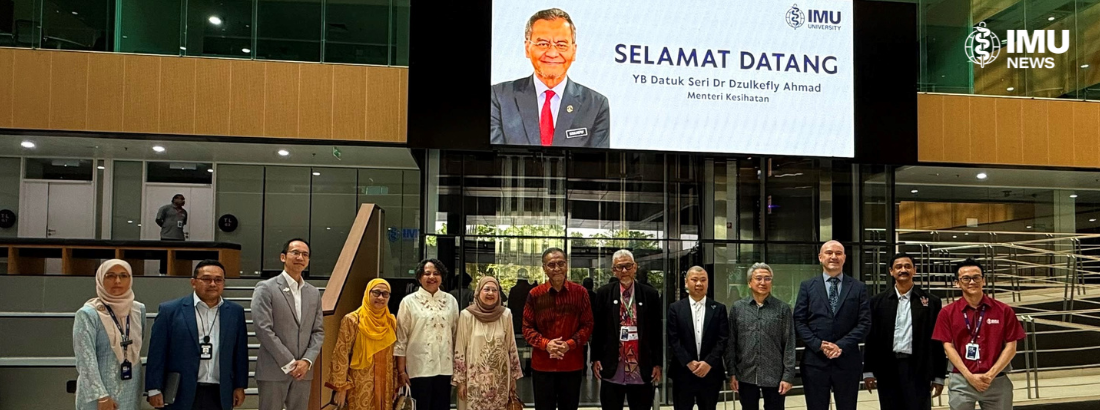
Malaysia’s Minister of Health, YB Datuk Seri Dr Dzulkefly Ahmad, opened the 2nd Travel Medicine Seminar 2026 at IMU University, highlighting the importance of pre-travel health advice as international travel continues to grow. Organised by IMU University’s Institute for Research, Development and Innovation (IRDI), the seminar brought together healthcare professionals, researchers, policymakers and industry experts to discuss travel medicine, vaccinations, infectious diseases, digital health, AI, travel insurance and global health security.
Why Travel Medicine Matters More Than Ever
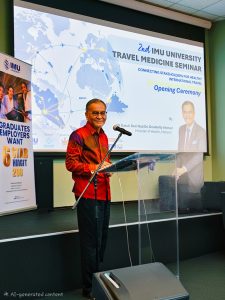
“Flight tickets booked, hotel sorted, OOTD on point. But have you made sure you’re safe and healthy before flying off?”
It was a simple yet powerful question posed by Malaysia’s Minister of Health, YB Datuk Seri Dr Dzulkefly Ahmad, while officially opening the 2nd Travel Medicine Seminar 2026 at IMU University.
“Let’s get real, guys. Many of us are excited when travelling overseas, but when it comes to travel medicine, it suddenly goes quiet. The fact is: only 40.5% of Malaysians seek medical advice before travelling abroad. That’s quite concerning.”
His message set the tone for the two-day seminar, which brought together healthcare professionals, researchers, academics, policymakers, students, and industry leaders to explore an increasingly important question.
In his keynote address, he highlighted that Malaysians recorded approximately 66.6 million outbound trips in 2025, yet local studies indicate that only 40.5% of travellers seek pre-travel medical advice, while just over half receive recommended travel vaccinations.
As international travel continues to rebound and evolve, ensuring travellers stay healthy and safe has never been more important.
Bringing Together Experts in Travel Health
Organised by the Institute for Research, Development and Innovation (IRDI), IMU University on 20-21 June 2026 at the IMU University Technology Park Campus, the two-day seminar attracted 126 participants from diverse backgrounds, including:
- Medical doctors,
- General practitioners,
- Allied health professionals,
- Academicians,
- Undergraduate and postgraduate students,
- Insurance representatives,
- Travel agencies, and
- Healthcare industry partners.
This seminar featured an impressive line-up of local and international experts who examined travel health from medical, public health, technological, psychological, and industry perspectives.
Travel Medicine: More Than Just Vaccinations
Many people associate travel medicine with getting a few vaccinations before a trip. However, as highlighted throughout the seminar, the field extends far beyond immunisation.
In his opening remarks, Seminar Chair Prof Datuk Dr Lokman Hakim Sulaiman, Public Health Advisor to the Ministry of Health Malaysia and Deputy Vice-Chancellor for Research of IMU University, emphasised that travel is no longer a luxury; it is a defining characteristic of our globalised world.
Globally, international travel is projected to skyrocket to 1.8 billion travellers per year by 2050. These massive populations are at risk of getting illnesses or injuries during travel. Malaysians made an estimated 66.6 million outbound trips in 2025.
From a public health perspective, managing a population at risk that is almost double our entire national population is a massive responsibility.
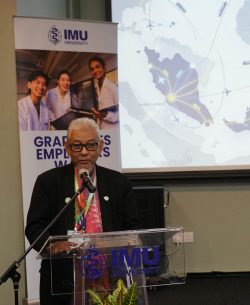
Travel medicine has become an essential component of preventive healthcare and national health security. That is why travel medicine matter.
Travel medicine encompasses:
- Pre-travel consultations,
- Risk assessments,
- Disease prevention,
- Insurance protection,
- Management of chronic illnesses during travel, and
- Preparedness for emerging infectious diseases.
Global Perspectives on Safe International Travel
One of the seminar’s highlights was the participation of Prof Dr Gerard Flaherty, an internationally renowned travel medicine professor from the School of Medicine, University of Galway, Ireland.
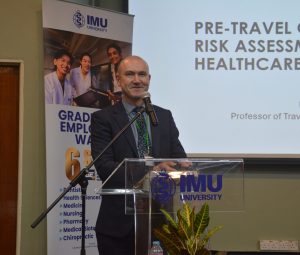
As the keynote international speaker, Prof Flaherty delivered multiple sessions covering the:
- Future of travel medicine,
- Pre-travel consultations,
- Risk assessments,
- Food- and water-borne illnesses,
- Vector-borne diseases, and
- Practical case-based discussions.
His presentations provided participants with evidence-based strategies to help travellers stay healthy before, during, and after their journeys.
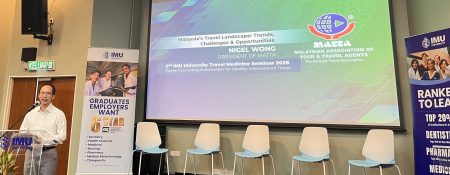
Adding an important industry perspective was Mr Nigel Wong, President of the Malaysian Association of Tour and Travel Agents (MATTA), who explored Malaysia’s evolving travel landscape, emerging trends, and the opportunities and challenges facing both travellers and healthcare providers.
Shaping the Future of Travel Medicine in Malaysia
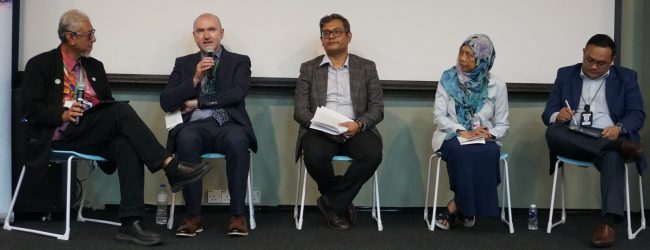
A key highlight of the seminar was the Policy Forum on Travel Medicine as a Specialty/Area of Interest, moderated by Prof Datuk Dr Lokman Hakim Sulaiman.
The panel featured:
- Prof Dr Gerard Flaherty (University of Galway, Ireland)
- Dr Hirman Ismail (Ministry of Health Malaysia)
- A/Prof Dr Hazian Hamzah (Academy of Family Physicians of Malaysia)
- Ahmad Soffian Bin Mohd Shariff (MATTA)
The discussion explored the growing importance of travel medicine in Malaysia and whether it should be formally recognised as a medical specialty or area of interest.
Panellists highlighted the need for specialised expertise to address the increasing health challenges associated with:
- International travel
- Emerging infectious diseases
- Global health security
The session sparked valuable discussions on strengthening travel health services and training opportunities for healthcare professionals in Malaysia.
The seminar also benefited from the generous support of BUZUD, the event’s main sponsor. As part of the programme, BUZUD sponsored a lunch symposium featuring Prof Dr Julia Mader from the Medical University of Graz, Austria, who shared insights on the use of Continuous Glucose Monitoring (CGM) technology to support travellers living with diabetes.
The session highlighted how advancements in digital health are helping individuals manage chronic conditions more effectively while travelling.
Addressing Real-World Travel Risks
Travel is not always about leisure. It can involve unique health risks, from large religious gatherings to disaster-prone destinations and remote locations with limited healthcare access.
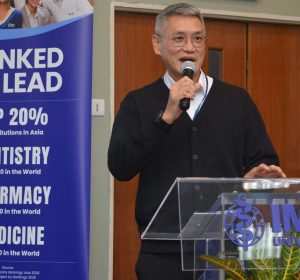
Participants learned about these challenges through sessions led by Prof Datuk Dr Lokman Hakim Sulaiman and Prof Dr James Koh Kwee Choy, a Professor at IMU University’s School of Medicine. Their talks highlighted the importance of risk assessment, preparedness, and appropriate preventive measures when travelling to high-risk destinations.
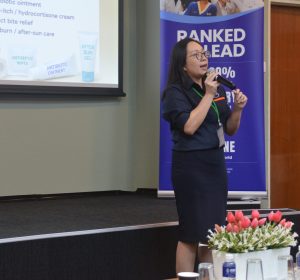
Meanwhile, Lim En Ni, Chief Pharmacist and Engagement Director of Alpro Pharmacy, provided practical guidance on assembling a travel health kit, equipping participants with useful advice that could be immediately applied in real-world travel situations.
The Future of Travel Health: AI and Digital Innovation
One of the most forward-looking segments of the seminar focused on how technology is transforming travel and healthcare.
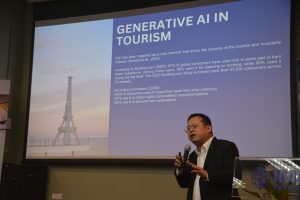
Senior Professor Dr Garry Tan Wei Han from UCSI University explored how generative artificial intelligence is reshaping the tourism industry.
Prof Ts Dr M Saravanan Muthaiyah, Dean of the School of Business and Technology at IMU University, discussed emerging digital innovations that are changing how travel-related health information is accessed, managed, and delivered.

These sessions highlighted the growing role of digital tools in supporting:
- Travellers,
- Healthcare providers, and
- Public health systems.
Beyond Physical Health: Looking After Mental and Financial Wellbeing
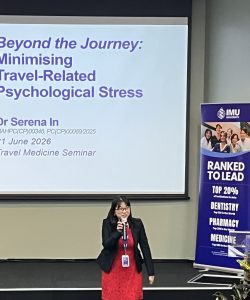
Recognising that travel wellbeing extends beyond physical health, the seminar also featured discussions on psychological and financial preparedness.
Dr Serena In, Senior Lecturer and Clinical Psychologist at IMU University’s School of Psychology and Social Sciences, examined strategies for minimising travel-related psychological stress, while Laurent Haw from Allianz Life Insurance Malaysia Berhad shared insights into how travel insurance contributes to safer and more resilient travel experiences.
Together, these sessions reinforced the idea that a successful journey involves preparing not only the body, but also the mind and finances.
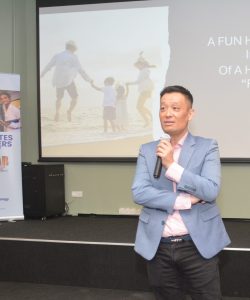
Supporting Travellers with Special Healthcare Needs
Special attention was also given to travellers with unique healthcare needs.
Through interactive case-based learning sessions, A/Prof Dr Erwin Khoo Jiayuan from IMU University’s School of Medicine joined Prof Flaherty to discuss practical considerations when travelling with children. Earlier sessions also addressed travel health management for adults with chronic conditions and other special populations.
These discussions provided healthcare professionals with practical tools to support diverse traveller groups more effectively.
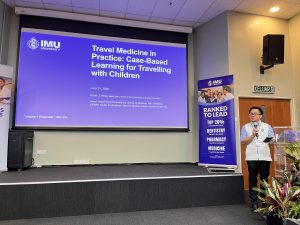
A One Health Perspective on Travel
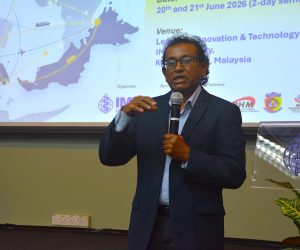
The seminar concluded with an inspiring plenary lecture by Dr Ravindran Thayan, Virologist and National Consultant (Laboratory) for the World Health Organization (WHO) Country Office for Malaysia, Brunei Darussalam and Singapore.
His presentation on “One Health in Sustainable and Responsible Travel: Risk of Zoonoses and Emerging Infections” highlighted how human, animal, and environmental health are deeply interconnected in the context of travel. As international travel continues to increase, understanding these connections is critical for preventing future outbreaks and safeguarding global health.
IMU University Driving the Future of Travel Medicine
The success of the 2nd Travel Medicine Seminar reflected a truly multidisciplinary collaboration involving:
- Academia,
- Healthcare,
- Government agencies,
- Industry partners,
- Insurers,
- Pharmacists, and
- Travel organisations.
The seminar was supported by valued partners including the:
“Participating in the 2nd Travel Medicine Seminar was a valuable and enriching experience. The seminar provided insightful updates on travel medicine, global health, and the One Health approach, while offering opportunities to learn from experts and engage with fellow participants.
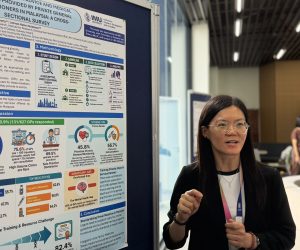
I was also particularly honoured to be awarded a prize (Best Poster Presentation Award) in the Poster Presentation Competition. Presenting my work allowed me to share my research with fellow participants and receive constructive feedback from experts in the field.
Winning the competition was both encouraging and motivating, serving as recognition of the effort invested in the study and inspiring me to continue contributing to research and scholarship in public health and travel medicine.

Overall, the seminar was a memorable experience that strengthened my interest in travel medicine and reinforced the importance of research, education, and collaboration in promoting safe and healthy travel. I am grateful to the organisers, speakers, sponsors, and fellow participants for making the event both informative and impactful.” – Dr Lai Pei Kuan, IMU University.
As the event concluded, one message stood out above all others: preparing for travel should not stop at booking flights and accommodation.
Whether travelling for business, leisure, education, pilgrimage, or adventure, taking the time to seek professional health advice, receive recommended vaccinations, understand destination-specific risks, and plan for medical contingencies can make all the difference.
Through initiatives such as the Travel Medicine Seminar, IMU University continues to champion preventive healthcare, interdisciplinary collaboration, and evidence-based travel health practices, helping travellers explore the world safely while protecting the health of communities both at home and abroad.
In The News
21 Jun 2026
20 Jun 2026
05 July 2026
05 July 2026
21 Jun 2026
The Star
MyMetro
The Star
The Star
LinkedIn
Thoughts Shared