


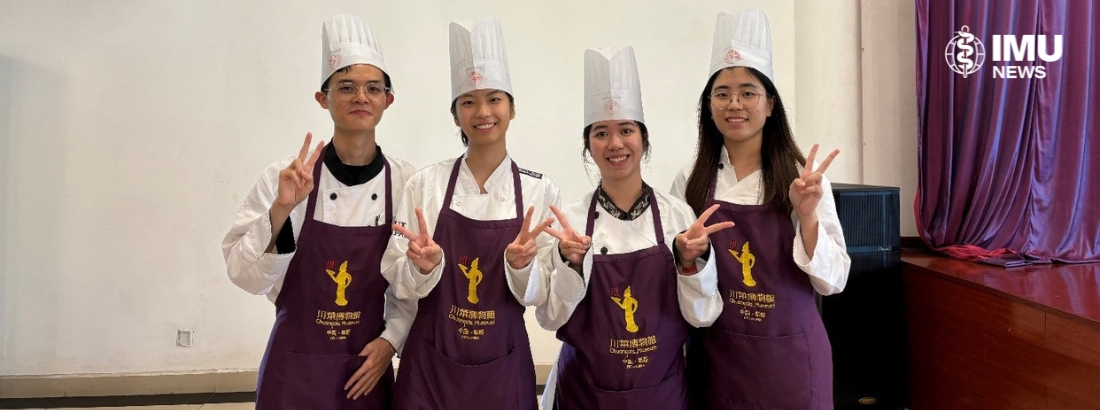
Our internship at Chengdu University of Traditional Chinese Medicine (CDUTCM) was a truly transformative experience. As a team of four IMU Pharmaceutical Chemistry students — Chong Bei Cheng, Leong Wei Choong, Lim Ying Hong, and Low Huie Lye — we embarked on a journey to deepen our understanding in traditional Chinese medicine (TCM) and pharmaceutical sciences. This invaluable opportunity not only enhanced our academic understanding but also allowed us to immerse ourselves in Chinese culture and research practices.
Embracing Chinese Culture Beyond the Laboratory
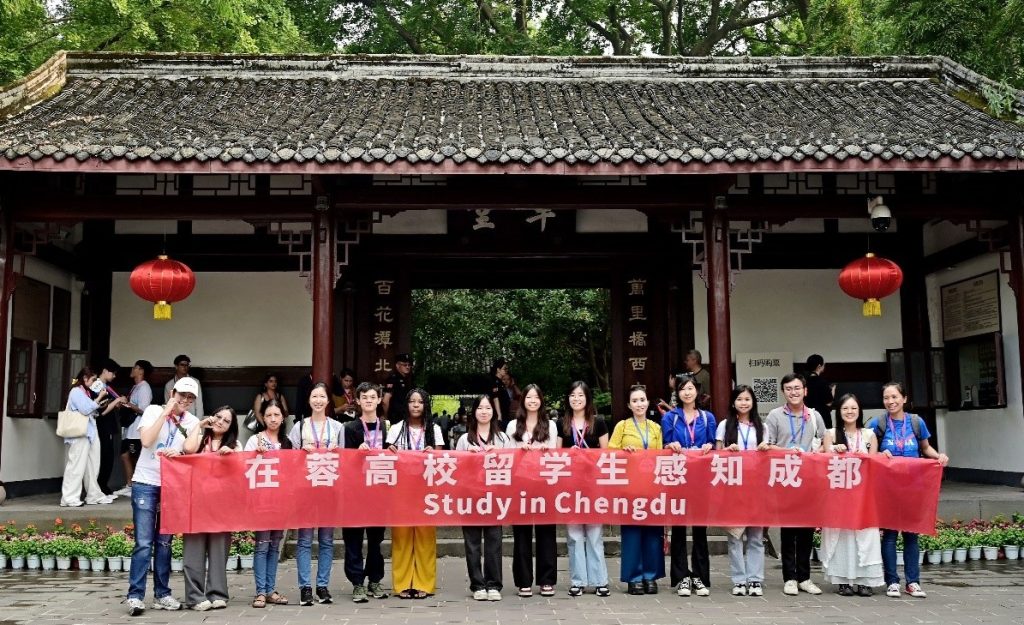
Beyond the academic sphere, our time in Chengdu offered us a hands-on and enriching experience of Chinese culture. We participated in the “Discover Chengdu” event, which included visits to various cultural and historical landmarks.
One of the highlights was visiting the Chengdu Sichuan Cuisine Museum, where we not only tasted local delicacies but also tried our hand at cooking the famous Kung Pao Chicken.
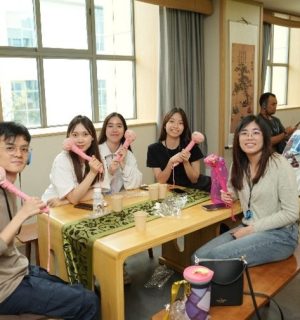
The event also offered participants a free consultation and treatment session involving acupuncture, pulse diagnosis, and traditional massage therapy, providing a direct experience of TCM’s holistic approach to health and wellness.
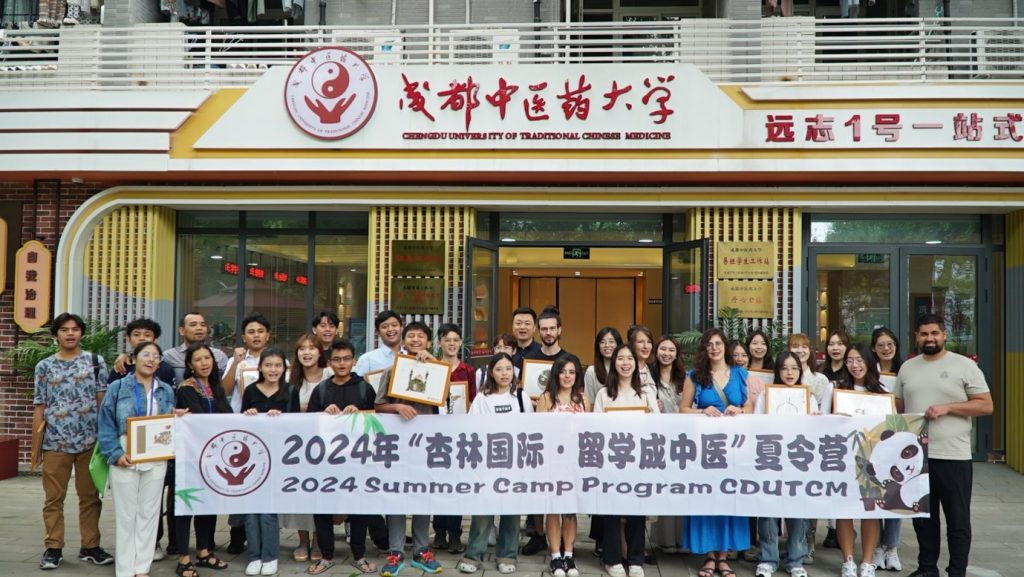
Furthermore, we took part in the “2024 Summer Camp of Xinglin International Programme – Study at CDUTCM”, which significantly broadened our exposure to Chinese traditions and TCM practices. The camp featured various activities, including Chinese dumpling making and exploratory workshops that delved into the basics of tuina (traditional massage therapy) and acupuncture.
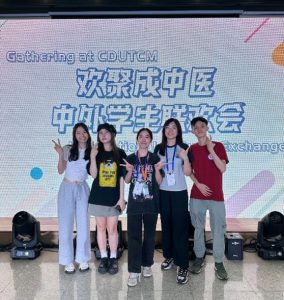
An additional highlight was the participation in an academic forum where scholars from over seven countries, including those from Thailand, Indonesia, and Latin America, discussed topics such as traditional Thai and Indonesian medicine and the growing prevalence of TCM in Latin America. This knowledge exchange greatly enhanced our understanding of alternative medical practices across different cultures.
During the Cultural Exchange Night, representatives from various countries, as well as students and lecturers from CDUTCM, performed traditional dances and art forms, culminating in a diverse display of cultural expression, which included the renowned Sichuan Face-Changing Opera. These performances showcased not only China’s cultural richness but also the vibrancy of other participating countries, making it a truly memorable and inclusive event.
Overcoming Challenges and Personal Growth
The internship was not without its challenges, which tested our adaptability and perseverance.
Low Huie Lye
One such incident occurred with Huie Lye during a mouse study, where the ethical handling protocols were called into question. Faced with this dilemma, Huie Lye had to quickly adjust and adhere strictly to research ethics, reinforcing the importance of professionalism and ethical integrity in scientific work. This experience was a profound reminder of the responsibility that comes with conducting research, especially when working with animals, and the need to constantly evaluate one’s actions against ethical standards.
Chong Bei Cheng
For Bei Cheng, while she was already familiar with the operation of UV-Visible spectrometry, the specific model used in the research lab was new to her, and she was tasked with processing numerous samples in a short period of time. This unfamiliarity with the equipment required her to quickly learn the nuances of the new model. A particular challenge arose when scientific discussions took place in Mandarin, especially when specialised scientific terms were used, making it harder for her to follow certain technical aspects. However, through proactive communication with her peers and patience in bridging these gaps, she was able to effectively overcome the barriers and carry out her tasks efficiently, improving her technical skills in the process.
Lim Ying Hong
Ying Hong faced her own set of challenges when working with Thin Layer Chromatography (TLC). Although she had a strong grasp of the theory, conducting TLC tests in a research setting was an entirely new experience. Ying Hong had to conduct multiple trials to identify the appropriate mobile phase, and long waiting times were required to analyse and interpret the results. Despite these difficulties, she remained determined, working collaboratively with her undergraduate peers who also performed the tests. This teamwork and persistence allowed her to refine her TLC technique and gain practical experience that went far beyond the classroom.
Leong Wei Choong
Similarly, Wei Choong encountered hurdles in formulation studies. Unlike the structured procedures followed in standard lab practicals, he was given a methodology developed by his senior that required continuous refinement. Throughout this process, Wei Choong learned the importance of adaptability and perseverance. When certain apparatus was unavailable, he observed how his seniors ingeniously improvised or found alternatives, a skill that proved invaluable in the unpredictable nature of research. This experience sharpened his problem-solving abilities and fostered a deep appreciation for the iterative process of scientific experimentation.
In conclusion, our journey at CDUTCM was a remarkable blend of academic, cultural, and personal growth. Engaging in TCM research, adapting to a multilingual laboratory environment, and exploring the rich culture of Chengdu have left an indelible mark on each of us. This internship not only broadened our technical skills and understanding of TCM but also highlighted the importance of adaptability, respect for cultural diversity, and ethical rigour. The challenges we overcame strengthened our resilience, and the experiences we gained—both in the lab and beyond—will continue to shape our future studies and careers. We are deeply grateful for the opportunity provided by CDUTCM and look forward to applying these valuable lessons in our future endeavours.
Written by Leong Wei Choong (PC122), Low Huie Lye (PC122), Lim Ying Hong (PC122), Chong Bei Cheng (PC122)
Thoughts Shared