


Key Takeaways
- IMU FIA students visited the National Museum of Malaysia for experiential learning
- The trip supported the Sociology and World Cultures module
- Students explored Malaysian cultural heritage and societal development
Experiential Learning in Sociology and Culture
History and culture are best understood not through textbooks alone, but through immersive experiences that bring the past to life.
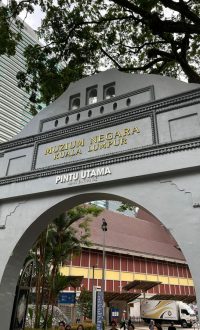
Recently, Foundation in Arts (FIA) 225 students from IMU University embarked on an educational field trip to the National Museum of Malaysia as part of their Sociology and World Cultures module, transforming theoretical concepts into tangible, real-world understanding.
The visit to the National Museum provided students with a unique opportunity to explore Malaysia’s rich cultural heritage and trace the evolution of societal structures over time.
Walking through galleries showcasing artifacts, historical narratives, and cultural traditions, students engaged with exhibits that illustrated:
- Key sociological concepts such as social change, cultural identity, community dynamics, and
- The forces that shape societies across generations.
Every display became a lesson in understanding the complexities of human society—from the influence of colonialism and migration to the preservation of indigenous cultures and the impact of modernisation.


From Museum Exhibits to Real-World Insights
Throughout the visit, students observed:
- How cultural practices evolve,
- How communities adapt to change, and
- How history continues to shape contemporary Malaysian identity
These observations directly complemented their coursework in Sociology and World Cultures, allowing them to contextualise academic theories within Malaysia’s own historical and cultural landscape.
Why Learning Beyond the Classroom Matters
At IMU University’s Foundation in Arts programme, education is designed to extend far beyond lecture halls.
The programme embraces a philosophy that meaningful learning occurs when students actively engage with the world around them—experiencing, exploring, and connecting ideas to real-life contexts.
Field trips such as the National Museum visit are integral to this approach, as they:
- Bring abstract sociological concepts to life through tangible historical and cultural evidence
- Encourage critical thinking as students analyse and interpret exhibits within the framework of their studies
- Foster cultural appreciation and awareness, essential skills for future healthcare and social science professionals
- Create memorable learning experiences that deepen understanding and retention of course material
- Promote active engagement with Malaysia’s diverse heritage, strengthening students’ connection to the society they will serve
Blending Fun with Meaningful Learning
The Foundation in Arts programme recognises that effective education balances rigorous academic learning with engaging, enjoyable experiences.
By integrating field trips, interactive assignments, and real-world applications into the curriculum, the programme brings learning to life in ways that resonate with students and inspire genuine curiosity.
For FIA 225 students, the National Museum visit was more than just an assignment—it was an opportunity to
- Step into the stories of the past,
- Understand the complexities of the present, and
- Reflect on their role in shaping the future.
The experience reinforced the importance of cultural literacy and sociological awareness, skills that will serve them well as they progress to undergraduate studies and eventually into professional careers.
A Commitment to Holistic Education: Preparing Future-Ready Graduates
The Centre of Pre-University at IMU University remains committed to providing Foundation in Arts students with diverse learning opportunities that combine academic rigour with experiential exploration.
By encouraging students to venture beyond textbooks and engage directly with cultural institutions, historical sites, and community spaces, the programme prepares them to become professionals who are:
- Thoughtful
- Informed, and
- Empathetic
The recent field trip to the National Museum exemplifies this commitment—demonstrating that at IMU University, learning is not confined to classrooms but extends into
- Museums,
- Communities, and
- The wider world
Through such initiatives, students develop not only academic knowledge but also
- Critical thinking,
- Cultural sensitivity, and
- Global awareness necessary to thrive in an increasingly interconnected society.
Thoughts Shared