


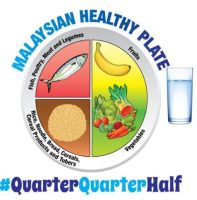
Understanding the principles of a healthy diet is just the first step – putting them into practice daily is what truly matters. One simple and effective way to do this is by following the Malaysian Healthy Plate concept. This approach, based on the “Quarter-Quarter-Half” (Suku-Suku Separuh) method, helps ensure balanced meals with the right proportions of essential nutrients to fuel your body and mind.
Applying the Healthy Plate Concept to Everyday Meals
Adopting the Malaysian Healthy Plate does not mean completely changing your diet overnight. Instead, you can make small, sustainable changes to align your meals with this approach.
Step 1: Imagine the Three Parts of a Plate
Using a round plate about the size of a standard dinner plate (roughly the width of two adult hands placed side by side), visualize it divided into three sections:
- Half of the plate for vegetables and fruits
- One-quarter for carbohydrates
- One-quarter for proteins
This simple method ensures a balanced intake of nutrients in every meal.
Step 2: Fill a Quarter of Your Plate with Carbohydrates
Carbohydrates are your main source of energy. Fill a quarter of your plate with options such as brown rice, oats wholemeal bread, or tubers such as sweet potatoes. Choosing whole grains instead of refined grains can improve digestion, keep you full longer, and stabilises energy levels.
Tips to Include More Whole Grains:
- Mix white rice with brown rice, red rice, or barley, a common practice in traditional Malaysian meals
- Choose whole grain options like mee hoon, wholemeal bread, chapati or breakfast cereals
- Add whole grains like corn or barley to bubuk lambuk (porridge) or soups for extra fibre
- Check food labels and select products with a higher percentage of whole grains, such as wholemeal biscuits or whole grain-based kuih
Simple Meal Ideas Using Whole Grains:
- Breakfast: Wholegrain oat cereal with fruits or a wholemeal tuna sandwich
- Lunch: Brown rice with ikan bakar (grilled fish) and ulam
- Dinner: Wholewheat mee goreng with seafood and vegetables
- Snack: Wholegrain bread with jam
Step 3: Fill Another Quarter with Protein-Rich Foods
Proteins are essential for muscle repair, immunity, and overall body function. Choose a variety of animal-based and plant-based proteins, such as
- Fish, poultry, lean meats, eggs
- Tofu, tempeh, legumes (beans, lentils, chickpeas)
For healthier options, choose grilled, steamed, or stir-fried protein sources instead of deep-fried foods.
Recommendations of Daily Protein Intake (Malaysian Dietary Guidelines 2020):
- Fish: 1 serving
- Poultry/meat/eggs: 1-2 servings
- Legumes: 1 serving
Simple Ways to Include Protein in Your Meals:
- Breakfast: Soybean milk with a wholegrain egg sandwich
- Lunch: Add chickpeas to beef stew
- Dinner: Stir-fry shrimp with tofu
Step 4: Fill Half Your Plate with Vegetables and Fruits
Vegetables should make up the largest portion of your plate as they provide fibre, vitamins, minerals, and phytonutrients. Aim for at least three servings of vegetables and two servings of fruit daily.
Include a Variety of Colours in Your Diet:
🌿 Green (Spinach, kailan, lettuce) → Good for iron and folate
🧡 Orange/Red (Carrots, tomatoes, pumpkin) → Rich in beta-carotene
💜 Purple/Blue (Brinjals, blueberries) → Contains anthocyanins for brain health
🤍 White (Cauliflower, garlic, onions) → Supports immunity
Simple Ways to Reach Your Daily Vegetable & Fruit Intake:
- Breakfast: Add lettuce, cucumber and tomato to your sandwich (1 serving of vegetables)
- Lunch: Include ½ cup of cooked spinach and a slice of papaya (1 serving of vegetables & 1 serving of fruit)
- Dinner: Have ½ cup of cooked mixed vegetables (1 serving of vegetables)
- Snack: Eat ½ of a medium-sized guava (1 serving of fruit)
Eating a variety of vegetables and fruits daily ensures you get phytonutrients (such as carotenoids and flavonoids), which may help reduce the risk of diet-related diseases.
Step 5: Stay Hydrated with Healthy Beverages
Water is essential for digestion, circulation, and concentration. Aim for at least 6-8 glasses daily and limit sugary drinks like sodas, bubble tea or sweetened coffee.
Better Beverage Choices:
- Plain water – Always the best option
- Herbal teas or infused water – A refreshing alternative
- Low-fat milk or soybean milk – provide protein and calcium
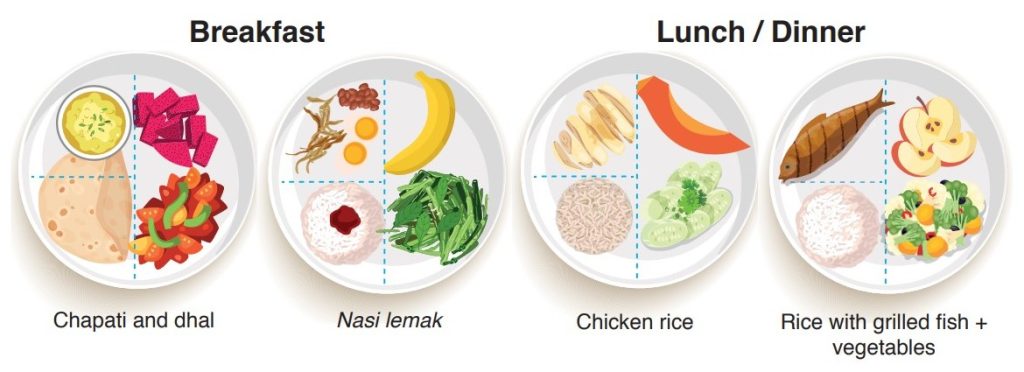
Healthy Plate in Action: Meal Examples
Simple ways to apply the Quarter-Quarter-Half concept in daily meals, whether at home or in the university cafeteria.
Building Sustainable Habits for Long-Term Health
Incorporating the Malaysian Healthy Plate into your daily routine is a simple and practical way to improve your eating habits. Start small—swap refined grains for whole grains, include more vegetables on your plate, and stay mindful of portion sizes. Over time, these small efforts will become second nature, helping you maintain energy levels, focus, and overall well-being throughout your university years and beyond.
Eating healthy doesn’t have to be complicated! With mindful choices, you can nourish your body while enjoying a variety of delicious and balanced meals. Your plate is your foundation—make every meal count!
Written by Dr Yong Heng Yaw
Thoughts Shared