


Article Summary
Foundation in Science students from IMU University visited Benns Ethicoa Chocolate Factory to explore the science behind bean-to-bar chocolate production. The experiential learning visit provided insights into cacao fermentation, food processing, sustainable sourcing, sensory science, and potential career pathways in the food industry.
Key Facts
Event:
Educational visit to Benns Ethicoa Chocolate Factory
Date:
5 June 2026
Participants:
IMU Foundation in Science (FIS) students
Organisers:
- Food Science Innovation Programme
- IMU Nutrition and Dietetics Students’ Association (INDSA)
Industry Exposure:
Real-world applications of food science and food innovation
Understanding the Bean-to-Bar Chocolate Production Process
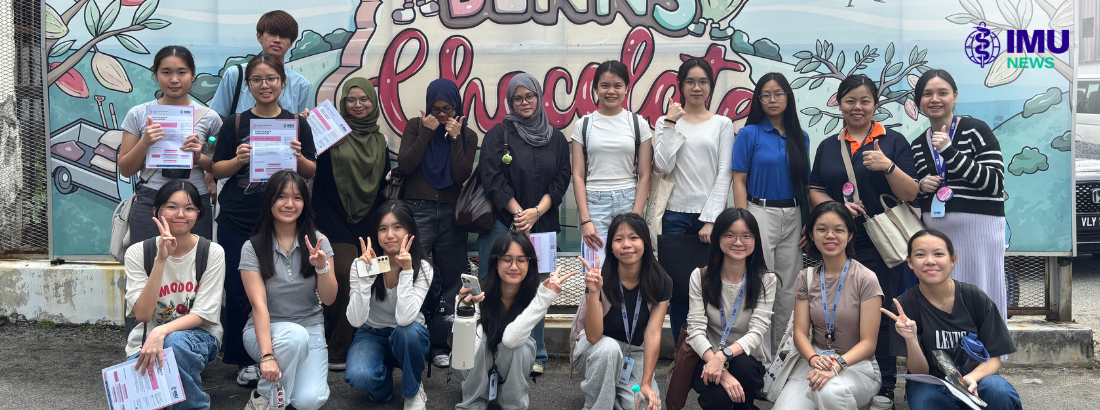
Experiential learning took centre stage as students from the Foundation in Science (FIS) programme at IMU University embarked on an educational field trip to Benns Ethicoa Chocolate Factory in Cheras, Selangor, on 5 June 2026.
Jointly organised by the Food Science Innovation programme from the School of Health Sciences and the IMU Nutrition and Dietetics Students’ Association (INDSA), the visit provided students with a unique opportunity to explore the fascinating journey of chocolate production while gaining insights into the history, science, and sustainability behind one of the world’s most enjoyed indulgences.
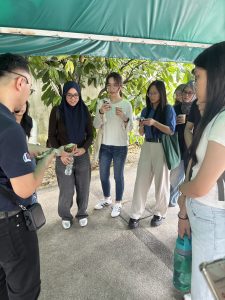
The half-day trip began with a complimentary chocolate welcome drink, followed by a guided tour led by Mr Dennis from Benns Ethicoa.
Throughout the tour, students gained valuable insights into:
- The origins of the cacao tree,
- The rich history of chocolate, and
- The intricate bean-to-bar production process that transforms cacao beans into premium chocolate products.
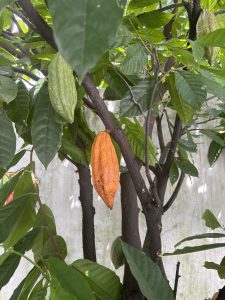
A memorable highlight of the visit was the opportunity for many students to see cacao trees and cacao pods firsthand, bringing to life the origins of the chocolate-making process.
The Role of Fermentation, Food Science and Processing in Chocolate Manufacturing
Students learned how ripe cacao pods are harvested and opened to obtain the cacao beans embedded within the sweet white pulp. They were also introduced to the crucial fermentation process, where naturally occurring microorganisms transform freshly harvested beans and develop the flavour and aroma precursors essential for chocolate production.
The tour continued with an overview of the subsequent processing stages, including
- Drying
- Sorting
- Roasting
- Winnowing
- Grinding
- Conching
- Tempering
- Moulding
Students observed how each stage contributes to the development of chocolate’s
- Distinctive flavour
- Texture
- Appearance
- Overall quality
These observations enabled students to connect scientific concepts learned in the classroom with real-world food manufacturing practices.
Sustainable and Ethical Cacao Sourcing
Beyond the technical aspects of chocolate production, students gained valuable insights into sustainable and ethical cacao sourcing. Mr Dennis explained how responsible sourcing practices
- Support cocoa-growing communities and local farmers
- Promote environmental sustainability
- Ensure the long-term viability of the cocoa industry
This provided students with a broader appreciation of the social, economic, and environmental considerations that shape modern food supply chains.
Chocolate Tasting and Sensory Science
A particularly enjoyable segment of the visit was the chocolate tasting session, where students tasted a variety of cocoa nibs and discovered how factors such as cacao origin, processing conditions, and ingredient composition influence the flavour and sensory characteristics. The tasting experience reinforced the important relationship between:
- Food science
- Product quality
- Consumer perception
The field trip served as an excellent platform for students to bridge classroom learning with industry practice. By observing the complete bean-to-bar process firsthand, students developed a deeper appreciation of the interdisciplinary nature of food science, encompassing:
- Food chemistry
- Food microbiology
- Food processing
- Food engineering
- Sensory evaluation
- Quality assurance
- Sustainability
- Product development
The visit also demonstrated how scientific principles are applied throughout the food production chain and highlighted the innovation and expertise required to produce high-quality food products in today’s dynamic food industry.
Food Science Innovation at IMU University: Shaping Our Future Food Innovators
The Bachelor of Science (Honours) in Food Science Innovation programme at IMU University equips students with comprehensive knowledge in food chemistry, food microbiology, food processing, food engineering, quality assurance and quality control, regulatory affairs, sensory science, product development, and food innovation.
Designed in collaboration with industry partners, the programme combines a strong scientific foundation with extensive practical exposure through laboratory training, industry engagement activities, and the 2U1i work-based learning model.
Guided by the values of S.I.H.A.T. (Sustainable, Innovative, Healthy, Affordable, and Tasty), students are empowered to develop innovative food solutions that address the evolving needs of society.
Leveraging IMU’s strong healthcare foundation, graduates also gain a deeper understanding of the important relationship between food, health, and the environment.
Experiential Learning Through Industry Engagement
At IMU University, the Centre for Pre-University is committed to providing students with learning experiences that extend beyond the classroom.
Industry visits, such as the Benns Ethicoa Chocolate Factory tour, allow students to witness scientific concepts in action, strengthen connections between academic learning and industry practice, and explore potential career pathways in fields such as food science, biotechnology, and quality assurance.
These experiential learning opportunities inspire curiosity, encourage critical thinking, and enrich students’ educational journeys, preparing them not only for university studies but also for future careers in science and healthcare.
Thoughts Shared