


Article Summary
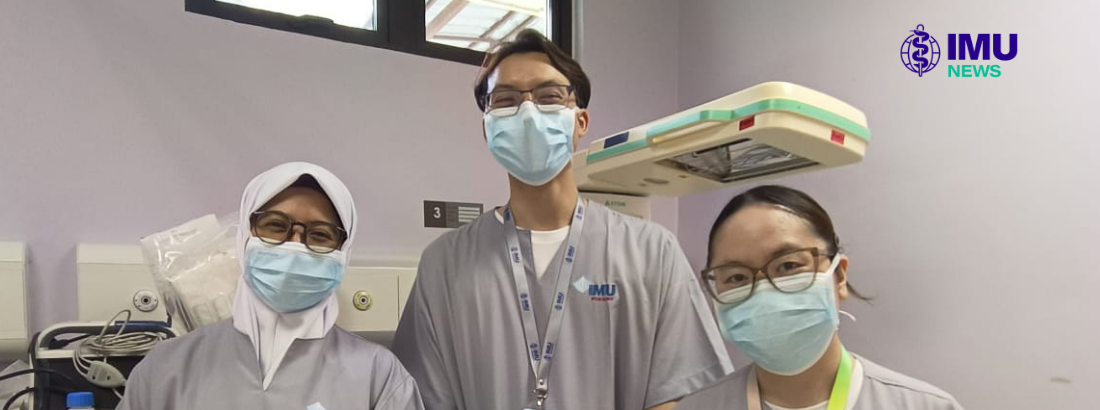
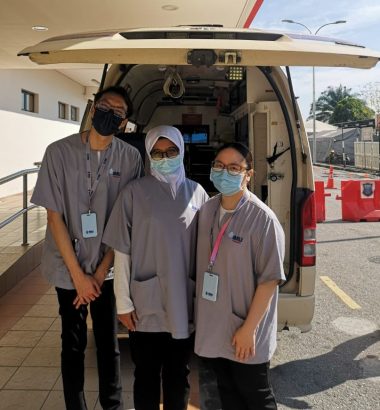
Three IMU Nursing Open and Distance Learning (ODL) students completed their clinical placement at the Coronary Care Unit (CCU) as well as Accident and Emergency Department (ED) of Hospital Tuanku Ja’afar Seremban, gaining hands-on experience in contemporary critical care and emergency nursing practices.
Key Facts
Activity:
Clinical Placement
Participants:
3 Bachelor of Nursing (Hons) Open and Distance Learning (ODL) Students
Institution:
IMU University
Duration:
14 days
Hospital:
Hospital Tuanku Ja’afar Seremban
Departments:
- Coronary Care Unit
- Accident and Emergency Department
Bridging Online Learning with Clinical Practice
The IMU Bachelor of Nursing (Hons) programme via the Open and Distance Learning (ODL) mode offers an Elective Nursing Clinical Practice module in the final Semester 10.
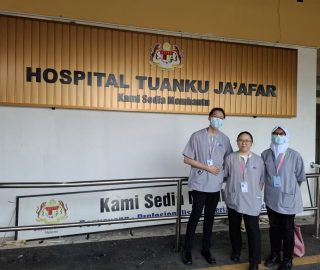
As part of this module, three students from cohort NUODL223 were given the opportunity to undergo a 14-day clinical placement at the Coronary Care Unit (CCU) and the Accident & Emergency Department (ED) of Hospital Tuanku Ja’afar Seremban.
The placement fulfilled their required clinical attachment hours and they were guided by an IMU-assigned clinical instructor and nursing lecturer.
The enriching clinical placement provided nursing ODL students with invaluable exposure to contemporary critical care and emergency nursing practices. The experience enabled students to bridge theoretical knowledge acquired through online learning with real-life clinical situations, thereby strengthening both their technical competencies and professional confidence in managing high-acuity patients.
Hands-On Experience in Critical Care Nursing
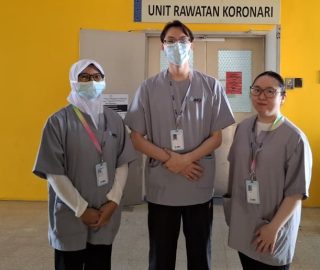
During their placement in the CCU, the students were exposed to advanced cardiac and critical care management. They developed a deeper understanding of ventilator settings and protocols, as well as the specialised nursing care required for ventilated patients, including
- Airway management,
- Patient monitoring, and
- Prevention of complications.
Students also revisited fundamental electrocardiogram (ECG) interpretation and gained clearer insights into current nursing management approaches for Acute Coronary Syndrome (ACS, Heart attack).
In addition, they had the opportunity to care for patients with various forms of cardiac dysrhythmias, heart failure and further enhance their understanding of acute stroke management. This exposure enabled the students to appreciate the clinical rationale behind many practices they had previously encountered in routine patient care.
Gaining Experience at the Emergency Department and in Trauma Management
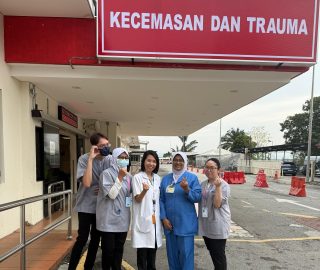
In the Emergency Department, students received an orientation from Nurse Manager, who introduced the:
- Department layout,
- Latest trauma protocols, and the
- Triage system, alongside
- Insights into emergency and One-Stop Crisis Centre (OSCC) case management.
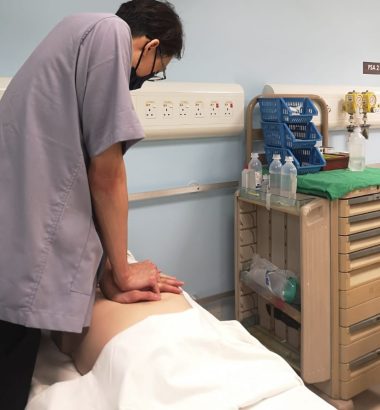
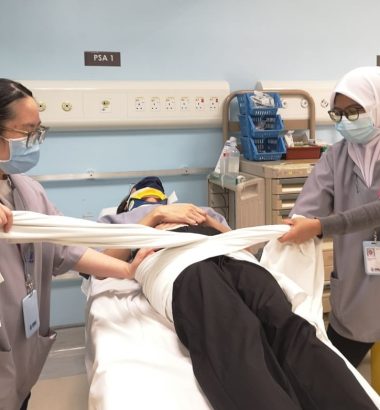
Students also revised key emergency protocols, including trauma management, Basic and Advanced Cardiovascular Life Support (BLS & ACLS), and participated in hands-on learning such as assisting with
- Intubation
- CPR chest compressions
- Cervical collar application and
- Pelvic immobilisation
As the posting progressed, students actively participated in real medical and trauma cases within the resuscitation zone.
Building Confidence Through Real Clinical Cases
Although they initially felt uncertain about their roles in such fast-paced situations, continuous exposure, supportive guidance from the ED team, close supervision by experienced Clinical Instructor/nursing lecturer throughout the posting, and structured debriefing sessions gradually enhanced the students’ confidence and understanding of emergency response responsibilities.
Students’ Reflections on the Clinical Placement Experience
Student reflections further highlighted the value of this clinical experience.
Nursing ODL student Ho Kit Yeng shared,
“I learned a great deal during this clinical posting. I feel especially fortunate to have been placed at Hospital Tuanku Ja’afar Seremban, where I had the opportunity to care for critically ill patients in both ED and CCU. It was a completely different experience from my usual work in general wards, as I was exposed to high-acuity cases and fast-paced decision-making environments. Being able to actively participate and engage hands-on during such life-threatening situations were both challenging and deeply educational.”
She shared that participating in trauma cases and caring for ventilated patients strengthened her clinical skills and ability to perform under pressure.
“This exposure has been invaluable in deepening my understanding of critical care nursing and the importance of timely, well-coordinated interventions in delivering quality patient care,” added student Ho.
Similarly, fellow NUODL223 student Norzuraida Binti Hashim reflected that the posting broadened her understanding of the workflow and clinical priorities within the CCU and ED settings, as she shared,
“Overall, this posting was an extremely valuable and enriching experience for me. As I have been working mainly in the general ward for many years, I do not have much opportunity to observe the workflow in CCU and ED. Through this placement, I gained a much deeper understanding of how both units operate, particularly the fast-paced environment, critical decision-making processes, and the differing priorities compared to general ward care. I truly enjoyed this posting experience, as it significantly broadened my clinical exposure and perspective as a nurse.”
She also appreciated the opportunity to revise important clinical knowledge before getting hands-on experience and work collaboratively with supportive healthcare teams as she highlighted:
“The teamwork among colleagues was good, with strong support from the hospital staff and clinical instructor.”
Meanwhile, NUODL223 student Phong Fu Zheng shared,
“This posting was a very valuable exposure. I had the opportunity to observe the differences between government and private hospital settings; while gaining a better understanding of how the CCU and ED differs from the ward environment. Overall, I gained a better understanding of the fast-paced critical care and ED environment, where nurses are required to think critically, respond quickly, and work closely as a team during emergency situations. The experience also taught me to remain calm and focused under pressure.”
Student Phong further added,
“It also strengthened my confidence, clinical judgement, and critical thinking skills. Overall, it was a truly enriching clinical learning experience.”
Preparing Future Nurses for High-Acuity Healthcare Settings
Taken together, the experiences shared by students highlighted how this nursing elective clinical placement served as a transformative learning for the students, enhanced their clinical exposure, critical thinking, and confidence in managing complex patient care, while reinforcing the importance of teamwork, communication, adaptability, and professionalism in critical care and emergency settings.
Written by Chow Suh Hing (Lecturer) and Lee Mei Ying (Clinical Instructor), IMU Nursing Division.
Thoughts Shared