


15 October 2025 | IMU University
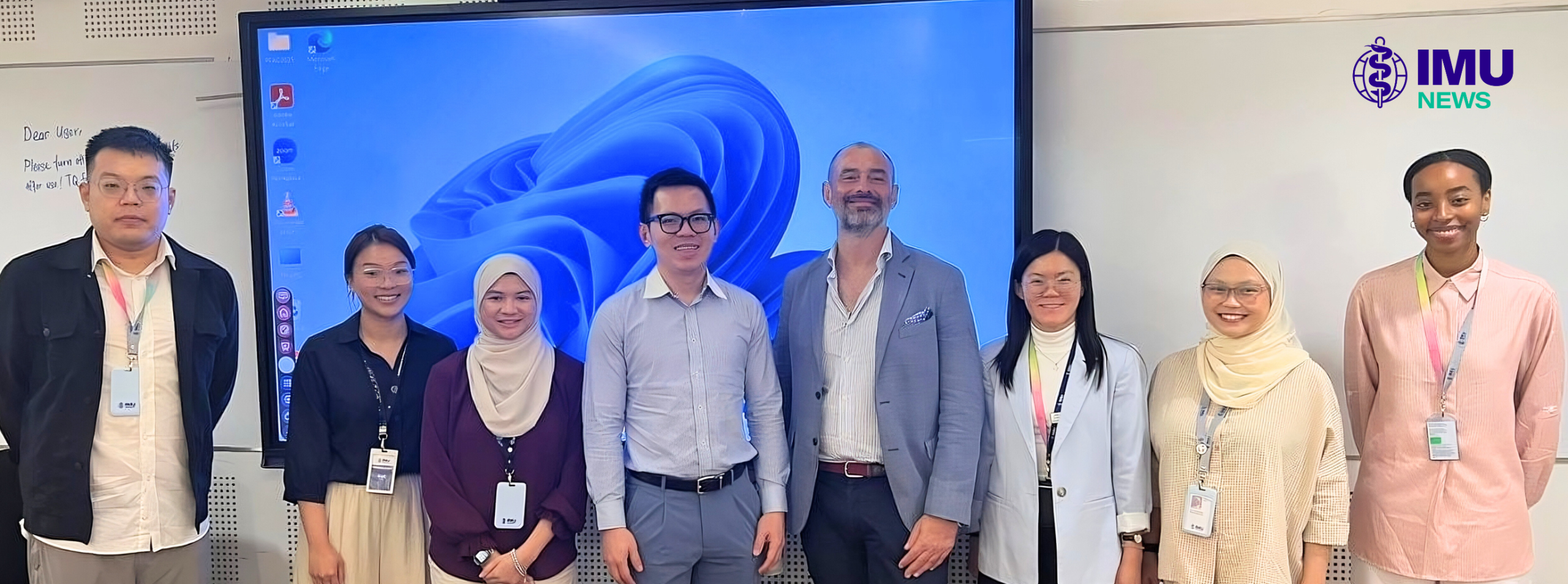
On 15 October 2025, the Institute for Research, Development and Innovation (IRDI) and International Office, IMU University, hosted an enlightening session on healthcare system transformation by Prof Dr Francesco Paolucci, a globally recognised authority in Health Economics and Policy from the University of Newcastle, Australia, and the University of Bologna, Italy. The event, held at the ICE Training Centre (Room 2.09) and streamed via Microsoft Teams, brought together enthusiastic participation from faculty members, researchers, and postgraduate students.
Prof Paolucci is an internationally recognised scholar and advisor, with extensive experiences in health economics, policy, and management. Over the past decade, his work has included one single-authored book and five edited special issues in peer-reviewed journals, as well as over 110 academic peer-reviewed articles, book chapters, and book reviews in a wide array of academic journals and presses, and in different languages. He also serves as a permanent member of the Risk Adjustment Network (RAN) – contributing to multiple projects in risk adjustment and health insurance markets.
In his opening remarks, Prof Paolucci poses a compelling question: “How can we afford the healthcare system of our dreams?” This challenge framed the entire discourse: how nations can craft health systems that are both affordable and equitable, while maintaining efficiency and universal access. He shared key insights on how healthcare systems can evolve to meet rising demands, enhance cost-effectiveness, and ensure equitable access to care. Drawing from Australia’s experience, he highlighted strategic approaches in financing, governance, and integrated care models; offering valuable lessons that can guide Malaysia’s healthcare transformation journey.
Throughout the one-hour session, Prof Paolucci highlighted key topics including:
- Overview of the Australian healthcare system which combines public and private financing. Medicare is a universal, mandatory scheme funded through general taxation and a 2% levy on taxable income, complemented by private health insurance as a supplementary and sometimes duplicative option.
- He described how public and private sectors overlap in financing and service delivery, noting that access and coverage often depend on income rather than need.
- Rising costs, workforce shortages, growing out-of-pocket payments, and fragmented regulations were identified as key pressures facing the public system.
- Prof Paolucci highlighted global patterns of healthcare challenges, including escalating costs, reliance on supplementary insurance, and managed care backlash.
- He introduced the concept of a “bilateral monopsony,” referring to limited competition between purchasers and providers, and emphasised the need for clearer purchasing structures.
- The discussion included the role of risk equalisation to promote fairness, while noting its inefficiency in promoting active purchasing.
- He concluded by outlining three transformation pathways—converging public and private schemes, abolishing duplicative structures, and developing integrated regulatory frameworks—to support sustainable healthcare reform.
Prof Paolucci also emphasized that the issue of healthcare affordability remains a global policy dilemma. Many countries, regardless of their system design, face similar challenges: escalating healthcare expenditure, unequal access, and policy disconnects between public and private sectors.
He noted that cost-containment strategies often lead to new forms of inequality, as patients are pushed toward supplementary insurance or private care options. Such dynamics, he warned, can undermine the very principles of universality and fairness that public systems strive to uphold.
To address these issues, Prof Paolucci introduced the concept of bilateral monopsony in healthcare in which a situation where both buyers and providers have limited competition, leading to inefficiencies in service purchasing and delivery. He advocated for a more competitive purchasing framework and transparent risk equalisation mechanisms, which could improve system performance by ensuring fair pricing, equitable risk-sharing, and efficient resource allocation.
In discussing potential strategies for reform, Prof Paolucci outlined three key pathways to healthcare transformation:
- Convergence between Public and Private Schemes — fostering collaboration and reducing fragmentation between financing mechanisms.
- Regulated Competition — abolishing purely segregated systems in favour of competition that encourages efficiency and innovation under a unified regulatory framework.
- Integrated Governance — aligning regulation, financing, and service delivery to ensure consistency, transparency, and long-term sustainability.
He emphasized that successful reform requires a clear regulatory vision, well-structured financial mechanisms, and investment in human capital and knowledge exchange. These elements, he noted, are critical to building resilient healthcare systems capable of adapting to future challenges.
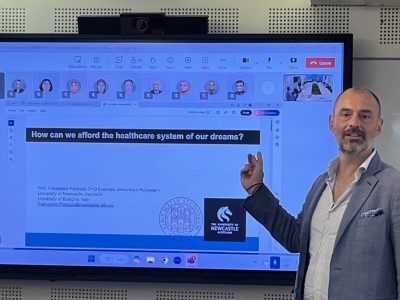
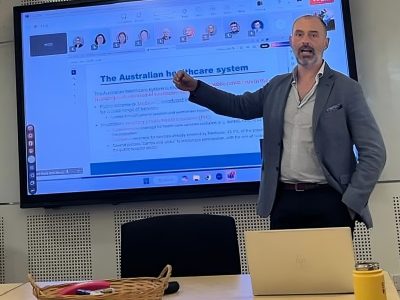
Students reflected that Prof Paolucci’s discussion deepened their understanding of real-world applications of health economics, especially in designing and evaluating sustainable healthcare systems. Academic staff also noted that such sessions enhance teaching strategies by bridging theoretical foundations with contemporary health policy challenges, thereby enriching future learning experiences.
The event not only fostered critical dialogue but also strengthened IMU’s commitment to advancing evidence-based, globally informed healthcare education. Participants left inspired by Prof Francesco’s insights which reminded them that achieving universal, sustainable healthcare requires not only sound policy design but also continuous collaboration between academia, industry, and government.
In conclusion, through his thought-provoking lecture, Prof Paolucci underscored that transforming healthcare systems requires more than policy reform where it demands a cultural and institutional shift towards fairness, innovation, and accountability. His insights provided IMU’s research community with a valuable lens to reflect on how local and global health systems can evolve to meet the growing demands of modern healthcare while ensuring no one is left behind.
Written by Nur Fatehah & Wong Kai Xuan
Thoughts Shared