


Article Summary
IMU Pharmacy students completed a Global Mobility Programme elective placement at Fudan University and four affiliated hospitals in Shanghai, gaining hands-on clinical pharmacy experience within an international healthcare environment.
At a Glance
Activity:
Global Mobility Programme Elective Placement
Venue:
Fudan University and four affiliated hospitals in Shanghai
Participants:
13 IMU Pharmacy students from the BP1/23 cohort
Date:
12 – 25 April 2026
Programme Overview: Global Clinical Pharmacy Exposure
As part of the Global Mobility Programme, IMU Pharmacy students from the BP1/23 cohort participated in an elective placement at Fudan University.
The students were posted to four affiliated hospitals in Shanghai, where they gained hands-on exposure to clinical pharmacy practice within an international healthcare environment. The programme was designed to broaden students’ global perspectives on healthcare while strengthening their professional knowledge and clinical competencies through immersive training experiences.
Conducted from 12 to 25 April 2026, the 14-day placement provided participants with meaningful insights into different healthcare systems and served as a valuable and eye-opening learning opportunity.
Pharmacy Students in this Elective Placement
- Koh Sin Han
- Chang Xue Rou
- Janice Go Mei Mei
- Nyam Pui Yeng
- Tai Jia Wen
- Hong Ying Xin
- Tee Yi Ning
- Khoo Jia Gee
- Wong Zhiyun
- Kee Zi Swin
- Yong Zhi Yan
- Chloe Liew Wen Hui
- Khor Yee Ming
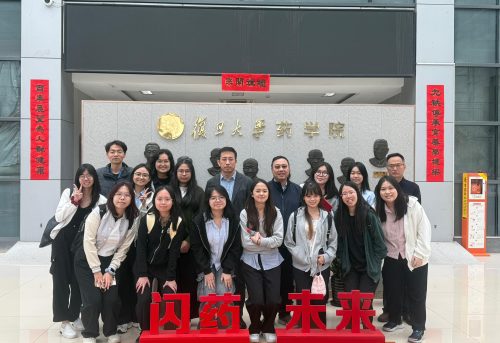
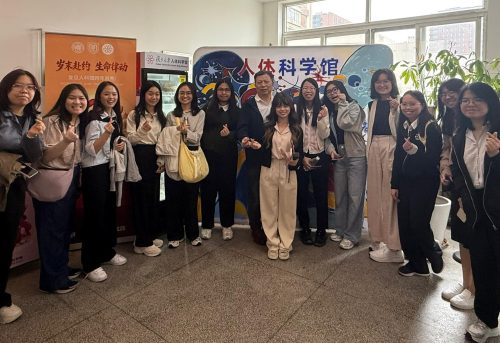
Huashan Hospital
Khor Yee Ming, Tee Yi Ning and Wong Zhiyun
Throughout the placement, they were given the opportunity to participate in clinical rotations across a variety of specialised departments, including
-
- Nephrology
- Hepatology
- Cardiology
- Infectious diseases
- Haematology
These rotations enabled them to gain broader exposure to the healthcare system and deepen their understanding of the roles and responsibilities of pharmacists within a tertiary hospital setting.
During the attachment, the students:
- Observed multidisciplinary collaboration among healthcare professionals and
- Learned how different departments manage patients with complex medical conditions.
They were exposed to various aspects of patient care, including
- Medication review,
- Prescription screening,
- Drug monitoring, and
- Counselling practices.
In addition, the attachment provided valuable insights into the:
- Clinical decision-making process and
- Importance of ensuring medication safety in hospital practice.
The rotations were conducted under the supervision of experienced pharmacists and clinical preceptors who provided continuous guidance and detailed explanations regarding:
- Departmental workflows
- Pharmaceutical care services
- Medication management strategies
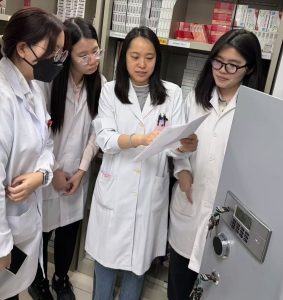
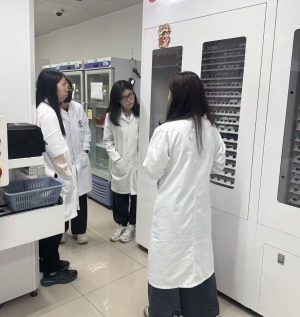
The students were also introduced to hospital automation technologies and medication safety protocols implemented to improve efficiency and minimise medication errors.
Overall, the clinical attachment at Huashan Hospital was a valuable learning experience that enhanced their
- Clinical knowledge
- Communication skills
- Professional understanding of pharmacy practice in a real-world healthcare environment
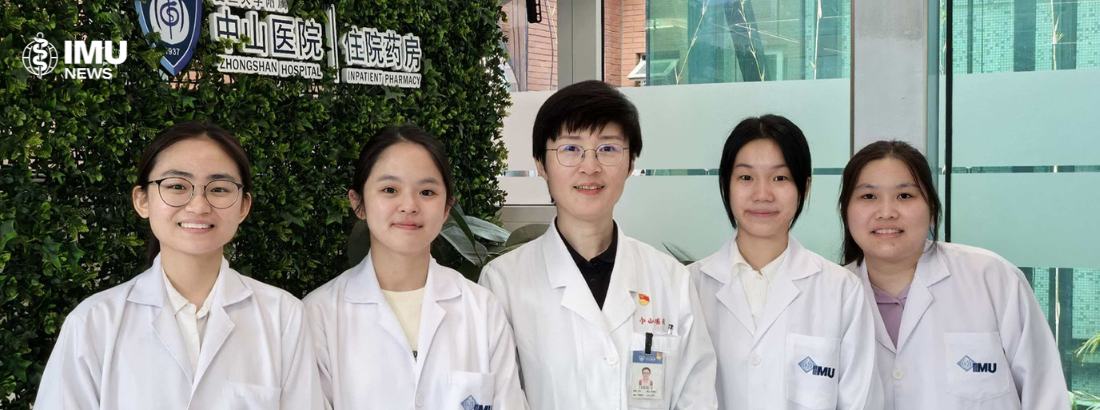
Zhongshan Hospital
Janice Go Mei Mei, Nyam Pui Yeng, Khoo Jia Gee and Hong Ying Xin
Zhongshan Hospital is particularly well known for its cardiology and hepatobiliary surgery specialties.
During our elective placement, students were mainly assigned to the cardiology and hepatobiliary surgery outpatient and inpatient pharmacies, where they observed
- The medication dispensing workflow and
- Learned how pharmacists communicate effectively with patients in both clinical and counselling settings.
In the inpatient pharmacies, students were given the opportunity to
- Participate in medication stock checking and
- Automated unit-dose drug packaging processes.
This allowed them to better understand inventory management practices and the role of automation in improving the accuracy, efficiency, and safety of medication dispensing within the hospital setting.
In addition, they had the opportunity to participate in ward rounds conducted by the infectious diseases team, as well as the preparation work prior to the rounds. This experience allowed them to better understand the role of pharmacists in
- Multidisciplinary patient care and
- Antimicrobial stewardship.
They are also:
- Given a tour of the hospital’s Pharmacy Intravenous Admixture Service (PIVAS) unit,
- Gained insight into the preparation procedures and workflow involved in sterile medication dispensing.
One of the highlights of the placement was visiting the hospital’s in-house pharmaceutical preparation unit, where specialised formulations are produced to meet clinical needs.
Furthermore, we had the chance to visit the Drug Clinical Trial Centre, which provided us with valuable exposure to the conduct of clinical research and the role of pharmacists in supporting clinical trials.
Huadong Hospital
Chloe Liew Wen Hui, Yong Zhi Yan and Kee Zi Swin
At the hospital, the students participated in rotations across several pharmacy departments, including:
- Pharmacy Intravenous Admixture Services (PIVAS),
- Inpatient and Anaesthetic Pharmacy,
- Pharmaceutical Manufacturing, and
- Clinical Pharmacy.
These rotations provided them with valuable exposure to the workflow and responsibilities of hospital pharmacists in a tertiary healthcare setting.
During the rotations, the students observed:
- The preparation, verification, and delivery of intravenous medications such as chemotherapy drugs and total parenteral nutrition (TPN), while
- Learning about medication safety protocols and automation systems that improved efficiency.
They also gained insight into the
- Dispensing and handling procedures for inpatient,
- Discharge, and
- Anaesthetic medications, including strict security measures and double-verification processes for controlled drugs.
In addition, the students visited the Pharmaceutical Manufacturing and Clinical Pharmacy Departments, where they learnt about
- External formulation preparation,
- Quality control procedures,
- Prescription screening,
- Medication safety monitoring, and
- Clinical research activities.
Outside of the hospital placements, the students also participated in cultural and educational visits to several cities and historical attractions, including the Oriental Pearl Tower and Shanghai Disneyland in Shanghai, as well as Suzhou, Hangzhou, and Wuxi. These experiences allowed them to appreciate the rich culture and history of China while creating meaningful memories throughout the placement programme.
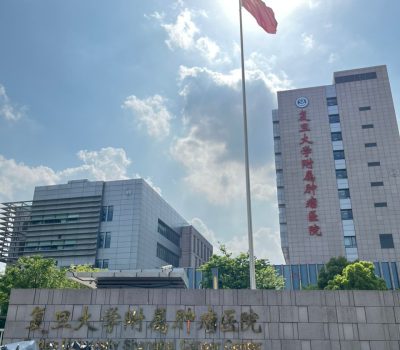
Fudan University Cancer Center
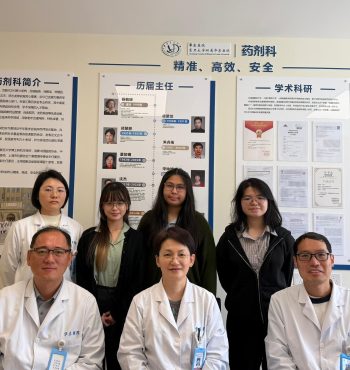
Chang Xue Rou, Koh Sin Han and Tai Jia Wen
During the attachment, the students were introduced to the
- Hospital structure and
- Different pharmacy departments.
The attachment provided valuable exposure to the workflow and multidisciplinary approach involved in cancer patient management.
The students were introduced to several automated facilities including
- Intelligent medication storage cabinet,
- Automated dispensing cabinets and
- Intravenous compounding robots.
Through these visits, the student learned how automation technologies in a high-volume oncology setting:
- Improve medication safety,
- Reduce dispensing errors,
- Enhance workflow efficiency, and
- Minimise manpower requirements.
In addition, the students were given the opportunity to observe a Multi-Disciplinary Team (MDT) meeting, where healthcare professionals from different specialties discussed patient management and treatment planning collaboratively.
The students also observed outpatient infusion counselling sessions and gained insights into patient education and communication provided by pharmacists.
Furthermore, educational sessions regarding current oncology trends were conducted, particularly focusing on
- Breast cancer and lung cancer management,
- Current treatment options,
- Future research directions, and
- Advancements in oncology pharmacy practice.
The student was also introduced to the adverse event reporting system and gained understanding regarding pharmacovigilance practices in oncology care.
Overall, the attachment provided meaningful exposure to modern oncology pharmacy services and enhanced the student’s understanding of clinical pharmacy practice in a specialised cancer centre.
Cultural and Global Learning
Beyond hospital attachment, the students also had the opportunity to explore Shanghai and experience the city’s unique blend of tradition and modernity. Throughout their stay, they visited several iconic landmarks and cultural attractions, allowing them to gain a deeper understanding of Shanghai’s history, architecture, and vibrant urban lifestyle.
The students explored popular destinations such as The Bund, Jing’an Temple and Yu Garden. They also experienced the lively atmosphere of shopping streets, local food districts, and public spaces, which showcased the diversity and energy of daily life in Shanghai.
In addition to sightseeing, the students were able to immerse themselves in the local culture by
- Trying traditional Shanghai cuisine,
- Using the city’s efficient public transportation system, and
- Interacting with residents.
These experiences provided valuable cultural exposure and helped them better understand the social environment surrounding healthcare practice in China.
Thoughts Shared