


Article Summary
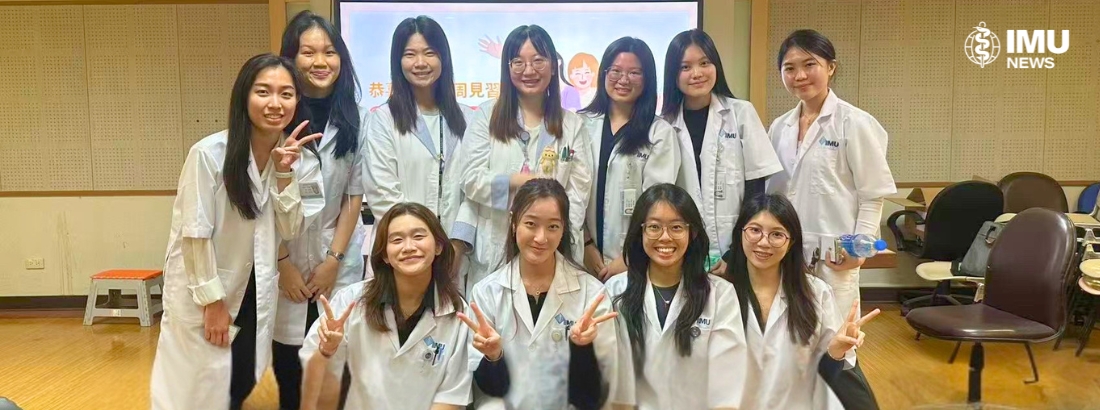
A group of 9 pharmacy students from IMU University recently wrapped up a rigorous 14-day clinical elective at Linkou Chang Gung Memorial Hospital (CGMH) attaining clinical touch in international environment.
At a Glance
Venue:
Linkou Chang Gung Memorial Hospital, Taiwan
Activity:
Global Mobility Programme Elective Placement
Date:
13 – 24 April 2026
Participants:
IMU University pharmacy students from the BP1/23 cohort
Pharmacy Students in this Elective Placement
- Amily Thor Wei Yi
- Charites Chong Thai Ern
- Choy Li Lian
- Chung Jia Xin
- Lau Zhi Kuan
- Ong Jes Lyn
- Tung Yi Qian
- Ursula Loo Yuin Tyn
- Wong Su Yian
International Clinical Exposure through an Elective Rotation
June 2026 — In alignment with the IMU University (IMU) School of Pharmacy’s Global Mobility Programme, nine pharmacy students recently completed an extensive two-week elective placement at Linkou Chang Gung Memorial Hospital, Taiwan.
Running from 12 April to 25 April 2026, this international mobility programme provided the students with a unique window into the operational logistics and clinical frameworks of the outpatient and inpatient pharmacy department, broadening their global perspectives while strengthening their professional, knowledge, and clinical competencies through immersive training experiences.
Throughout this placement, they were privileged to receive the opportunity to explore
- Inpatient
- Outpatient
- Drug Information Services.
Inpatient Pharmacy Department: Prescription Screening & Backend Logistics
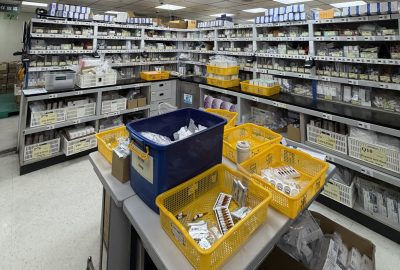
Students worked systematically across inpatient stations, beginning with bulk medication unpacking and patient-specific repackaging of medications like tablets, capsules, intravenous fluids and crystalloids like dextrose and 0.9% sodium chloride solutions. They spent two days inside the screening hub using an integrated computer network to validate active physician prescriptions and concluded the rotation in the “BATCH” department sorting returned medications back into distinct basket codes.
Throughout their time at this department, the group moved from theoretical pharmacology to active clinical decision-making. While repackaging medications, students learned the
- Supply chain logistics
- Enhanced physical drug familiarity
- Verified codes and seals to prevent errors
During prescription screening, they learned to
- Synthesise patient-specific lab parameters
- Evaluate estimated Glomerular Filtration Rate (eGFR) values to cross-check renal clearance
- Identify potential drug -drug interactions before medication distribution
Operating as a final line of defence within a multidisciplinary medical network instilled a deep sense of interprofessional accountability. Navigating the backend logistics emphasised the values of organisational discipline, strict quality control, and institutional efficiency required to run a safe hospital environment.
Outpatient Pharmacy Department: High-Velocity Dispensing & Drug Information
After one week in the Inpatient department, students transitioned to the fast-paced Central Department, managing outpatient prescriptions embedded with specific routing codes for oral solids, injectables, and controlled substances. They packed ordered medications from the prescription given by the doctors onto continuous conveyor belt lines, operated electronic queuing networks at the front counter, and handled public inquiries via phone and the hospital’s digital portal within the Drug Information Service.
Students gained direct, practical familiarity with advanced drug classes and devices, including:
- Asthma inhalers (Seretide, Symbicort, Ventolin),
- Cutting-edge subcutaneous biologics (Mounjaro for weight management,
- Forteo for osteoporosis,
- Dupixent for atopic dermatitis), and
- Diagnostic colonoscopy preparations (Bowklean).
Thriving in such a fast-paced, relentless workflow shifted their mindset, teaching them that precision must always come before speed. It forced them to build their own strict habits of double-checking everything and taking real personal ownership of their work.
At the same time, watching real counselling sessions firsthand was an eye-opener, showing them that clinical knowledge is only half the battle; it means nothing if it isn’t paired with genuine empathy and clear, patient-centered communication.
Whether it was using simple, illustrated leaflets or just taking an extra moment to explain a concept, they learned that meeting patients where they are is what truly builds trust and ensures they feel confident following through with their care.
Operating in an unfamiliar international environment presented immediate communication hurdles, particularly localised Taiwanese pharmaceutical abbreviations and Mandarin medical terms. Students demonstrated high adaptability by maintaining clinical notebooks, consulting senior staff, and cross-referencing drug identities with the hospital’s integrated software, turning an intimidating language barrier into a significant milestone for professional growth.
Cultural & Global Learning: Immersive Exploration of Taiwan
Beyond the hospital walls, the group also actively engaged with Taiwan’s vibrant heritage and urban life. Students spent their evenings exploring Taiwan’s world-famous night markets, diving into the local street food scene. The group also traveled across Taipei, immersing themselves in the historic coastal charm of Tamsui, the trendy creative districts of Zhongshan, and the bustling streets of Ximending.
This global mobility experience taught students that healthcare and lifestyle are deeply intertwined. By navigating the local transit systems and observing daily local interactions, they gained a broader understanding of Taiwanese society, dietary habits, and cultural norms.
This experiential learning fostered a profound sense of global citizenship and cultural humility. Interacting with locals in diverse social environments expanded their interpersonal communication skills, showing them that being an effective healthcare professional requires an open mind and a genuine appreciation for diverse cultures.
Thoughts Shared