


Article Summary
During a 14-day elective placement at Chengdu University of Traditional Chinese Medicine, 13 IMU Pharmacy students gained valuable experience in both modern healthcare and Traditional Chinese Medicine (TCM) practices within China’s healthcare system. Based at the university’s Second Affiliated Hospital and Chengdu Fifth People’s Hospital, they participated in a diverse range of clinical, academic, and cultural learning experiences.
Key Facts
Programme:
Global Mobility Programme
Participants:
13 IMU Bachelor of Pharmacy (BPharm) students
Duration:
13 April – 3 May 2026
Host Instituition:
Chengdu University of Traditional Chinese Medicine
Clinical Attachments:
-
- Second Affiliated Hospital of Chengdu University of Traditional Chinese Medicine
- Chengdu Fifth People’s Hospital
Location:
Chengdu, China
Experiencing Modern Healthcare Practices and Traditional Chinese Medicine (TCM) Practices
Our 14-day elective placement in Chengdu University of Traditional Chinese Medicine provided us with a valuable opportunity to experience both modern healthcare practices and Traditional Chinese Medicine (TCM) practices within China’s healthcare system. Students were assigned to two affiliated hospitals, namely the:
- Second Affiliated Hospital of Chengdu University of Traditional Chinese Medicine (成都中医药大学第二附属医院) and
- Chengdu Fifth People’s Hospital (成都中医药大学第五附属医院),
During our placement at the hospitals, we were exposed to a wide range of clinical, academic, and cultural learning experiences.
IMU Pharmacy Students in this Elective Placement
- Wong Xin Yi
- Lee Xin Yi
- Wong Le Yi
- Huang Yee Xin
- Lai Yu Jie
- Howard Wong Xiu Hao
- Beh Coral
- Nicole Lee Xin Yen
- Law Pui Ne
- Carmen Chong See Mun
- Afiq Afina
- Ding Wei Xuan
- Lim Zi Cheng
Throughout the placement, the 13 IMU Pharmacy students rotated through various departments, including
- Inpatient wards,
- Outpatient pharmacies,
- Pharmacy Intravenous Admixture Services (PIVAS),
- Emergency services, and
- TCM dispensaries.
These visits allowed us to gain a comprehensive understanding of hospital workflows and the important role that pharmacists play in ensuring safe and effective patient care across different healthcare settings.
Participation in Ward Rounds
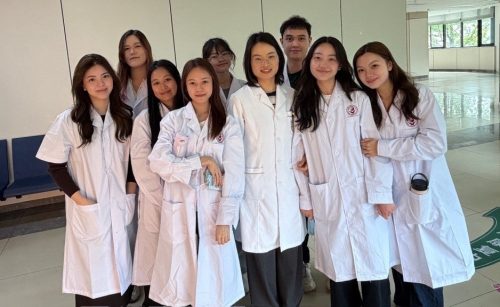
One of the most memorable aspects of the placement was participating in ward rounds alongside pharmacists and multidisciplinary healthcare teams. During these sessions, students observed:
- Medication reviews,
- Patient counselling,
- Therapeutic decision-making, and
- Discussions on treatment plans.
This firsthand experience demonstrated how clinical pharmacists actively contribute to
- Optimising medication therapy,
- Preventing drug-related problems, and
- Supporting physicians in patient management.
In addition to clinical exposure, students witnessed the integration of technology into healthcare systems such as Automated Dispensing Cabinets (ADC), automatic pill-packing machines, and express medicine dispensing systems were routinely used to:
- Improve dispensing efficiency,
- Reduce medication errors, and
- Enhance patient safety.
Observing these technologies in practice highlighted the continuous efforts made by hospitals to:
- Modernise pharmaceutical services and
- Improve healthcare outcomes.
Academic Sharing Sessions and Case Discussions
The hospitals also organised a series of academic sharing sessions and case discussions for visiting students.
Through these interactive sessions, pharmacists introduced:
- Common clinical cases,
- Medication management approaches, and
- Innovative healthcare technologies.
Students were encouraged to actively participate in discussions, exchange ideas, and compare healthcare practices between China and Malaysia. These interactions not only enriched our professional knowledge but also fostered meaningful international academic exchange.
Emergency Response Training Session
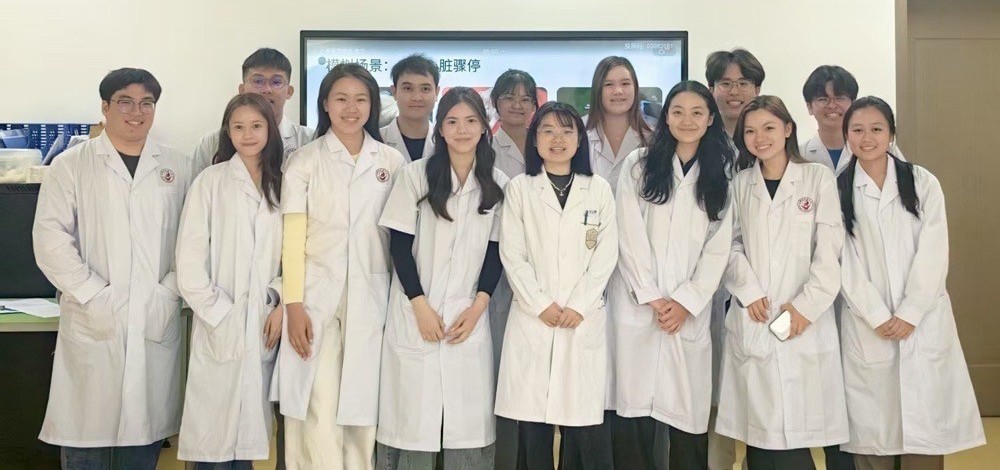
Beyond pharmaceutical care, students attended a hands-on emergency response training session that focused on basic life support skills. We learned the:
- Appropriate situations for performing cardiopulmonary resuscitation (CPR),
- Practiced the correct techniques, and
- Gained experience in using an Automated External Defibrillator (AED).
The session emphasised the importance of timely intervention during medical emergencies and equipped students with practical skills that may one day help save lives.
Exploring the Integration of Traditional Chinese Medicine with Modern Medical Practice
A unique feature of the placement was the opportunity to explore the integration of Traditional Chinese Medicine with modern medical practice. Unlike the healthcare system commonly encountered in Malaysia, TCM plays a significant role in patient management within Chinese hospitals.
Students observed TCM consultation services, herbal dispensing processes, and various treatment approaches that combine traditional knowledge with modern medical care.
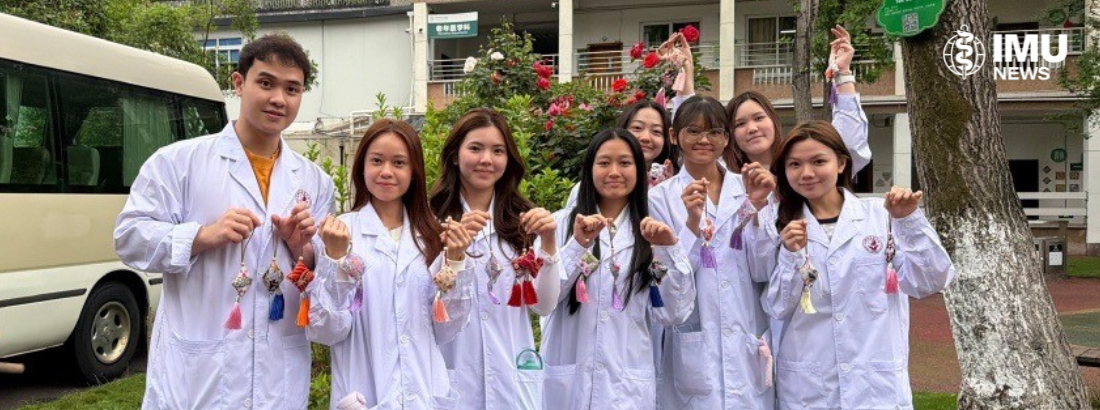
To further deepen our understanding of TCM, we visited a botanical garden containing numerous medicinal plants used in traditional therapies. Students also participated in cultural activities, including the making of traditional Chinese herbal sachets (香囊).
Learning about the cultivation, identification, and traditional functions of these herbs helped us appreciate the
- Natural origins of many Chinese medicines and
- Longstanding role of herbal therapy in Chinese healthcare.
Experiencing Culture and Lifestyle of Chengdu
While the hospitals served as our primary learning environment, the placement also provided opportunities to experience the culture and lifestyle of Chengdu beyond the clinical setting.
One of the highlights was a visit to the Chengdu Research Base of Giant Panda Breeding (成都大熊猫繁育研究基地), where students observed giant pandas in carefully designed habitats and learned about their
- Conservation efforts,
- Breeding programmes, and
- Daily care.
Seeing China’s national treasure up close was an unforgettable experience and offered a deeper appreciation of the country’s commitment to wildlife preservation.
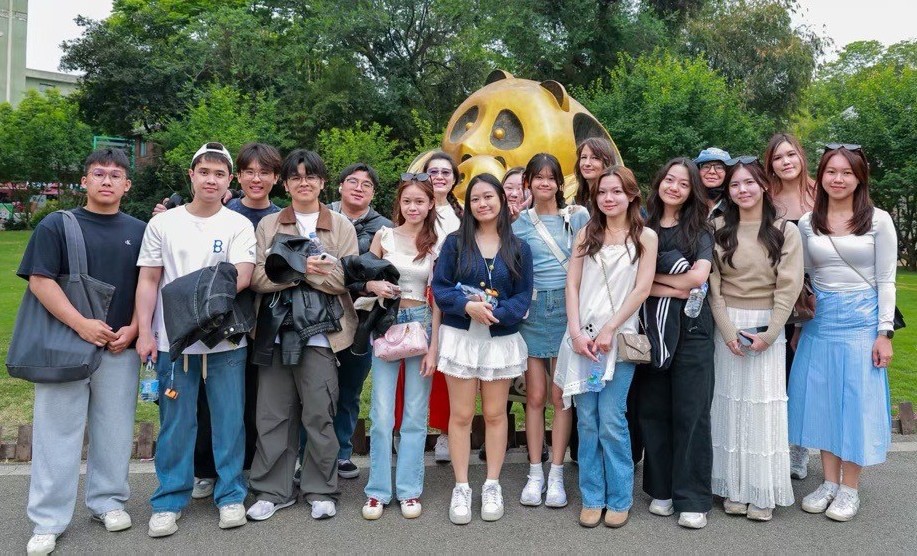
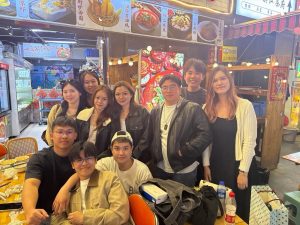
Outside of scheduled activities, students also immersed themselves in Chengdu’s rich cultural atmosphere by exploring local attractions while tasting authentic Sichuan cuisine. Exploring Chengdu allowed us to immerse ourselves in the local culture, experience daily life in the city, and create meaningful memories through interactions with the welcoming local community.
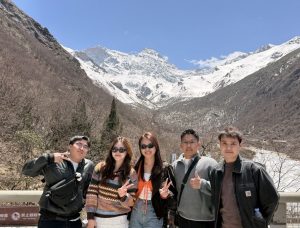
During the weekends, many students travelled to renowned scenic destinations such as Jiuzhaigou National Park (九寨沟) and Huanglong (黄龙). Located at elevations exceeding 3,000 metres above sea level, these UNESCO-recognised sites are famous for their crystal-clear lakes, colourful pools, waterfalls, and breathtaking mountain landscapes. The spectacular scenery provided a refreshing contrast to the hospital environment and offered an opportunity to relax while experiencing the natural beauty of Sichuan Province.
A Holistic Learning Journey
Overall, the elective placement in Chengdu was far more than a clinical attachment. It was a holistic learning journey that combined professional development, cultural immersion, and personal growth.
Through direct exposure to China’s healthcare system, advanced pharmaceutical services, Traditional Chinese Medicine, and local culture, the knowledge and experiences gained throughout the placement allowed us to view patient care from a different perspective and will undoubtedly benefit us in our future careers as healthcare professionals.
Thoughts Shared