


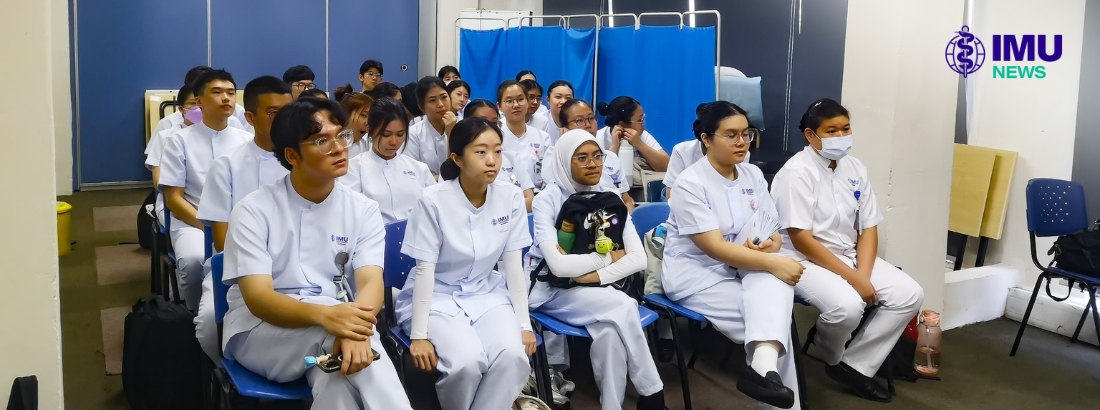
On 15 August 2025, the Nursing Division, led by Ms Deepa Kaliappen and supported by Ms Lee Mei Ying, transformed the classroom into a stage where learning felt urgent, immersive, and unforgettable. For cohort NU124, who are Year 1 Semester 2 nursing students, the workshop on Medication Safety, Legal Awareness, and Documentation Integrity was far more than another academic session; it became a powerful rehearsal for the realities of nursing practice. Conducted at the IMU Clinical Campus in Seremban on the students’ final day of posting, the workshop provided a fitting and memorable conclusion to their clinical journey.
The defining moment of the day came through a gripping roleplay that could easily have happened in any real healthcare setting. Two patients, both admitted under the same name but with different medical record numbers, became the centre of a scenario that tested the students’ attention to detail. As the situation unfolded, they quickly realised how easily a medication error could occur if identity checks were rushed or overlooked. What might have been a routine exercise turned into a tense, immersive drama where every decision carried weight. Students found themselves double-checking, questioning, correcting, and most importantly documenting every action with care and precision.
What made the experience particularly impactful was the way it extended beyond the ward. While some students took on roles as staff nurses, patients, doctors, others became family members, and one even played the part of a lawyer representing the patient’s family. When the lawyer began probing into the details of the case, students suddenly saw their documentation in a new light. Gaps, omissions, or vague notes were no longer harmless; they were potential evidence in a legal inquiry. The exercise made clear that documentation is not mere paperwork but the frontline of accountability, protection, and professional integrity.
For many, the realism of the roleplay left a lasting impression. Students later described how the simulation made their hearts race, but in a way that sharpened their focus and deepened their understanding. One participant admitted, “The roleplay felt so real. It made me nervous, but in a good way—I could see what would happen if I made a mistake on the ward.” Another reflected, “I used to think documentation was just paperwork. Now I know it is one of the most important parts of safe practice.” The legal perspective struck a chord as well, with one student noting, “Having a lawyer question us opened my eyes. It reminded me that honesty and accuracy are our strongest protections.”
The workshop went far beyond teaching procedures; it fostered confidence, sharpened clinical decision-making, and highlighted the essential role of empathy when interacting with patients and their families. Most importantly, it reinforced to NU124 students that errors in nursing are not abstract risks but real possibilities, ones that can be prevented through vigilance, clear communication, and professional accountability. Within the safe yet demanding environment of simulation, students were able to make mistakes without fear, transforming anxiety into readiness and turning theoretical knowledge into practical competence.
By the end of the day, the message was clear: nursing is not only about knowledge, but about carrying responsibility with integrity. For Cohort NU124, this workshop was a turning point, a reminder that every action on the ward has weight, and that their role as future nurses demands both technical skill and a deep sense of accountability.
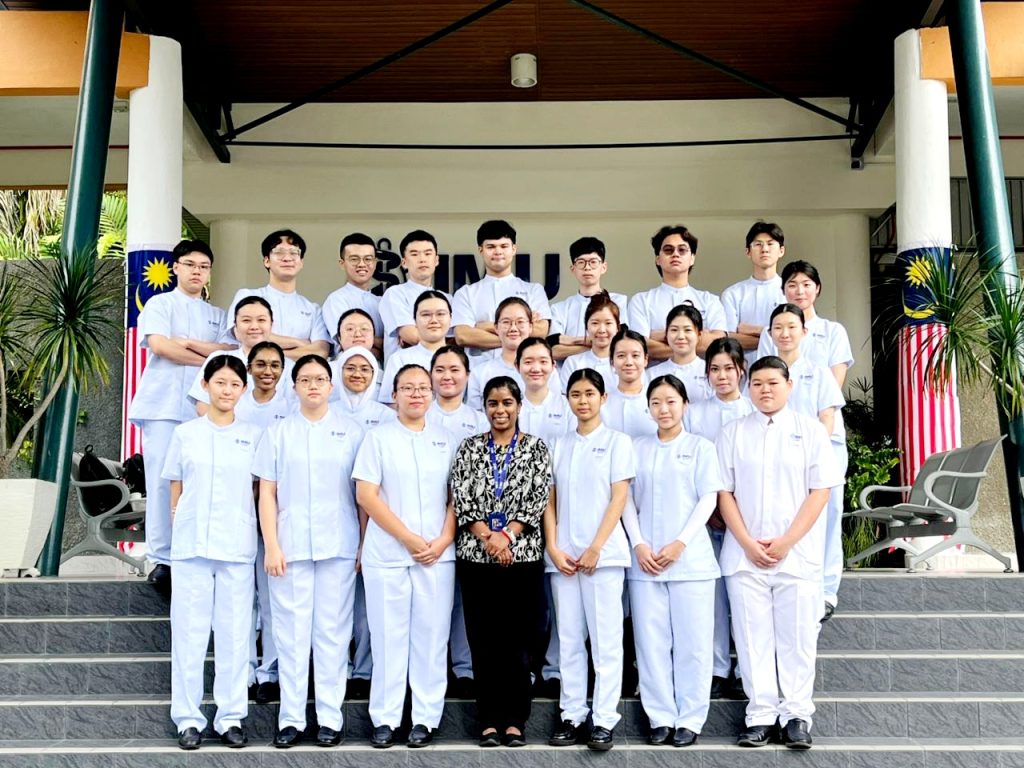
As one student summed it up: “This workshop didn’t just teach us about medication safety, it prepared us for the realities of being accountable, professional, and compassionate nurses.”
In doing so, we once again demonstrated our commitment to student-centred, practice-based education, ensuring that every graduate steps into the ward ready to deliver care that is not only competent, but safe, ethical, and deeply human.
“Safe Hands, Honest Records, Stronger Nurses.”
Written by: Deepa Kaliappen, Faculty of Nursing
Reviewed by: Dr Lim Swee Geok, Head of Nursing Division
Thoughts Shared