


Key Learning Points
- 4 final-year IMU Dietetics with Nutrition students completed a two-month community placement at the IMU Student Dietetics Centre
- Community placements bridge the gap between theory and clinical practice
- Personalised nutrition care improves outcomes in chronic diseases
- Health education and behavioural change are essential in disease prevention
- Hands-on initiatives enhance real-life application of nutrition knowledge
- Inclusive and community-based programmes strengthen public health impact
- Dietetics training develops not only clinical skills, but also leadership and communication competencies
Four Students in this Placement
Chew Yi Xun
Christine Ong Rui Rong
Teoh Xin Mei
Wong Xin Yue
Two-month Community Placement at IMU Student Dietetics
As part of the Bachelor of Science (Hons) in Dietetics with Nutrition programme at IMU University, four final-year students completed a two-month community placement at the IMU Student Dietetics Centre (SDC), a student-led initiative dedicated to promoting accessible dietetics and nutrition care to the public.
Under professional supervision, the students provided services such as body composition analysis and individual diet consultations—both face-to-face and online—while continuing to engage the community to advocate the role of dietetics in health. This placement serves as an important bridge between academic learning and real-world practice.
The programme aims to provide students with opportunities to apply their theoretical knowledge and professional training in clinical, community, and food service settings.
It also prepares them to:
- function effectively as members of the healthcare team
- develop critical thinking skills, and
- demonstrate professional and ethical practice as entry-level dietitians
Through this hands-on exposure at SDC, the students are empowered to translate knowledge into meaningful community impact while preparing themselves for future roles in the healthcare workforce.
Supporting Kidney Health: Nutrition Care for Dialysis Patients
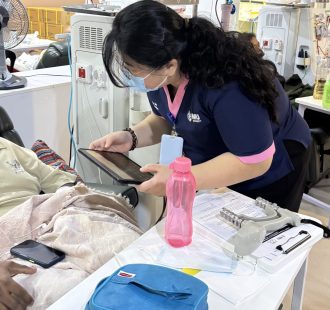
In a collaborative initiative at Diaverum Subang Jaya, personalised nutritional education was provided to long-term dialysis patients with end-stage renal failure (ESRF) over three visits.
During these visits, patients underwent:
- malnutrition and sarcopenia screening,
- nutrition knowledge assessments, and
- one-on-one diet education
They were given guidance on managing
- potassium
- phosphate
- sodium
- fluid intake, and
- vegetarian protein options
In order to enhance understanding, the sessions incorporated:
- visual aids
- practical strategies, and
- multilingual communication
Patient feedback was collected to guide ongoing improvements and strengthen collaboration between students and the centre.
This initiative creates a meaningful impact on the community by empowering patients with tailored knowledge to:
- manage their nutritional needs
- improve health outcomes, and
- foster sustainable dietary habits
It also strengthens collaboration between students and healthcare centres, promoting continuous learning and capacity building in renal nutrition care.
Mastering Blood Sugar: Understanding Carbohydrates and Glycaemic Impact
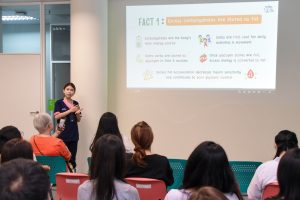
An interactive group education session titled “Carbohydrates and Blood Glucose: What You Need to Know” was conducted to enhance public understanding of carbohydrate intake and its impact on blood glucose levels.
During the session, participants were educated on the definition and types of carbohydrates, as well as practical strategies to make informed food choices for better glucose control. The programme incorporated real-life examples and actionable tips, enabling attendees to apply the knowledge effectively in their daily dietary habits.
This initiative creates meaningful impact within the community by improving health literacy and empowering individuals to make informed dietary choices.
By translating complex nutrition concepts into practical, easy-to-apply guidance, the session helps participants better manage or prevent conditions such as diabetes.
Beyond knowledge transfer, the interactive format encourages behavioural change, builds confidence in self-care, and strengthens the link between student-led services and community health promotion.
Ultimately, such programmes contribute to long-term disease prevention and promote a more health-conscious community.
Cooking for Better Health: Turning Nutrition Knowledge into Practice
The Art of Cooking for Health Culinary Medicine Series 1
The cooking lab session marked the launch of The Art of Cooking for Health Culinary Medicine, an initiative by the SDC aimed at promoting practical healthy cooking knowledge within the community.
During the session, participants learnt how to transform commonly consumed foods into healthier low glycaemic index (GI) alternatives by incorporating high-fibre and high-protein ingredients alongside appropriate cooking methods.
Participants prepared One-Pot Baked Rice and Taufufah while learning about ingredient selection, strategies to increase fibre content and the practical application of low GI concepts to support better blood glucose control.
By translating nutrition knowledge into practical skills, the session empowered participants to confidently apply healthier choices in their daily lives.
The Art of Cooking for Health Culinary Medicine Series is designed to be a sustainable initiative, with future sessions planned to continuously support the community in developing healthier cooking habits.
This hands-on experience strengthens self-management, particularly for individuals at risk of or living with Type 2 Diabetes, while promoting long-term healthy eating practices within families and the wider community.
Through accessible education and skill development, the initiative contributes meaningfully to the prevention and management of non-communicable diseases in the community.
Advocating Dietetics: Engaging Communities Through Health Education
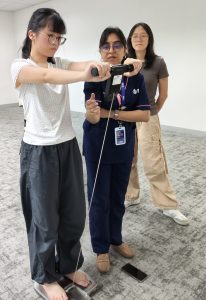
Beyond its core outpatient services and major community initiatives, the IMU SDC also actively supports various university and community engagement events to advocate the dietetics profession and advancing nutrition knowledge.
IMU Degree Discovery Xperience (DDX)
At the IMU Degree Discovery Xperience (DDX), an event designed to introduce IMU Foundation students to different undergraduate programmes at the University, the students showcased the clinical role of student dietitians through demonstrations of nutrition assessment tools and discussions on interpreting nutritional information in commercial food products.
Through this experience, the students strengthened their ability to communicate nutrition concepts and advocate the role of dietitians to prospective healthcare students.
Deaf-Friendly Health Carnival
The students also contributed to the Deaf-Friendly Health Carnival, an event aimed at promoting accessible health education for the Deaf community and their families.
During the carnival, they delivered a health talk focusing on common non-communicable diseases (NCDs) in Malaysia and shared practical nutrition tips for disease management.
By participating in this initiative, student dietitians gained valuable experience in delivering inclusive health education and engaging with diverse communities.
From Classroom to Community: A Journey in Dietetics Practice
The placement at the IMU SDC provided a valuable opportunity for the students to experience dietetic practice in real community settings.
Throughout the programme, the students engaged with individuals from diverse backgrounds, health conditions, and levels of nutrition knowledge. Interacting with different patient groups—including those with chronic diseases and members of the public seeking preventive nutrition advice—helped them gain a deeper understanding of the real-life challenges people face in managing their health.
These experiences also fostered greater empathy, adaptability, and cultural sensitivity in our delivery of nutrition education and dietary counselling.
Working in a student-led environment also strengthened teamwork and organisational skills. As a team, the students collaborated closely to plan and execute various activities and community events from start to finish. This included brainstorming programme ideas, preparing educational materials, coordinating logistics, and delivering the sessions to participants.
Through these experiences, they learned the importance of clear communication, delegation of responsibilities, and mutual support in ensuring the success of each initiative.
In addition to community engagement, we were also involved in the day-to-day operations of the dietetic centre. Managing consultations, organising schedules, preparing resources, and supporting outreach activities allowed the students to appreciate the operational aspects of running a nutrition service.
This exposure provided insight into the entrepreneurial and leadership mindset required to sustain a community-based health service, encouraging them to think beyond clinical practice and consider innovative ways to expand access to nutrition care.
Overall, the placement enriched the students’ learning by strengthening their hands-on clinical and community nutrition skills. It also enhanced their confidence in communicating nutrition information to the public, applying the Nutrition Care Process in real cases, and working collaboratively as part of a team.
These experiences have played an important role in shaping our development as future dietitians who are not only clinically competent but also capable of contributing meaningfully to community health promotion.
A Meaningful Journey
The community placement at the IMU Student Dietetics Centre has been a meaningful journey that highlights the dual benefit of community engagement and the students’ development.
Through nutrition talks, nutrition screening, group education and hands-on sessions, they were able to contribute to community education by promoting practical strategies for disease prevention and management.
At the same time, these experiences strengthened their clinical reasoning, communication skills, teamwork and confidence as future dietitians. The opportunity to translate classroom knowledge into real world practice has been invaluable in shaping our professional growth.
We would like to express our sincere appreciation to our clinical instructors for their continuous guidance, constructive feedback and unwavering support throughout the placement. Their mentorship played a pivotal role in refining our clinical skills and ensuring that our education initiatives were evidence based, structured and impactful. We were also grateful to all collaborating partners and participants whose involvement made this placement both enriching and rewarding.
Written by DN122 Final Year Students: Chew Yi Xun, Christine Ong Rui Rong, Teoh Xin Mei and Wong Xin Yue


Thoughts Shared