


Article Summary
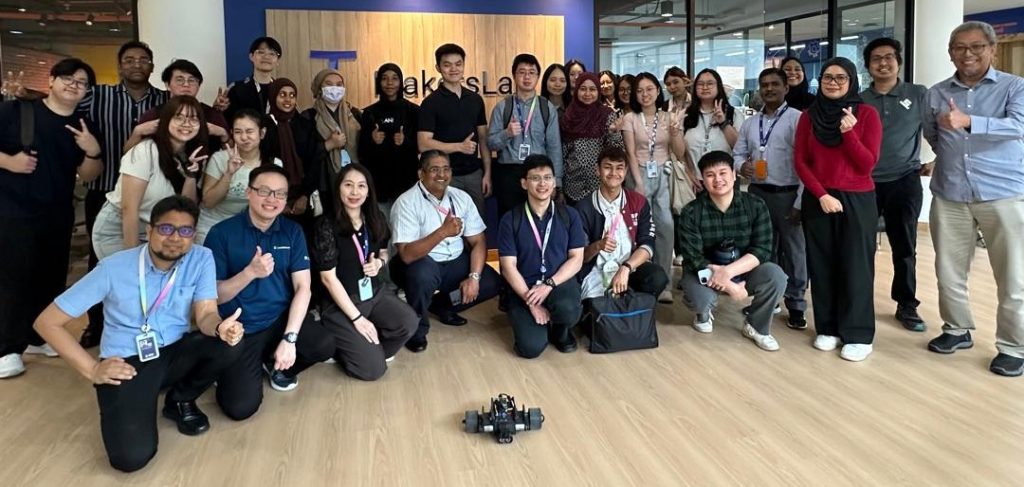
Students from the Bachelor in Digital Health (BDH) and Master in Health Informatics and Analytics (MHIA) programmes at IMU University visited Malaysian Research Accelerator for Technology and Innovation on 11 December 2025. The industry visit provided hands-on exposure to emerging technologies, startup ecosystems, and real-world digital health innovation in Malaysia.
Key Facts
Visit Location:
Malaysian Research Accelerator for Technology and Innovation
Date:
11 December 2025
Participants:
22 IMU University students from:
- Bachelor in Digital Health (BDH)
- Master in Health Informatics and Analytics (MHIA)
Industry Exposure in Digital Health and Innovation
An industry visit to the Malaysian Research Accelerator for Technology and Innovation (MRANTI) was conducted on 11 December 2025 to enhance experiential learning for IMU University students from these programmes:
- Bachelor in Digital Health (BDH) and
- Master of Health Informatics and Analytics (MHIA)
The visit involved 22 students and was accompanied by Prof Ts Dr Saravanan Muthaiyah, the Dean, School of Business and Technology and three lecturers
- Ts Dr Fong Pui Kwan,
- Dr Thein Oak Kyaw Zaw and
- Dr Gunasekar Thangarasu
In addition to technological exposure, the visit provided students with valuable insights into MRANTI’s startup ecosystem, highlighting how innovation-driven enterprises are nurtured from ideation to commercialisation.
This is part of the BDH programme’s commitment to experiential learning, consistently organising industry visits and external engagements to ensure students gain real-world exposure beyond the classroom.
Exploring Emerging Technologies in Healthcare
During the visit, participants were introduced to several key facilities, including the
- MakersLab,
- 3D printing facilities,
- Robotics lab, and
- 5G Immersive Experience Centre.
Students gained:
- Practical understanding of rapid prototyping, robotics, and immersive technologies, as well as
- Their potential applications in healthcare such as medical device development, automation, telemedicine, and remote patient monitoring.
Engagement with the innovation environment also allowed students to appreciate how startups leverage these technologies to develop scalable and market-ready digital health solutions.
Developing Innovation Mindset
The visit gave students first-hand access to tools and networks shaped exactly for breakthrough work.
More than labs and gear, the group had highlighted how graduates must think like creators, not just applicants. Solving actual problems mattered most, along with knowing where value really lands.
Seeing startups backed by MRANTI turn medical challenges into practical products showed students ways that ideas can grow beyond theory.
What stood out for MHIA learners was how the trip responded to industry advisors’ push to shape graduate work around inventions that could be materialised.
Strengthening Digital Health Education Through Industry Collaboration
Overall, the visit successfully bridged theoretical knowledge with real-world technological and entrepreneurial practices.
The combined exposure to advanced technologies and startup innovation
- Strengthened students’ understanding of the broader digital health ecosystem and
- Reinforced the programme’s objective of producing industry-ready graduates equipped with both technical competence and innovation mindset.
Thoughts Shared