


What does it mean to be ready for emergency and trauma care?
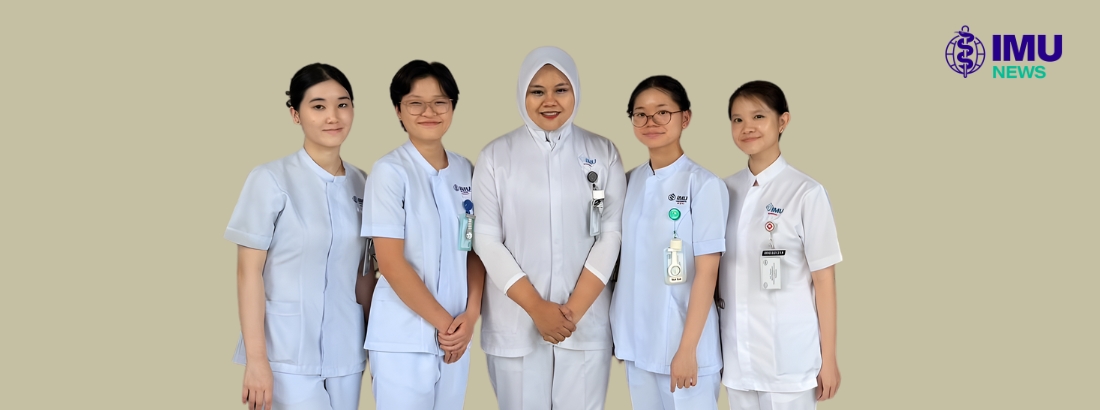
For five IMU Bachelor of Nursing (Hons) students from Cohort NU123, who were posted to the Emergency and Trauma Department at Hospital Tuanku Jaafar, Seremban, from 1 to 12 December 2025, the answer did not emerge in a lecture hall or simulation room. Instead, it revealed itself in the resuscitation bay of a real Emergency Department, where seconds mattered, decisions carried weight, and learning became deeply human.
Laying the Groundwork
The journey began long before the students stepped into the Emergency Department. As part of their Emergency and Trauma module, NU123 followed a structured learning pathway that combined theory, simulation, and interprofessional exposure. Core emergency nursing concepts were introduced alongside ethical considerations, patient assessment using primary and secondary survey, triage, airway and shock management, mass casualty as well as disaster response.
This foundation was reinforced through immersive learning at the Clinical Skills and Simulation Centre (CSSC) at IMU University’s Bukit Jalil Campus. Rather than practising skills in isolation, students were required to integrate multiple interventions while managing a single simulated trauma patient. Cervical collars, pelvic binders, airway adjuncts, intravenous cannulation, and rapid assessment were carried out under time pressure, closely reflecting real emergency care.
Uncertainty was common. Moments of panic surfaced. Communication was sometimes hesitant, and technical accuracy required refinement. Yet these moments were not discouraging. Through guided debriefing, students began to understand that emergency nursing is not about perfection. It is about awareness, teamwork, adaptability, and learning to function when conditions are far from ideal.
When Nursing and Medicine Collaborate
Preparation continued through an interprofessional simulation session at the IMU Seremban Clinical Campus. Nursing students from NU123 worked alongside Semester 8 medical students from ME122 in managing a patient with an open tibial fracture following a motor vehicle accident. With only ten minutes to complete a primary survey and initiate early management, the pressure was immediate and real.
Beyond clinical skills, students learned the importance of communication, role clarity, and mutual trust. They began to see that effective emergency care depends not only on knowing what to do, but on understanding who should act, when to step forward, and how to work together while still reassuring the patient in moments of distress.
Stepping Into Reality
The transition from preparation to practice began with orientation to the newly renovated Emergency Department. Students familiarised themselves with patient flow, treatment zones, and the application of the Revised Malaysia Triage Protocol 2022. This helped them visualise how clinical decisions are prioritised and made in real time within a fast-paced emergency setting.
This was followed by Basic Life Support (BLS) and defibrillator skills training. Although BLS had been taught earlier in their programme, most students had only observed resuscitation in clinical practice. This session allowed students to practise high-quality cardiopulmonary resuscitation (CPR), rhythm recognition, defibrillation, and cardioversion in line with the 2025 American Heart Association guidelines.
What they did not know was how soon all of this preparation would be tested.
When Preparation Met Reality
During one of their early ED shifts, what began as a routine posting quickly transformed into a defining moment for them. Two male casualties were brought in by members of the public following a firearm-related incident. The arrival was sudden and unplanned. Within moments, the ED shifted into full trauma activation.
The first patient arrived conscious and responsive, with multiple gunshot wounds and visible external bleeding. Rapid haemorrhage control, limb immobilisation, and close monitoring were initiated, stabilising his condition while further assessments were carried out.
The second patient arrived in cardiac arrest.
What followed was a prolonged and intense resuscitation that tested every layer of emergency care. The patient experienced repeated episodes of ventricular fibrillation (VF) and pulseless electrical activity (PEA), accompanied by catastrophic haemorrhage. Advanced trauma and cardiac life support unfolded rapidly: high-quality cardiopulmonary resuscitation, endotracheal tube (ETT) intubation, bilateral chest tube insertion for haemopneumothorax, massive transfusion via a Level 1 rapid infuser, intraosseous access, and ultimately an emergency open thoracotomy with open cardiac massage performed in the ED before transfer to the operating theatre. As the resuscitation continued, forensic teams were activated due to the medico-legal nature of the case, with evidence collection taking place alongside life-saving efforts.
These five students happened to be posted in the ED that day, Trauma Life Support was no longer confined to textbooks or simulations. It was unfolding in real time, unpredictable, relentless, and undeniably real.
They were no longer observers.
Nurul Fathihah binti Mohd Azhar was involved from the patient’s arrival, assisting with cervical collar application and patient transfer, and subsequently supporting airway management in the resuscitation bay with Denise Quek Le Yun. Koh Jia Tong stepped into the resuscitation bay as part of the trauma team and performed CPR, contributing to the return of spontaneous circulation. Her ability to deliver effective chest compressions under extreme pressure, despite this being one of her first real-life CPR experiences as a student nurse, was acknowledged by the emergency physicians. As the resuscitation continued, Jia Tong worked alongside Tan HaoXuan, with both students assisting an emergency physician during chest tube insertion by preparing equipment and supporting the procedure, while Denise Quek Le Yun and Kristen Liew Li-Ann formed another pair assisting a second emergency physician. Throughout the three-hour resuscitation, the students remained attentive to instructions, responsive to evolving needs, and actively supported the trauma team.
Student Voices from the Resuscitation Bay
This unique experience became more than a clinical exposure. It marked the moment they stopped seeing themselves as students on the sidelines and began to recognise their place as contributing members of the healthcare team.
Koh Jia Tong
“Emotionally, this experience was intense and overwhelming, as I witnessed repeated cardiac arrests, massive haemorrhage, and emergency surgical intervention. At the same time, it was profoundly impactful. It strengthened my confidence, resilience, and sense of responsibility as a student nurse and a future healthcare provider.
I felt a deep sense of pride in myself and my classmate for being able to actively participate and contribute to the management of such a critical case, especially as encountering a firearm-related trauma of this severity during clinical posting was something I never expected, making this resuscitation even more extraordinary for me to witness. Being entrusted to assist in a complex and high-risk situation reinforced my belief in our clinical abilities and the importance of teamwork.”
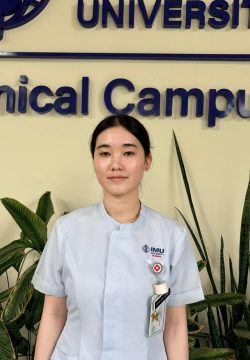
Tan HaoXuan
“As a student nurse, I was deeply impressed by the ED staff and the way they managed patients in such a high-stress situation. Never in my life had I encountered such a complex cardiopulmonary emergency involving firearm-related injuries. Experiencing this case firsthand during only my second week in the ED was both confronting and eye-opening.
Through this intense, hands-on experience, I came to appreciate how our prior training prepared us to function, even as novices in the ED. Although our contributions were limited by our scope as students, we were encouraged to step forward, demonstrate initiative, and work alongside the healthcare team. This trust allowed us to build teamwork with the ED staff and participate meaningfully in patient care. Being involved in such a demanding situation gave me a strong sense of accomplishment and motivated me to continue improving my clinical skills and confidence as a future nurse.”
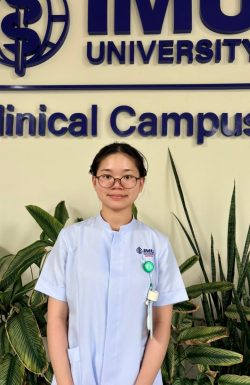
Denise Quek Le Yun
“During the damage control resuscitation, I experienced a mix of intense emotions. At first, I felt excited to be involved in such a critical case, but this was quickly accompanied by nervousness and hesitation, as I was worried about getting in the way in a fast-paced emergency setting.
With timely guidance, I gradually gained composure and confidence, which allowed me to step forward and contribute within my scope of practice. Being present during a life-threatening situation made me more aware of my role and responsibility as a student nurse. As the resuscitation progressed, I was deeply impressed by the calmness, efficiency, and coordination of the multidisciplinary team, including my peers, who demonstrated strong initiative and situational awareness throughout the process.
This experience reinforced the importance of teamwork, clear communication, and emotional control during emergencies. It also strengthened my confidence in applying theoretical knowledge to real-life clinical practice. Overall, this encounter was a pivotal learning experience that enhanced my professional growth and reaffirmed my motivation to become a competent, resilient, and patient-focused nurse.”
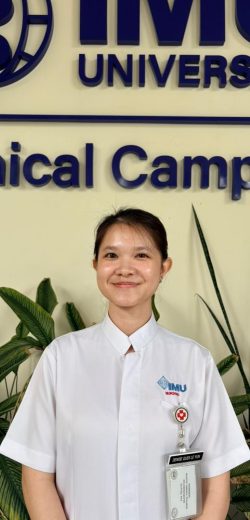
Kristen Liew Li-Ann
“This experience allowed me to witness a complete trauma protocol that required close collaboration and teamwork across multiple healthcare professions. It made me realise how vital each discipline is, and how seamlessly everyone works together to manage and save patients in high-stress emergency situations.
Being involved in this case, even though it was only my second week in the ED, gave me the opportunity to contribute within my capabilities. With guidance from the nursing faculty, I learned how to assist the trauma team appropriately and safely. The continuous support and knowledge shared throughout our training helped me respond more effectively than I expected in such a demanding situation.
Overall, I felt a strong sense of accomplishment and pride in being able to contribute to patient care. This was a truly valuable learning experience—one that I may not encounter again, but will always remember as a defining moment in my clinical training.”
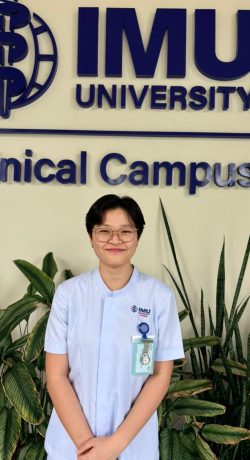
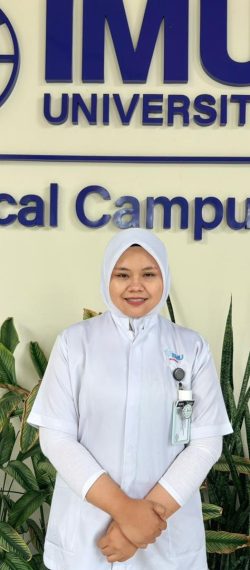
Nurul Fathihah binti Mohd Azhar
“This was my first time witnessing a real-life emergency of such severity, and at the beginning, I felt overwhelmed by the pace, urgency, and intensity of the resuscitation. However, despite feeling emotionally challenged, I knew that the most important priority at that moment was to do everything possible to help the patient survive.
As the resuscitation progressed, my confidence gradually improved. The ED doctors acknowledged our presence and encouraged us to participate, even though we were still student nurses. That recognition motivated me and reinforced my sense of responsibility as part of the healthcare team. I was particularly impressed by how clearly and effectively the team communicated with one another, even under immense pressure.
Throughout the process, we continuously observed what was needed and offered help proactively. Sometimes, even without verbal instructions, we learned to read the situation, anticipate needs, and ask how we could assist. This allowed us to support the doctors and nurses meaningfully. Overall, this experience strengthened my confidence and reaffirmed my motivation to grow into a competent, reliable nurse. It highlighted the vital role nurses play during emergencies and will remain a defining learning experience in my journey to becoming a registered nurse.”
When the Urgency Settled
After the patient was transferred to the operating theatre, the students returned quietly to the trauma bay to tidy the area and restock consumables. While the medical team continued to care for the first casualty, the students continued their ED duties and completed their assessments until the shift ended. When the pace finally eased, we came together for debriefing, not only to review the clinical aspects of the case, but to process what had been felt, witnessed, and learned. It was a moment to slow down, to acknowledge the weight of the experience, and to recognise how much had been carried together as a team.
What Stays with Us
Throughout our Emergency and Trauma posting, we encountered urgency, uncertainty, loss, and survival. What stayed with us most was not the complexity of the cases, but the quiet transformation our clinical instructor later shared that she had witnessed in us.
In our first week in the ED, she helped us find our footing by revisiting key concepts, not to test us, but to remind us that what we had learned mattered. Our early hesitation, we later realised, reflected care and respect for the seriousness of emergency care rather than weakness.
When a major trauma case arrived, everything we had prepared for was put to the test. Our instructor did not see us retreat; she saw us step forward. She guided us as we listened, prepared, and supported the team, not because we knew everything, but because we were present and willing to learn.
After the patient was transferred out, we quietly worked together to restore the trauma bay. This small moment reflected teamwork, responsibility, and learning beyond technical skills.
This experience reminded us of something our clinical instructor often emphasised. Academic achievement is easy to measure, but it is rarely what people remember. What endures is how we step up in challenging situations, how we communicate under pressure, how we work with others, and how we carry ourselves when resources are limited. Academic excellence matters, but it should never come at the expense of attitude, integrity, accountability, and compassion. These qualities reveal themselves quietly, especially in moments when no one is watching.
Acknowledgements
The ED posting described was made possible by the generosity, guidance, and trust of many individuals who shaped our learning in ways we will never forget.
We are grateful to Dr Lim Swee Geok, Ms Mong I vy, and Ms Lee Mei Ying for providing us with knowledge and clarity before we ever entered the ED. We are thankful to the Nursing Faculties for supporting our clinical posting.
We also thank Ms May Goh Lay Khim, Ms Deepa A/P Kaliappan, Ms Lee Mei Ying, Mr Dharshan Kumar A/L Kumarasan and the CSSC team for creating immersive learning experiences that allowed us to practise, make mistakes, and grow safely.
Our sincere appreciation goes to Ms Malini A/P Krishna for guiding us in defibrillation and cardioversion, and to A/Prof Mohammad Arshad Ikram Arshad, Ms Malini, Ms Normy Binti Narihan, Mr Daniel Tay Jun Siang and the ME122 medical students for meaningful interprofessional learning.
Above all, we thank the ED doctors, ward sisters, nurses, and medical assistants for trusting us, involving us, and allowing us to learn in moments that truly mattered.
Written by (NU123 Nursing Students):
Koh Jia Tong
Tan Hao Xuan
Denise Quek Le Yun
Kristen Liew Li Ann
Nurul Fathihah binti Mohd Azhar
Edited by:
Lee Mei Ying
Reviewed by:
Dr Lim Swee Geok
Thoughts Shared