


Article Summary
This article highlights key insights from MIND#8 at IMU University, where Prof Dr Samsilah Roslan shared strategies on research commercialisation, innovation, and translating academic work into real-world impact.
Key Takeaways
- Up to 95% of research does not reach end users, highlighting a major gap in impact
- The 6Ps Framework (People, Problems, Partnerships, Pathways, Platforms, Persistence) is a practical guide for translating research into impact.
- A shift from “technology push” to “market pull” improves relevance and adoption
MIND#8 at IMU: Driving Research Beyond Publications into Real-World Impact
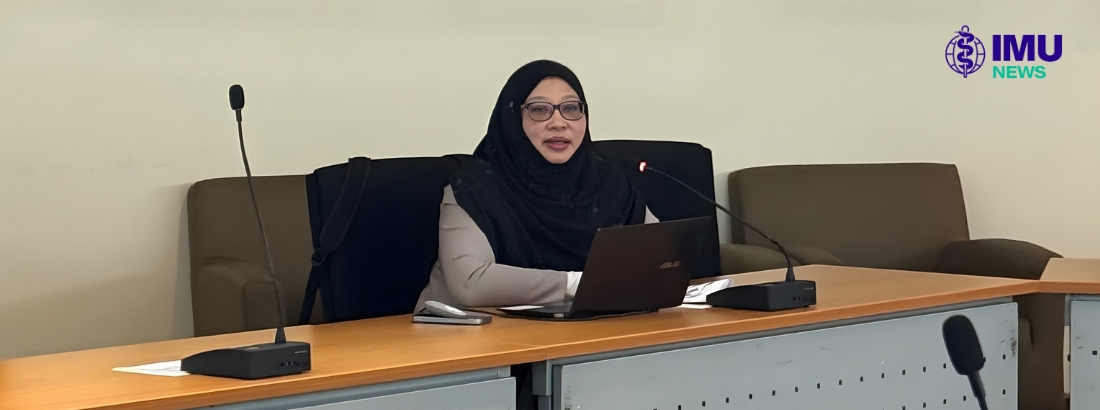
The Institute for Research, Development and Innovation (IRDI) at IMU University recently hosted MIND#8, featuring Prof Dr Samsilah Roslan, Director of Putra Science Park, Universiti Putra Malaysia (UPM), on 2 March 2026 at IMU University’s main campus in Bukit Jalil.
A distinguished leader in research commercialisation and innovation management, Prof Samsilah delivered an engaging session on translating academic research into meaningful societal and economic impact.
Prof Dr Samsilah is widely recognised for her contributions to Malaysia’s innovation ecosystem. With over 16 years of experience in commercialisation and more than 300 technology transfer and licensing negotiations, she has played a pivotal role in advancing university-industry collaboration.
Under her leadership, UPM has received multiple national awards for excellence in intellectual property management. She has also contributed to national innovation policies and international initiatives, further strengthening Malaysia’s research and commercialisation landscape.
The Challenge: Research Fails to Reach End Users
Opening the session, Prof Samsilah highlighted a critical challenge in academia – nearly 95% of research outputs do not reach patients or end users. She emphasised that while publications remain important, research should ultimately deliver tangible impact.
“Commercialisation is not just about financial returns – it is about creating value for society,” she noted, underscoring that impactful research can improve patient outcomes, raise awareness, attract investment, and generate employment opportunities.
She called for a shift in academic mindset from “Publish or Perish” to “Publish AND Impact”, encouraging researchers to think beyond traditional outputs and consider how their work can address real-world problems.
The 6Ps Framework for Research Impact
A key highlight of the session was the introduction of the 6Ps Framework – People, Problems, Partnerships, Pathways, Platforms, and Persistence, as a practical guide for translating research into impact.
Prof Samsilah emphasised the importance of identifying real-world problems and adopting an academic entrepreneur mindset, where research is driven by purpose and application. She also highlighted the role of partnerships in amplifying impact, noting that collaboration with industry provides access to manufacturing capabilities, regulatory expertise, and distribution networks.
Importantly, she stressed that partnerships should not be viewed as a compromise, but rather as a strategic pathway to ensure research reaches those who need it most.
From Technology Push to Market Pull in Innovation
Another key insight from the session was the need to shift from a “technology push” approach to a “market pull” strategy. Researchers were encouraged to validate whether their innovations address genuine needs and to align their work with market demand.
Prof Samsilah illustrated how successful innovations are often driven by strong user demand, supported by clear value propositions and continuous engagement with stakeholders. This approach ensures that research outputs are not only scientifically sound but also relevant and adoptable.
Understanding the Research Commercialisation Pathway
The session also provided practical insights into the commercialisation pathway, from idea development to market entry. Prof Samsilah highlighted the role of technology transfer offices (TTOs) in supporting patent applications, licensing agreements, and funding processes.
Building an Impact-Driven Research Culture
During the interactive Q&A session, participants explored topics such as start-up formation, pitching to investors, and commercialising health-related innovations. Prof Samsilah emphasised that successful commercialisation requires not only a strong idea, but also teamwork, persistence, and adaptability, as well as an understanding of market validation and business models.
In her concluding remarks, Prof Samsilah called for a broader cultural shift within academia from risk avoidance to calculated risk-taking, from working in isolation to engaging within innovation ecosystems, and from intellectual property (IP) hoarding to active IP utilisation.
Researchers were encouraged to rethink the purpose of their work by starting with real-world problems, identifying clear users or beneficiaries, and designing research with impact in mind from the outset.
Building strong partnerships, understanding market needs, and remaining persistent through challenges are essential to translating research into meaningful outcomes that benefit society.
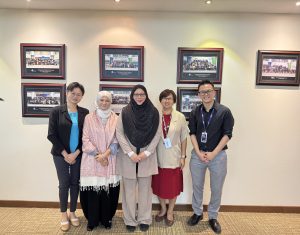
MIND#8 provided participants with not only practical strategies but also a renewed perspective on the purpose of research. The session reinforced IMU’s commitment to fostering a research culture that values both academic excellence and meaningful societal impact.
Written by Dr Lai Pei Kuan and Ngai Zi Ni
Other Sessions in the MIND (Meet, Inspire, Network, Discuss) Series
17 October 2025: From Research to Revenue: A Reviewer’s Insights on Securing MOSTI Grants
17 November 2025: An Enriching Scholarly Exchange: Research Highlights by Deakin University’s Researchers
3 October 2025: Transforming Health Systems Through Evidence: Prof Syed Mohamed Aljunid Inspires at IMU’s MIND Session
05 January 2026-Screening Smart: Prof Ho Weang Kee Shares Advances in Breast Cancer Risk Prediction at IMU University
Thoughts Shared