


05 January 2026 | IMU University Bukit Jalil
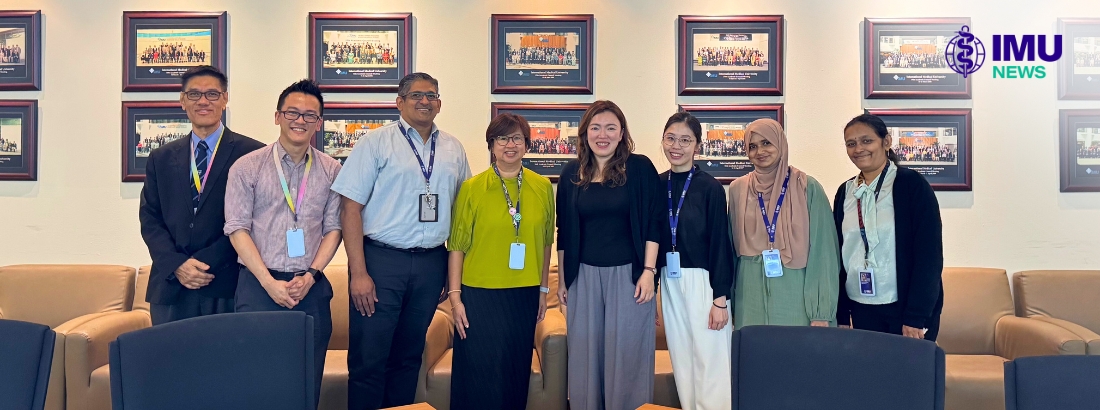
The Institute for Research, Development and Innovation (IRDI) recently hosted the 5th installment of the MIND (Meet, Inspire, Network, Discuss) series, featuring Prof Ho Weang Kee from the Faculty of Science and Engineering, University of Nottingham Malaysia, as the special guest speaker. Her talk focused on breast cancer risk prediction, precision medicine, and the importance of population-specific screening strategies for Asian women.
Prof Ho is a leading statistician whose research integrates advanced statistical and genetic modelling to improve breast cancer risk assessment, particularly for under-represented Asian populations. After completing postdoctoral training in the United Kingdom, including roles at the National Institute for Health Research and the University of Cambridge, she returned to Malaysia in 2013 to establish a research programme centred on precision medicine for Asian women. Her work has received international recognition, including the L’Oréal-UNESCO Malaysia For Women in Science Fellowship and the International Rising Talent Award. In 2024, she became the first Malaysian recipient of the £1.92 million Wellcome Trust Career Development Award, supporting an eight-year programme to develop breast cancer risk-stratification and communication tools for multi-ethnic Asian populations.
During the session, Prof Ho highlighted several key themes in breast cancer risk prediction for Asian women, including:
- The under-representation of Asian populations in global genetic studies.
- Differences in BRCA1 and BRCA2 mutation prevalence between Asian and European populations.
- The use of population-specific polygenic risk scores to improve prediction accuracy.
- The influence of lifestyle, reproductive factors and mammographic breast density across populations.
- The need to translate research findings into equitable, real-world screening strategies.
Beyond genetics, Prof Ho presented data on lifestyle and reproductive risk factors, mammographic breast density, and their varying influence across Asian and European populations. While differences exist, she noted that Asian populations are often more similar than different, underscoring the need for integrated, context-specific risk prediction models rather than fragmented approaches.
A key highlight of the talk was the discussion on translating research into real-world impact. Prof Ho shared ongoing work on risk-stratified screening tools and the MAKNA initiative, which aims to improve how breast cancer risk is communicated to women in Malaysia. She also addressed current challenges in screening uptake, including cost, fear, and low risk perception, stressing that effective screening requires both behavioural change and equitable health system support.
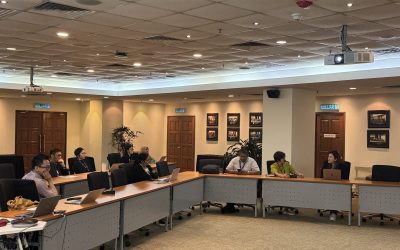
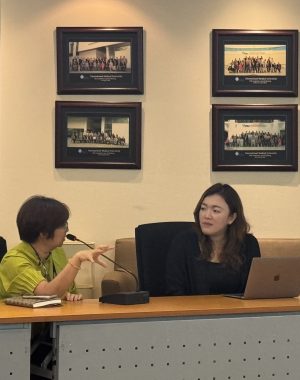
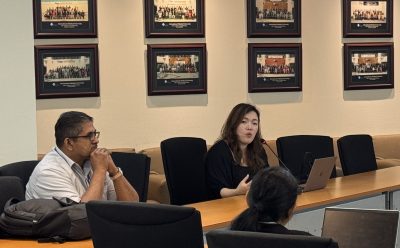
The session concluded with an engaging Q&A, where participants discussed geographical variation in breast cancer risk, data gaps among under-represented populations, dietary factors, and strategies to encourage mammography uptake. Prof Ho emphasised the importance of sustained data collection, inclusive research, and mentorship in building impactful scientific careers.
MIND #5 once again demonstrated the value of the MIND platform in fostering interdisciplinary dialogue and connecting research excellence with real-world health challenges. Prof Ho’s sharing offered valuable insights into how precision medicine equitable screening strategies can shape the future of breast cancer prevention in Asia.
Submitted by Ngai Zi Ni & Gladys Yau
Other Sessions in the MIND (Meet, Inspire, Network, Discuss) Series
17 October 2025: From Research to Revenue: A Reviewer’s Insights on Securing MOSTI Grants
17 November 2025: An Enriching Scholarly Exchange: Research Highlights by Deakin University’s Researchers
3 October 2025: Transforming Health Systems Through Evidence: Prof Syed Mohamed Aljunid Inspires at IMU’s MIND Session
Thoughts Shared