


To facilitate global learning experiences, the IMU School of Pharmacy established the Global Exposure Fund, offering financial support for pharmacy students to undertake elective placements abroad. As part of this initiative, 24 pharmacy students from the BP122 cohort embarked on a transformative elective placement at the University of South Australia (UniSA).
The placement included a two-week clinical immersion facilitated by SA Pharmacy at premier South Australian hospitals — Royal Adelaide Hospital (RAH), Lyell McEwin Hospital (LMH), and Queen Elizabeth Hospital (QEH) followed by a one-week on-campus mobility programme at UniSA, significantly enhancing students’ academic and professional growth.
One of the Highlights: Learning Experience at the Royal Adelaide Hospital (RAH)
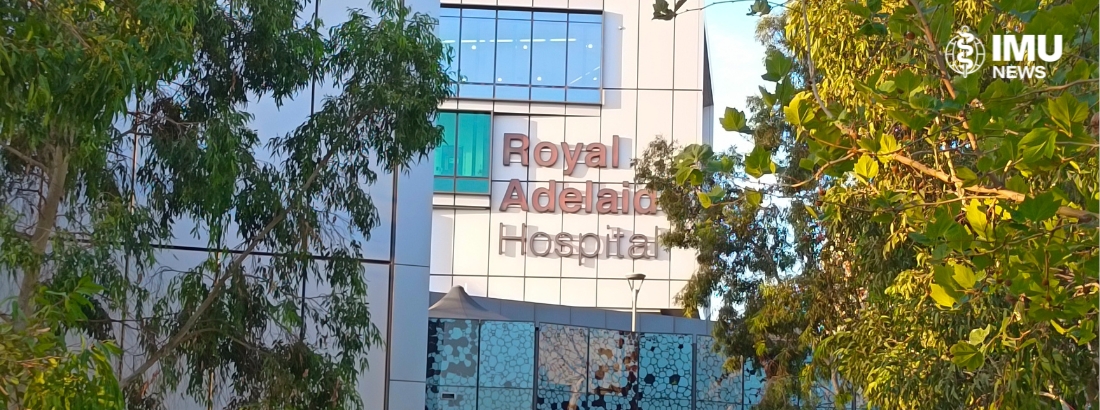
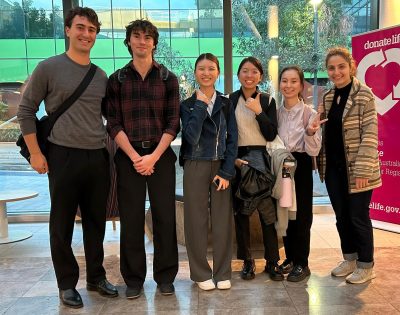
Among the 24 students, Tan Xin Ni, Seow Ru Jun, and Melanie Lim Zi Ye had their placement at the Royal Adelaide Hospital (RAH), the largest and most advanced public hospital in South Australia, located on Port Road in Adelaide. Their clinical immersion at RAH provided exposure to the full scope of hospital pharmacy, ranging from inpatient automation to outpatient medication management.
The inpatient dispensary operated efficiently, utilising Automated Dispensing Cabinets (ADCs) for regular restocking and the ROWA robotic system for rapid medication picking. However, special medications such as chemotherapy agents and biologics required careful manual handling under the Special Access Scheme (SAS).
They participated in medication reconciliation, cross-referencing prescriptions with lab results — a process that highlighted the critical role of pharmacists in preventing dosing errors.
In the outpatient pharmacy, the students observed Australia’s Pharmaceutical Benefits Scheme (PBS) in action, significantly reducing medication costs for patients. The Clozapine Monitoring System (CPMS) demonstrated advanced safety protocols for high-risk medications.
Xin Ni
Xin Ni had her one-week placement at the Intensive Care Unit (ICU). As ICU patients are often unconscious, history-taking becomes challenging. She learned to gather medication histories using multiple sources such as medical records, the iPharmacy system and information from family members. She had the opportunity to speak directly with a patient for history taking, in which she practised prioritising key questions and using open-ended prompts for accurate recall.
In medication reconciliation, she was introduced to the guidelines and references used in Australia. She also learned the “head-to-toe” approach and FAST HUGS BID mnemonic for medical reconciliation.
Additionally, she practised therapeutic drug monitoring of vancomycin to evaluate and adjust dosing appropriately. The student expressed gratitude to her preceptor for the guidance and generous teaching provided throughout her ICU placement.
Ru Jun
Ru Jun’s General Medicine rotation revealed the depth of pharmacists’ clinical involvement. One memorable case involved a patient with C. difficile infection, where she learned to avoid loperamide due to the risk of toxin retention. Discharge planning extended beyond prescriptions as the pharmacists educated patients, caregivers, and community providers to ensure continuity of care.
The Australian pharmacists’ scope is expanded from vaccinations to multidisciplinary rounds, which was inspiring. However, challenges like medication adherence in homeless patients underscore systemic gaps.
This experience reshaped her perspective, emphasizing patient-centered care, technology integration, and interdisciplinary collaboration as pillars of modern pharmacy practice.
Melanie
Melanie was assigned to the cardiology department in RAH. It was a valuable experience that bridged theoretical knowledge with real-world patient care. She was assigned to the Acute Coronary Syndrome (ACS) team, working alongside medical officers, pharmacists, and nurses.
Under the guidance of the pharmacist preceptor, she gained hands-on experience in medication management, from reviewing patient records via Sunrise EMR to taking medication histories and identifying potential interactions or adherence issues. She had the chance to collaborate on treatment plans and discharge medications for complex cardiovascular cases with other healthcare professionals, highlighting the importance of interprofessional teamwork. She also observed that many ACS patients had comorbid diabetes, underscoring the need for integrated care in controlling the diabetes condition.
After finalising discharge plans, the pharmacist would prepare medications, often using Dose Administration Aids (DAAs) to support adherence to complex regimens. One of the most rewarding aspects was counselling post-PCI (Percutaneous Coronary Intervention) patients on dual antiplatelet therapy (DAPT), bleeding risks, and lifestyle changes. This placement has solidified her interest in cardiac pharmacy and pharmacists’ vital role in multidisciplinary care.
On-campus Mobility Programme in UniSA
An on-campus mobility programme was organised in UniSA campus after the hospital placement. The structured programme provided a valuable opportunity for the students to gain deeper insight into various aspects of pharmacy practice and education in Australia.
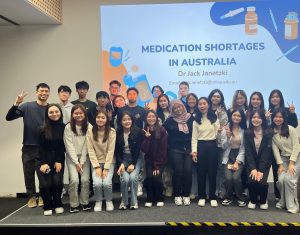
On the first day, the session on medication shortages led by Dr Jack Janetzki helped to enhance student awareness of the systemic issues affecting medicine supply and a pharmacist’s role in managing these challenges.
Additionally, a hands-on session in the Pharmacy Practice Integrated Learning Suite with Dr Kirsten Staff offered the student practical exposure to patient-centred care and simulated pharmacy scenarios, further reinforcing the importance of clinical competence, effective communication and teamwork.
On different days, the session on Australian Traditional Medicines introduced students to the integration of cultural practices within the healthcare system, broadening their perspective on holistic and inclusive care.
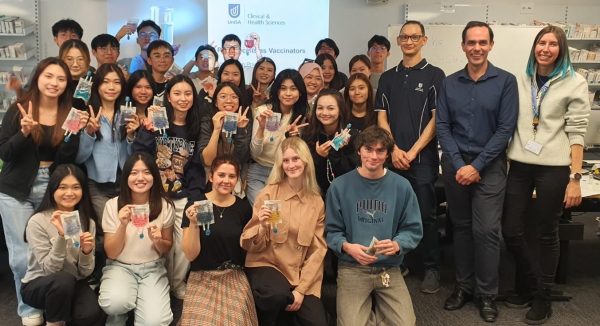
Besides that, a vaccination practice session was conducted by Dr Brian, which demonstrated the expanding role of Australian pharmacists as vaccinators. All students participated in hands-on vaccination training, which included practising the handling and injection techniques on simulation pads, as well as the preparation and reconstitution steps.
The session also covered patient communication strategies which are crucial in ensuring safe and effective vaccination practices. The students were also introduced to the pharmacy ethics and intern training pathways by the UniSA intern coordinator, providing them with a clearer understanding of the professional standards and expectations required for a pharmacy internship in Australia.
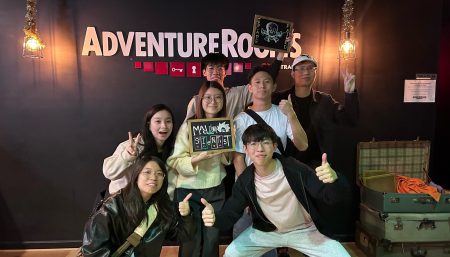
The students also shared their journey in Adelaide as a group of seven, turning the experience into a memorable journey with unexpected friendship. The trip brought them together through shared adventures and simple moments of joy. They hugged koalas, met kangaroos, strolled through the Hahndorf village, watched sunset at Mount Lofty, and enjoyed hotpot night at the boys’ place. Despite the unfavourable weather, they created memories by singing karaoke, exploring the escape room and sharing dinners while catching up on their placement stories.
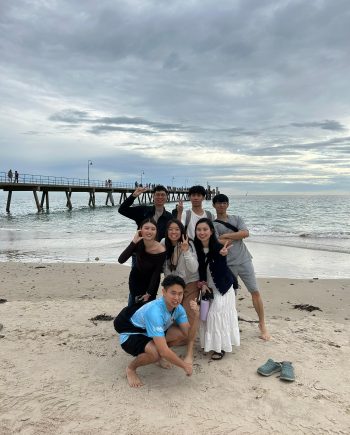
The group expressed heartfelt gratitude to Prof Matt and Ms Narelle for their care and support throughout the trip, with a memorable lunch they shared. What truly made the trip remarkable was not the places they visited, but the warmth, support, companionship and the lasting memories they will always cherish. As the saying goes, “it’s not where you go, but with whom you travel that makes the journey worthwhile.”
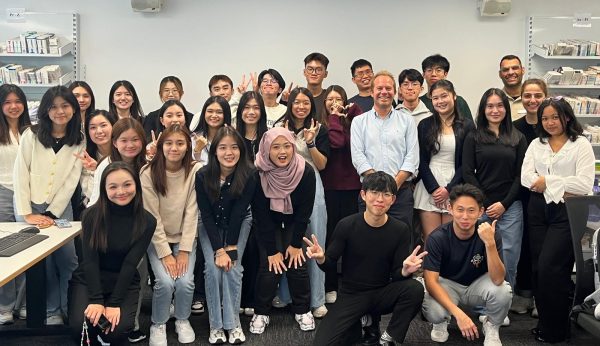

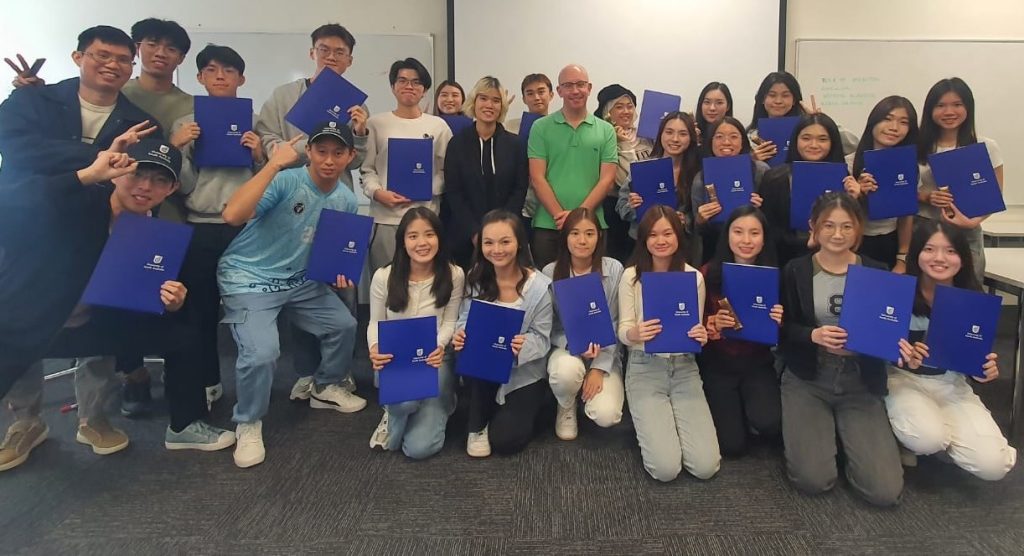
In short, the students are deeply thankful to the School of Pharmacy at IMU, Prof Matt, and Ms Narelle from UniSA for making this unforgettable experience possible — not only for the invaluable clinical placement opportunity but also for the meaningful memories, friendships, and support that made their journey in Adelaide truly special.
Wow this is great
i love everything
I have a diploma in pharmacy wanted to upgrade I am from kenya
Our team will reply you on this soon
I have a diploma in pharmacy wanted to upgrade I am from kenya
Our team will reply you on this soon