


Article Summary
Artificial intelligence (AI) and robotics are transforming in vitro fertilisation (IVF) by improving sperm selection, embryo monitoring, and personalised fertility treatments. At IMU University’s Diagnostic Lecture Series 2025, experts highlighted how AI-driven embryology, time-lapse imaging, and genetic testing are reshaping reproductive medicine and increasing success rates in assisted reproduction.
Key Takeaways
Diagnostic Lecture Series 2025: Advanced Clinical Embryology
Event Date:
10 October 2025
Venue:
IMU University
Participants:
70
Speakers:
8
- AI in IVF improves accuracy in sperm and embryo selection
- Time-lapse imaging allows continuous embryo monitoring
- Personalised fertility treatments increase success rates
- Genetic testing helps prevent inherited diseases
- Quality control ensures safe and effective IVF outcomes
The Rise of AI in IVF and Embryology
Imagine an in vitro fertilisation (IVF) lab where an artificial intelligence (AI), with an eye more precise than any human, scans thousands of sperm in seconds, selecting the single best one.
It then watches over a growing embryo, analysing its every cell division to predict its chance at life.
This isn’t science fiction — it’s the new reality of fertility care, and it was the electrifying focus of the “Diagnostic Lecture Series 2025: Advanced Clinical Embryology” held at IMU University on 10 October 2025.
Forget everything you thought you knew about the quiet, microscopic world of embryology.
The field is in the midst of rapid advancement, and at its epicentre was the Diagnostic Lecture Series, organised by the
- Division of Applied Biomedical Science and Biotechnology, IMU University in collaboration with the
- Office of Industry Partnerships and Engagement (IPE), IMU University, and
- Alpha IVF & Women’s Specialist Centre.
The event was proudly sponsored by:
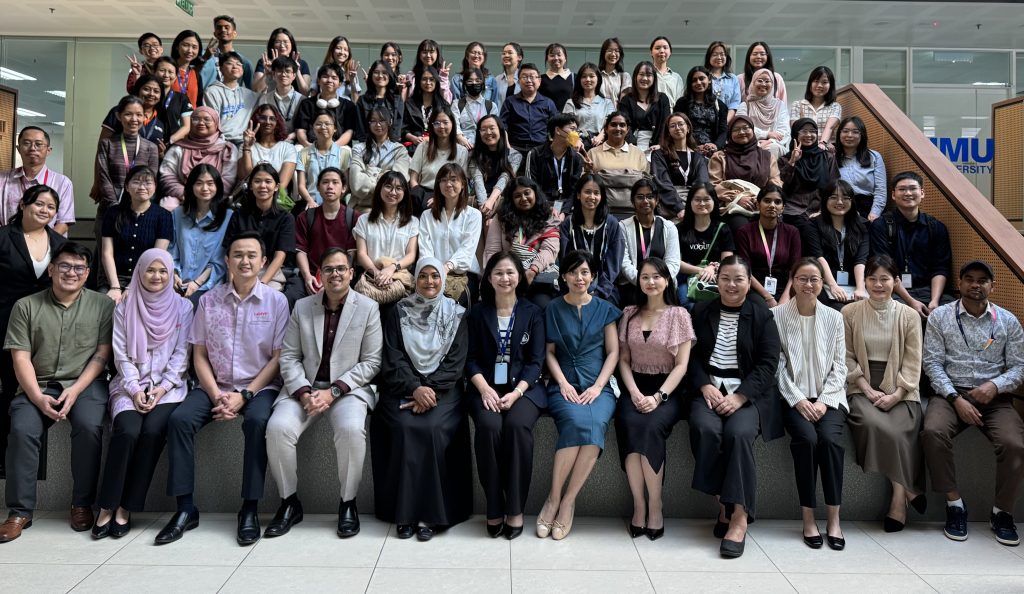
Attended by about 70 participants including students, academics, and industry leaders, the event unveiled a future where having a baby is being redefined by data, algorithms, and breathtaking technology.
Setting the Stage for a Revolution
The programme was inaugurated by A/Prof Dr Wong Chew Yen, Associate Dean of Research and External Engagement, School of Health Sciences, IMU University.
In her opening address, she highlighted the critical role of such dialogues in bridging academic knowledge with cutting-edge clinical practice, setting a forward-thinking tone for the day.
Goodbye Guesswork, Hello AI Precision
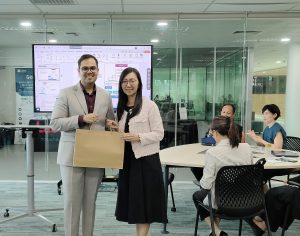
The lectures kicked off with a bang as Mr Zyaad Mosahed (Lab IVF (M) Sdn Bhd) (Pictured on the left of the photo) demonstrated how AI-powered “robot scientists” are now performing semen analysis.
These systems don’t get tired, they don’t have bad days, and they spot details invisible to the human eye.
“This is about eliminating the ‘art of guesswork’ and replacing it with unwavering, data-driven accuracy,” his talk revealed.
This theme of an intelligent lab was picked up in the final keynote by Ms Adelle LimYun Xin (Alpha IVF & Women’s Specialist Centre), who took the audience on a tour of a fully AI-integrated clinic.
She showed how algorithms can now simulate a woman’s ovarian response to drugs, grade eggs, and even predict which embryo has the best shot at leading to a healthy baby.
“We are moving from standardised treatment to truly personalized fertility journeys,” she announced, “where every decision is powered by deep data insights.”
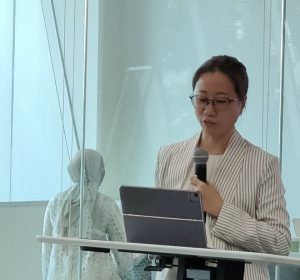
AI-Powered Sperm Selection and Semen Analysis
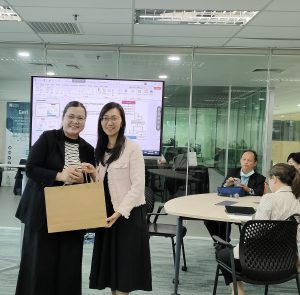
But what about the embryo’s journey itself?
Ms Low Sin Yee (Alpha IVF & Women’s Specialist Centre) (Pictured on the left of the photo) captivated the audience with her talk on “Revolutionizing Sperm Preparation and Selection,” where she explored cutting-edge techniques transforming fertility treatment.
Time-Lapse Embryo Monitoring and Predictive Analytics
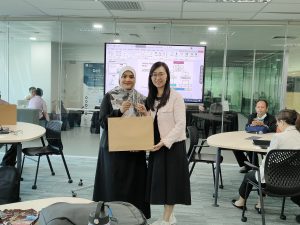
Ms Noor Faridah Shaik Dawood (Genea Biomedx) (Pictured on the left of the photo) showcased the magic of time-lapse technology. Instead of briefly taking embryos out of an incubator for a daily check, they are now filmed 24/7.
“We’ve discovered that embryos have a ‘hidden heartbeat’—a unique development timeline that tells us which ones are the strong contenders. It’s like getting a director’s commentary on the very beginning of life,” she explained.
Advances in Embryo Freezing and Cryopreservation
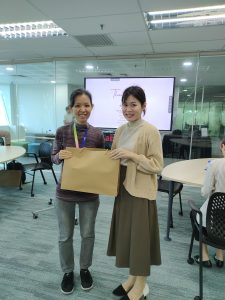
And when it’s time to transfer, a critical question arises: fresh or frozen? Ms Kong Mei Yee (Genesis IVF) (Pictured on the right of the photo) broke down the modern debate, highlighting how advances in cryopreservation—essentially deep-freezing embryos with near-perfect survival rates—have given clinicians and patients powerful new options.
The series also zoomed out to address life-changing decisions. A/Prof Dr Abdul KadirAbdul Karim (Pictured on the left of the main photo) (Universiti Kebangsaan Malaysia) discussed the vital importance of fertility preservation, especially for cancer patients, calling it an “insurance policy for future family dreams.”
Genetic Testing and Fertility Preservation
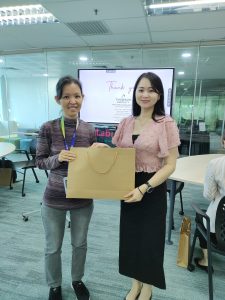
Meanwhile, Ms Michelle Lim Sheng Rong (Sunfert International Fertility Centre) (Pictured on the right of the photo) detailed how Pre-implantation Genetic Testing (PGT) acts as a powerful safeguard, allowing scientists to screen embryos for genetic diseases before transfer.
Why Quality Control Is Critical in AI-Driven IVF Labs
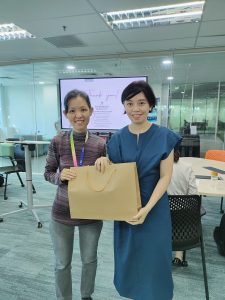
And holding all this high-tech wizardry together? The unsung hero of the IVF lab: quality control. Ms Tee Sze Tian (TMC Fertility & Women’s Specialist Centre) (Pictured on the right of the photo) delivered a powerful message:
“In a field where we are handling the building blocks of life, there is no room for error. Total Quality Management is the non-negotiable framework that ensures every technological advance actually translates into a safe and successful outcome for patients.”
A Forward-Looking Close
The event was brought to a thoughtful close by A/Prof Dr Koh Rhun Yian, Head of the Division of Applied Biomedical Science and Biotechnology who synthesised the day’s key learnings and underscored the importance of continuous innovation underpinned by rigorous scientific standards.
The event was met with enthusiastic reviews from all corners. Students called it an “eye-opener,” while industry professionals praised the “excellent networking.”
One thing is clear: the future of making families is here, and it’s faster, smarter, and filled with more hope than ever before.
The message from IMU’s lecture series was resonating with the quest to create life; science has just gained its most powerful partners yet.
Organising Committee
Chairperson:
Prof Dr Chye Soi Moi
Committee Members:
Dr Tsen Min Tze
Dr Shamala Salvamani
Dr Anil Philip Kunnath
Article written by Dr Anil Philip Kunnath.
Thoughts Shared