Search

A Journey Through Healing and Heritage

Day 1

We are honored to be invited to participate in the workshop held by ShanXi University of Traditional Chinese Medicine (SXTCM).

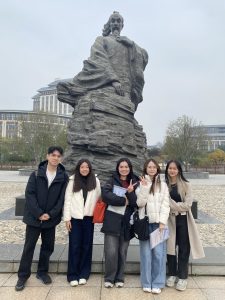
On the first day, we attended the opening ceremony organised by the university. The event was grand and inspiring, and it was wonderful to have the opportunity to make new friends in Shanxi and immerse ourselves in their culture throughout the seven days of our visit.

The campus is well-equipped with professional facilities including acupuncture and Tuina rooms. The large library left a strong impression with most seats occupied and a quiet atmosphere of focused learning.

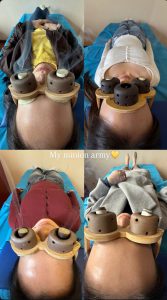
One of the most unforgettable experiences of the day was trying eyes moxibustion therapy. Although we are familiar with standard moxibustion at our own university, this was our first time experiencing eye moxibustion. It was unique and memorable.

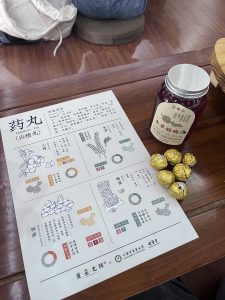
Another highlight was the process of making ShanZha (howthron) pills with new friends. The mixture was rolled and shaped into uniform pieces before being packed into small packets.

From this workshop we understand that the softness and firmness of hawthorns can change with the weather, but the functions still work the same. Hawthorn pills are best taken after a meal, especially when you feel bloated or stuffiness. This workshop provided us with valuable learning opportunities and meaningful cultural experiences. 

The visit to the museum of Chinese Medicine in the university also offered an enriching experience. In the museum, a wide variety of Chinese medicine herbs were displayed in their original forms. This created a valuable opportunity to closely observe real medicinal materials rather than relying solely on textbook descriptions. The tour introduced the appearance, function and unique characteristics of each herb, broadening knowledge and deepening understanding of Chinese medicine. With over hundreds of herbs exhibited, the experience fostered a strong appreciation for the wisdom of ancient practitioners who discovered and recorded these valuable materials, allowing traditional medicine to be preserved and passed down through generations.

The visit to Shanxi University of TCM and the museum of Chinese Medicine provided a comprehensive and enriching journey into traditional medical culture. From witnessing modern educational facilities and hands-on practices such as eye moxibustion and ShanZha pill preparation, to observing original herbal specimens preserved in the museum, the experience highlighted both the innovation and historical depth of Chinese Medicine. The overall experience left an impression and deepened understanding of Chinese Medicine in both theory and practice.

Day 2

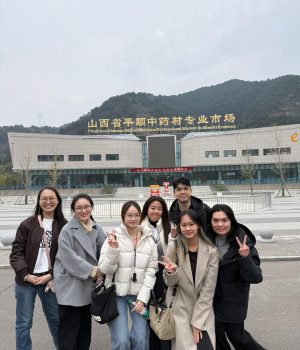
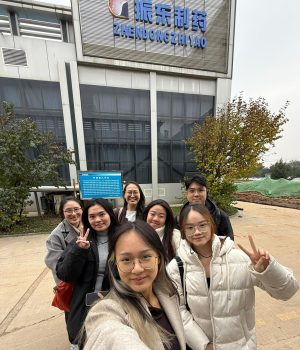
Our visit to Ping Shun county, the province’s first specialised town dedicated to TCM, offered profound insights into the fusion of tradition and innovation within the industry. Through visits to the Zhen Dong E-commerce Centre, the Shang Dang TCM Cultural Centre, and the medicinal and edible products market, we witnessed how the county has transformed its rich herbal heritage into a modern, thriving enterprise.

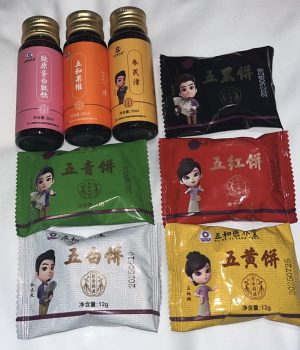
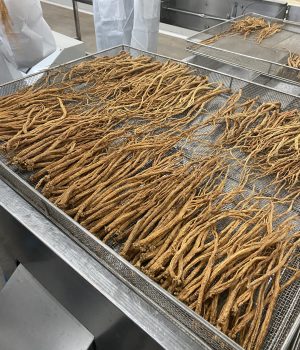
With a ten-thousand-acre cultivation base growing key herbs such as Codonopsis pilosula (Dang Shen), Forsythia suspensa (Lian Qiao), Scutellaria baicalensis (Huang Qin), and Astragalus membranaceus (Huangqi). Ping Shun demonstrates effective agricultural diversification that supports both industry and sustainability. The most remarkable aspect was the “Company + Government + Agricultural Cooperative + Base” model, which successfully connects individual farmers with global markets through shared resources, strategic planning, and governmental support. Moreover, the integration of TCM into everyday products – such as shampoos, tonics, foods, and vinegars – highlights a forward-thinking approach that transforms traditional remedies into modern wellness solutions. We had the opportunity to visit their live-streaming studio and witness a live broadcast in action. Overall, the study tour to Ping Shun County was deeply inspiring, revealing how the future of TCM lies in harmonising ancient wisdom with contemporary innovation to meet the health and lifestyle needs of modern society.

PingShun Market
Zheng OngZhi HAo
Screenshot
CM Med 2

Day 3

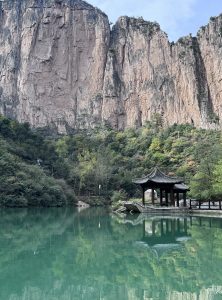
As our journey continued, we eventually arrived at Tong Tian Gorge (通天峡), a breathtaking natural wonder. We had the opportunity to explore the mountain, hiking to its summit while listening attentively to the tour guide’s explanation of how the gorge was formed.

Tong Tian Gorge was created over millions of years through the combined effects of water erosion and tectonic movements – the river gradually carved its way through the limestone mountains, shaping the magnificent cliffs and deep valleys we see today.

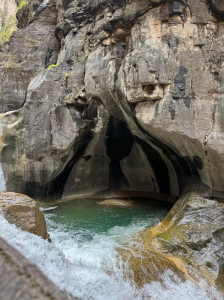
Midway through our hike, we encountered a fascinating sight, a naturally formed, peach-shaped cave created by the constant force of waterfall erosion and gravity. The formation was truly remarkable and left a deep impression on us.

Later that night, we embarked on a 280-kilometre journey to Ping Yao, a destination that felt like stepping back in time to ancient China. There, we were invited to watch a cultural performance titled 《You Jian Ping Yao》 (“See Ping Yao Again”). The show vividly portrayed the stories of local people who were willing to sacrifice themselves and travel afar to protect merchants striving to strengthen their nation’s economy. The performance was both touching and inspiring, offering a glimpse into the enduring spirit and resilience of the people of Ping Yao.

Day 4

The following morning, we began our exploration at the renowned Ping Yao Ancient City, a UNESCO World Heritage Site. For us, stepping into Ping Yao felt like entering a living scene from a historical Chinese drama. The city’s well-preserved walls, traditional courtyards, and vibrant streets illuminated the enduring charm of ancient Chinese urban life. As night fell, the city came alive with hawkers and local crafts, showcasing the seamless blend of history and modern vitality. Our continued exploration of various preserved historical sites within the city deepened our appreciation for how the past continues to live on in modern China.

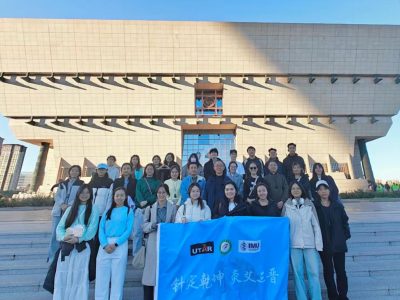
Later, during our visit to the Shanxi Provincial Museum, we were given the invaluable opportunity to immerse ourselves in China’s rich cultural and historical heritage. There, we witnessed an extraordinary collection of historical artifacts that have been meticulously preserved. Each item, though seemingly ordinary at first glance, carried profound stories and cultural significance that revealed the depth of China’s ancient civilisation. The museum’s grand architectural design, coupled with its vast historical displays, offered a powerful reflection of how deeply China treasures its history and traditions – values that also underpin the philosophy of Chinese Medicine.

Day 5

After having a warm breakfast, we are guided to visit the Zhong Hua Fu Shan Hometown.

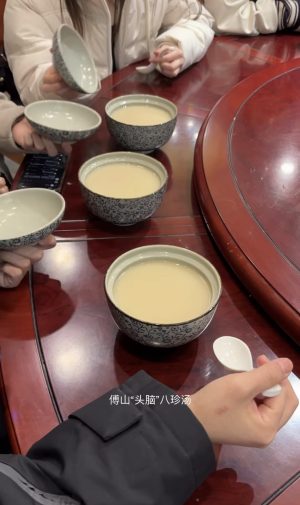
We were warmly welcomed by the local guide, we were each served with a bowl of Fu Shan Ba Zhen Tang. We are fortunate to have the opportunity to try and introduced to a completely different way to prepare Ba Zhen Tang. The Fu Shan Ba Zhen Tang is different from the everyday Ba Zhen Tang that we know, firstly, it is white and thick in texture. Interestingly, we learned that this is because this Ba Zhen Tang is added with lamb meat, yellow wine and lotus root to be cooked for a long time, creating this marvel. This Ba Zhen Tang had accompanying appetisers that came with it, each further enhancing the taste of the dish.

After that, we were led by the guide to take a tour around the garden of the Fu Shan hometown, soaking in the scenery while listening to the history of Fu Shan. Previously, Fu Shan was only known to us as a dedicated Chinese Medicine practitioner, as great as he already was in our eyes, hearing about his story and legacy showed us that he was more than that, the fact that he created the aforementioned Ba Zhen Tang for his sick mother, and that he never got married after losing his wife at a young age of 27, showed that he was a filial son and a faithful husband, all of these attributes of being a good person, which is the prerequisite of being a good healthcare professional. After the tour, we felt that our horizons have been broadened significantly.

Screenshot

We left Fu Shan hometown and embarked to Tai Yuan where we were pampered with a large variety of local food. We visited Shanxi Provincial Acupuncture and Moxibustion Hospital, it is always amazing and eye-opening to witness and to be introduced to different methods of acupuncture and Tuina apart from the classic ones we learned from textbooks. We were also shown the different types of unique needles, which was known as “New Nine-Needle Acupuncture Technique”, where there are nine different acupuncture needles used for different conditions. This was something that they developed on their own, derived and inspired by ancient needling techniques and equipment that are not seen in Malaysia.

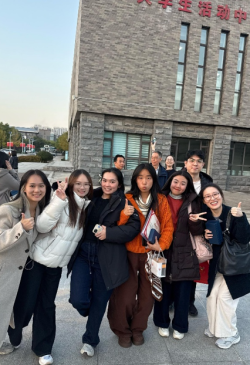
In the closing ceremony, Tan Yi Xiang, the student representative from IMU University delivered her key reflections and insights, while Ms Hing Tze Xin delivered a heartfelt speech of gratitude.

All in all, this learning trip to Shanxi China has allowed us to forge new bonds and connections as we made new friends and allowed us to dive deep into the abundance of TCM history in one of the most historical provinces in China. This has been a journey of great value which we will cherish the things we learned and memories we made.

Remarks from Tan Wei Shan and Hing Tze Xin

It feels as though it was just yesterday when we were the ones who were students being led on a learning and visiting workshop, it is always a great opportunity to not merely be exposed to different or innovative ways of TCM treatment methods, but also such a humbling experience to witness the grandeur of the world, to immerse ourselves in the culture of others, one that might not be familiar to us, but we learn to appreciate.

Attending this workshop as lecturers, it has granted our Chinese Medicine programme in IMU University more exposure globally, allowing the growth of collaboration opportunities, be it in terms of clinical mobility for students or staff, or in the fields of research. It is beneficial for both parties to have built rapport. As educators, we always strive for improvement, both to keep up with the advancement of the healthcare field, and with the new generation of youths so to ensure effective communication in and out of the classroom. A learning experience such as this workshop to Shanxi University of TCM is an excellent opportunity in achieving both.

In preparing our students for the outside world in the future, skills and knowledge in TCM are not the only aspects we wish to train them in. Developing different soft skills and people skills such as cross-cultural communication, patient-centred thinking, observational skills, adaptability and open-mindedness are all important attributes of a good TCM practitioner, therefore it is of the essence for students to put themselves out there to see and learn new things from different places and different people. Through these 7 days, it is safe to say that students of IMU do indeed possess these attributes, or are along the lines of developing them, as it was comforting to see them taking care of themselves and one another, getting along with students of different schools, background and culture, all while remaining diligent in learning.

An Unforgettable Learning Experience

In summary, students have learned the different types of growth and harvesting process of many commonly used herbs that originated from China, this helps them understand and appreciate the herbs better. They were also introduced to the local herbal formula that is different from the one they commonly know, as well as different acupuncture needles or equipment used for different conditions of different diseases. For 7 days, we also immersed ourselves in the culture of Shanxi, enjoying their cities and chilly weather, their food and the opportunity of mingling with and making new friends with the students from Shanxi University of TCM. All in all, this workshop not only helps in the growth of TCM treatment and knowledge, it also helps build soft skills and people skills needed in the future.

group photo2
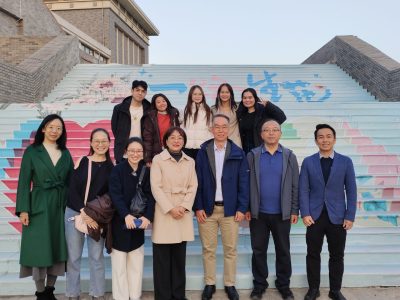
Group Photo Shanxi
group photo 3

Students:

Tan Yi Xiang, Katerina Lee Jia Jing, Sabrina Chia Jie Ying, Chia Xiao Xuan, Marvin Kew Ming Ren (IMU Chinese Medicine Students from CM223 cohort)

Staff:

Ms Tan Wei Shan, Ms Hing Tze Xin