Search

Advancing Climate–Health Action in Malaysia Through Forecasting, Evidence, and Collaboration

Article Summary

Researchers, policymakers, and healthcare experts gathered at NIH–MOH Malaysia for the seminar “Advancing Climate–Health Action in Malaysia: Forecasting, Evidence, and Collaboration.” Co-organised by IMU University, Sunway Centre for Planetary Health, and NIH–MOH Malaysia, the event explored climate–health intelligence, disease forecasting, heat stress, and evidence-informed strategies to strengthen Malaysia’s climate resilience and public health preparedness.

At a Glance

Event:

Advancing Climate–Health Action in Malaysia: Forecasting, Evidence, and Collaboration

Date:

13 April 2026

Venue:

National Institute of Health (NIH), MOH Malaysia, Setia Alam

Co-Organisers:

IMU University, Sunway Centre for Planetary Health, and NIH–MOH Malaysia

Key Topics Discussed:

  • Climate and health priorities in the 13th Malaysia Plan
  • Climate-sensitive diseases in Malaysia
  • Heat stress and occupational health in Southeast Asia
  • Automated mapping and prediction of disease risk

IMU Representatives:

  • Dr Teguh Haryo Sasongko
  • Dr Shazia Jamshed
  • Dr Teoh Gaik Kin
  • Dr Lee Yi Yi
  • Dr Ahmad Fairuz Mohamed
  • Dr Seow Shi Rui

Bringing Together Multidisciplinary Stakeholders to Explore the Growing Importance of Climate–health

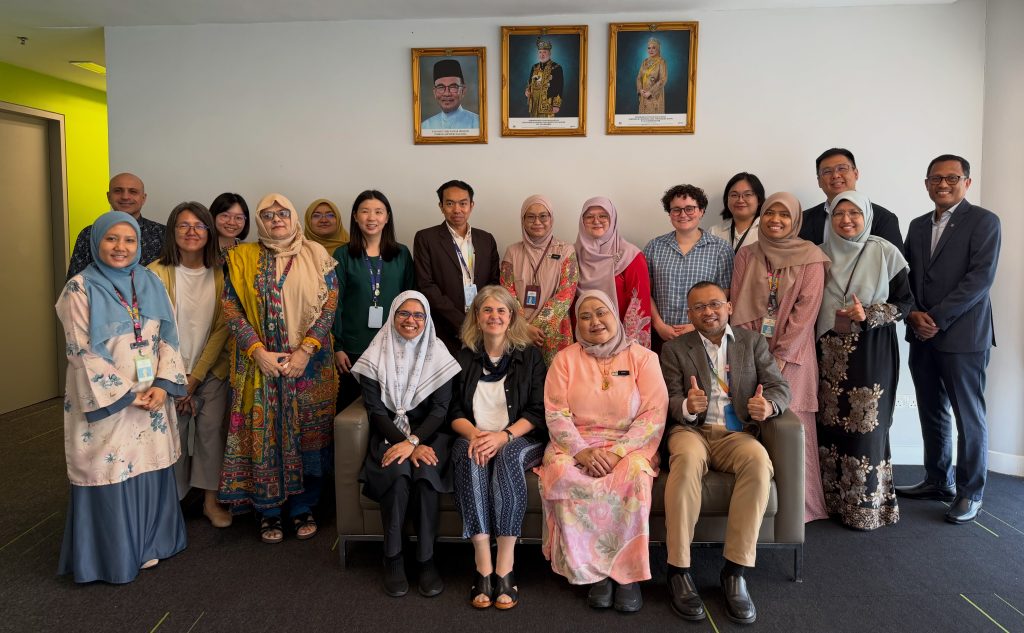
Setia Alam, 13 April 2026 — A seminar titled “Advancing Climate–Health Action in Malaysia: Forecasting, Evidence, and Collaboration” was successfully held at National Institute of Health (NIH), Ministry of Health (MOH) Malaysia in Setia Alam.

The event was co-organised by

  • IMU University,
  • Sunway Centre for Planetary Health, and
  • NIH–MOH Malaysia.

This seminar brings together multidisciplinary stakeholders from research, policy, and practice to explore how climate–health intelligence, particularly forecasting approaches, can:

  • Inform anticipatory action,
  • Guide priority setting, and
  • Catalyse cross-sector collaboration.

The seminar was chaired and moderated by A/Prof Dr Teguh Haryo Sasongko from IMU University. The seminar was also attended by a delegation from IMU University, comprising:

  • A/Prof Dr Shazia Jamshed (School of Pharmacy),
  • Dr Teoh Gaik Kin (School of Psychology and Social Sciences),
  • Dr Lee Yi Yi (School of Health Sciences),
  • Dr Ahmad Fairuz Mohamed (School of Medicine), and
  • Dr Seow Shi Rui (Institute for Research, Development and Innovation).

Their participation reflects the University’s continued commitment to

  • Advancing climate–health research,
  • Fostering interdisciplinary collaboration, and
  • Contributing to national and regional efforts in strengthening climate resilience and planetary health initiatives.

Climate and Health in the 13th Malaysia Plan

The seminar commenced with a strategic framing session by Ministry of Health delivered by Datuk Dr Nor Asiah Muhamad, Head of the Sector for Evidence-Based Healthcare, at NIH, MOH Malaysia. Her presentation, “Climate and Health in the 13th Malaysia Plan Health Research Priorities,” highlighted the Ministry’s latest strategic directions in addressing climate change and health.

Based on the forthcoming 13th Malaysia Plan, health research priorities will focus strongly on

  • Urbanisation,
  • Air pollution, and
  • Flooding, as well as
  • Toxic chemicals, water and waste management.

These priorities aim to target Malaysia’s climate change, where rapid development in densely populated urban areas has intensified vulnerabilities to heatwaves, flooding, and environmental degradation.

Addressing Climate-Sensitive Diseases

The first keynote lecture was delivered by Dr Rohaida Ismail, Head of the Environmental Health Research Centre, Institute for Medical Research. In her presentation, “Climate-Sensitive Disease Trends in Malaysia,” she underscored the growing importance of addressing vector-borne diseases and food- and water-borne diseases under changing climate conditions. There is work to adopt a One Health model and prediction for climate-sensitive diseases, recognising the interconnectedness of

  • Climate,
  • Ecosystems, and
  • Human society.

Heat Stress and Health in Southeast Asia

This was followed by an international perspective from Dr Jennifer Cole of Royal Holloway University of London, who presented “Heat Stress and Health in Southeast Asia – Cambodia Construction Sector National Survey Interim Results”, sharing findings on the health impacts of heat stress among workers, including

  • Key determinants and
  • Potential strategies.

Her presentation resonated strongly with the Malaysian context, where heatwaves are an increasing concern, particularly in urban and high-density environments.

Forecasting Disease Risk Through Automated Mapping

In the subsequent session, Ms Polly Hipkiss delivered a presentation titled “Automated Mapping of Climate Change and Associated Disease Risk.” She shared ongoing work on the development of open and freely accessible prediction models for infectious diseases, with a vision to support any country in strengthening climate–health surveillance and anticipatory action. She welcomes collaborator early on system development and contribution to database.

Strengthening Climate–Health Collaboration

Overall, the seminar underscored forecasting and climate–health intelligence’s roles in supporting evidence‑informed action.

Through knowledge sharing and cross‑sector networking, the session fostered meaningful dialogue and collaboration.

These engagements are expected to:

  • Contribute towards strengthening Malaysia’s preparedness and response to climate change, while
  • Advancing integrated approaches to climate resilience and planetary health.

Submitted by Dr Seow Shi Rui