Search

Six Years, Twenty Kilos, and a Lifetime of Learning

There has been no greater humbling experience in my life than entering medical school. My journey at IMU started relatively smoothly six years ago. I chose their Foundation in Science (FIS) programme as my pre-university pathway since it was a quick, easy and direct track into a medical career.

FIS also gave me a great introduction to life in KL—a big change for a Sarawakian like me, especially in terms of people and culture (my schools back home were essentially monoracial). Sure, the main campus is small and fairly secluded from KL’s hotspots (there was no Pavillion BJ back then, mind you), but I truly enjoyed, and continue to cherish, the experiences I shared there with my friends, nonetheless.

The curriculum of FIS catered well to students aiming for a medical degree like me. Topics covered in FIS biology-related subjects were great bridging material from SPM to the MBBS curriculum, and I found myself progressing comfortably into the early years of my medical school.

Amidst the daily hustle of 8am to 6pm classes, I found solace in the wide variety of clubs, societies and student bodies at the BJ campus, many of which I’d never seen back home. Though a difficult choice between cultural, sports, performance, and academic clubs, I ultimately chose to step outside my comfort zone and joined cheerleading – a profound experience I remember dearly to this day. Engaging in a team-based sport with students from diverse backgrounds and different programmes, ultimately competing in the IMU House Cup against friends from other houses, was a challenge that I missed fondly as I progressed to the Seremban Campus. Reflecting on this, I sometimes regret not participating more in student clubs, having prioritised academics a little too much.

Looking back, the orientation week was a thrilling kick-off to our medical journey. It broke down barriers between juniors and seniors and laid the groundwork for close bonds that would persist throughout the years.
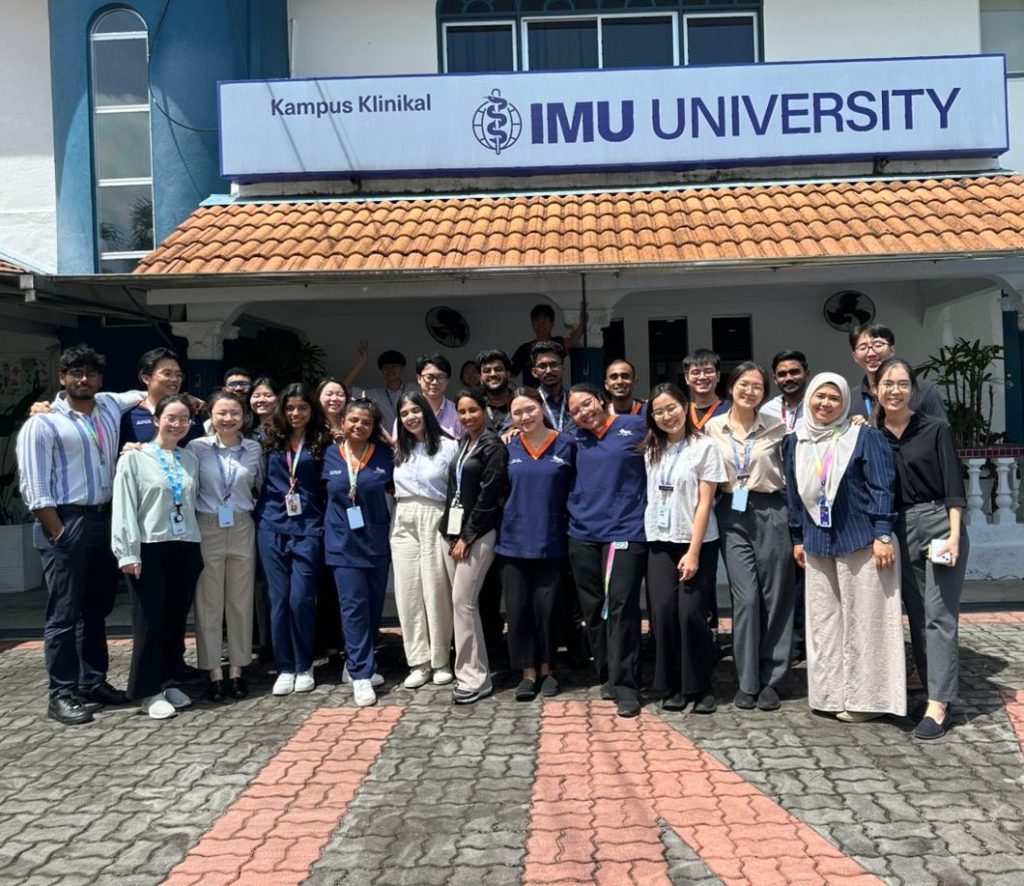
Our Frist 2.5 Years at IMU Bukit Jalil Campus

The pre-clinical phase, or theoretical phase that followed, was strewn with bumps from the get-go, as the COVID-19 pandemic struck. Flight costs were well over a thousand ringgit to Sarawak, and I (naively) brushed off the pandemic as a short-lived ordeal. I ended up stuck alone in Vista Komanwel B for a year, with all on-campus activities halted. Online lectures were not suited for me in the slightest bit. Finding motivation and drive to study was immensely difficult, and without in-person interaction, I felt it impossible to connect meaningfully with new colleagues and lecturers. I remember the initial joy of finding out our online tests were open book, and the subsequent dread as I read the half-page-long questions.

Amid constantly shifting government policies during the COVID era, I appreciated IMU’s attempt at engaging us in face-to-face learning whenever possible. We had physical clinical skills sessions once a week, with the occasional anatomy class in the Medical Museum once a while. To hone our clinical skills with real patients as early exposure, we visited Klinik Kesihatan clinics and even had a two-week posting in Hospital Kuala Kubu Bharu. Though much of my pre-clinical years remains a blur, I still remember these physical classes – and, most importantly the people I met –vividly.

As the pre-clinical phase ended, we wished the best for peers transferring to partner universities and moved onto the next phase of our journey: our clinical years in Seremban’s clinical campus.

Our Time at Clinical Campus in Seremban

I’ve long been convinced in my pursuit of medicine, and I liked the options I had at IMU. Initially, my trajectory was towards IMU’s transfer pathways to UK and Australian universities for clinical years, but I had also heard great things about its local pathway graduates from various specialists I attached to post-SPM.

After spending the last few years in their clinical campuses in Seremban and Batu Pahat, I’m glad to say I made the right choice. The initial transition to Seremban was difficult. Gone were the outrageously cold halls and diversity of students in the BJ campus, the general comfort and ease of KL, and the laid-back nature of online classes.

The Seremban campus, fairly open-air, was populated solely by medical students, with the very occasional pharmacy, dietetics, or dentistry student. Good accommodation in Seremban was hard to find, the roads were poorly designed, and there just wasn’t much in terms of leisure. It was also where the real grind of medical school began and where we were reminded of, and moulded by, our duties as medical professionals. We started seeing real patients in the hospital daily, learning how to function as a houseman would. Our accumulated clinical skills were put to the test regularly, often to the headshakes and gentle disappointment of our lecturers. But through failure, we learned. I’ve always appreciated the saying: “An error does not become a mistake until you refuse to correct it”.

With each posting, we discovered new challenges and passions; each posting adding another brick to our foundation of clinical know-how as we rotated through various hospital departments. The constant struggle of trying to keep up with each posting’s own demands was a gruelling experience – but adversity breeds maturity. Through all the challenges I’ve pushed through with my friends, I can confidently say we’re all graduating as bright, resilient and steadfast individuals, and I trust we are well-prepared in our resolve to serve the ill and vulnerable. A little bit of hair loss here, and a little bit of weight gain there (20 kilos for me!) is a small price to pay, right?

One of the toughest parts of this field is the sinking feeling that, the more we learn, the more we feel we lack the knowledge to be competent enough. Yet it is this never-ending feeling of inadequacy that drives our pursuit of knowledge and pushes us to grow. The whole theme of lifelong learning is strongly embedded in IMU’s philosophy, and its emphasis is ever more important as we move beyond the undergraduate level.

On a short note, although student societies in the Seremban campus were mostly academic clubs, there is however an active sports club and a large role of community service in student life through IMU Cares projects. However, I heavily urge all students, whichever year of study you’re in, to explore student societies outside IMU and to participate in workshops whenever you can.

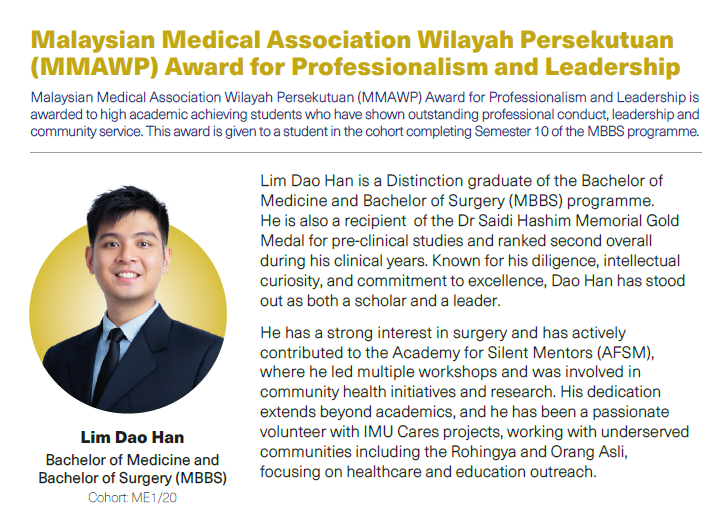
In my later MBBS years, I found myself desperately wanting to join workshops, but just couldn’t find an opening in my schedule to fit it in. I participated mostly in the Academy for Silent Mentor (AFSM), to which I owe much of my interest in surgery. I used to take the KTM back and forth between Seremban and KL, sleeping over at friends’ places, just to attend their workshops. Besides AFSM, there is a wealth of opportunities from a multitude of societies – MSSS, MMI, IASSS, and AMSA to name a few. I regret not seizing the chance to join their workshops when I still had the time.

Our Final Semester: Kluang or Batu Pahat Clinical Campus

After completing our professional exams in Seremban, we moved on to our final semester in Johor, divided between the Batu Pahat and Kluang campuses – without TBLs, the role of lecturers in our day-to-day learning was lessened, and we were encouraged to mature as medical students and to carry forward our strong principles to be able to function independently.

All that was left was to refine our repertoire of clinical skills and to prepare our patient portfolios for the final exit exam. As I finished my portfolio viva, I was swept by a strange, bittersweet feeling; that I had done all I could have, that my six-year journey in IMU had come to an end – and now, ahead of me, lay endless possibilities.

I’m currently preparing for the MRCS Part A in my pursuit of a surgical career, and hope to begin my housemanship at Sarawak General Hospital soon.

Advice to Juniors and Future Students

My advice to juniors and future students is to treat your patients kindly; they are real genuine folk with real genuine feelings, and affirming their feelings can help your patients in more ways than you might expect.

Struggling with colleagues is inevitable; trouble will come your way whether you try to avoid it or not, but learning to reflect and forgive will bring you peace of mind.

The journey will be long and difficult, but remember that setbacks are common and impostor syndrome is universal. There is no rush, and there is no shame in taking a break. Sometimes, it’s exactly what you need. Good luck.

Written by Lim Dao Han